 WhatsApp: +86 16626708626
 Email:
  Phone: +86 16626708626
Description
The GE IC697PCM711P is typically deployed in mature Series 90‑70–based plants where operators need more intelligence at the rack level without redesigning the whole control system. It shows up in power generation units, heavy manufacturing, and continuous process lines where engineers want to offload complex logic, data handling, or serial communications from the main CPU while keeping everything inside a familiar GE Fanuc environment. In many upgrade projects, the GE IC697PCM711P is added when plants introduce new intelligent field devices, link legacy equipment over serial protocols, or implement custom algorithms that standard ladder logic cannot handle efficiently. Used in industrial automation projects that involve high‑speed data processing, protocol conversion, or custom C‑based applications, this module becomes an internal “application engine” within the PLC rack, not a standalone device.
In real‑world control systems, the GE IC697PCM711P is applicable in control systems that must interface to scales, drives, analyzers, operator terminals, or third‑party controllers over RS‑232/RS‑485 or similar serial links. Engineers use it to run data collection tasks, advanced calculations, or supervisory functions that must keep pace with plant events without adding another external PC. In utilities or oil and gas, it may handle device polling and protocol translation so the main CPU can focus on sequencing and safety logic. In discrete manufacturing, it can manage barcode scanners, printers, and custom motion or indexing calculations. Because it lives directly on the PLC backplane and shares resources with the rest of the Series 90‑70 system, it helps plants extend the life, flexibility, and responsiveness of installed GE platforms while keeping control of change and validation effort.
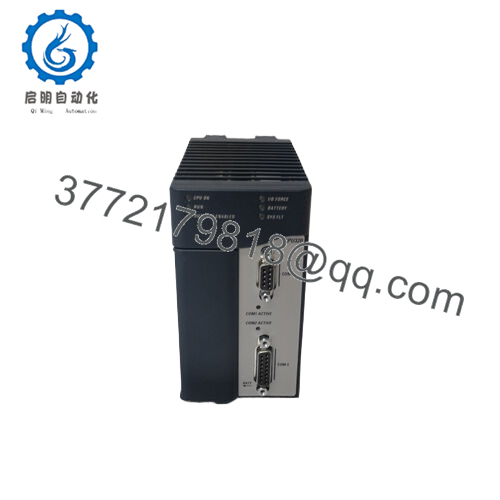
The GE IC697PCM711P is a programmable coprocessor module designed for the GE Fanuc Series 90‑70 PLC family, giving the controller a dedicated processing resource for custom applications and serial communications. Within the system architecture, it occupies a single rack slot and connects directly to the backplane bus, exchanging data with the main CPU through shared memory and configured communication channels. Engineers position the GE IC697PCM711P as a way to embed C‑language or high‑level application logic inside the PLC environment, instead of relying on an external industrial PC, protocol gateway, or custom hardware interface. This keeps the control solution unified from a maintenance and lifecycle point of view, while still providing far more flexibility than pure ladder logic.
Functionally, the GE IC697PCM711P supports dual‑task operation so it can run multiple applications concurrently, such as real‑time calculations and device polling, while maintaining deterministic behavior compatible with the control system. It is typically configured and programmed using dedicated GE tools running on a programming workstation, then downloaded to the module over the PLC network or through a serial connection, depending on site standards. Because it belongs to the Series 90‑70 ecosystem, it fits naturally into existing cabinets, power supplies, and communication networks, which makes it attractive for brownfield expansions. For integrators and plant engineers, the value of the GE IC697PCM711P lies in its ability to solve communication and data‑handling gaps without forcing a change to the base PLC architecture, reducing project risk and commissioning effort in complex plants.
From a performance standpoint, the GE IC697PCM711P is built around a RISC‑based processor running at a clock speed suitable for real‑time industrial workloads, paired with dedicated RAM and flash memory to store applications and data sets. This design lets the module handle continuous serial polling, protocol parsing, and arithmetic workloads without overloading the central CPU, which is crucial when cycle times are tight or when many devices share the same PLC. The internal memory resources of the GE IC697PCM711P support both program storage and data buffering, allowing engineers to implement robust error checking, queue management, and retry strategies for field communications. As a result, applications like data concentration, batch calculations, or device gateways can run reliably even under noisy electrical conditions or during network disturbances.
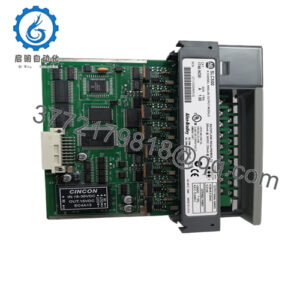
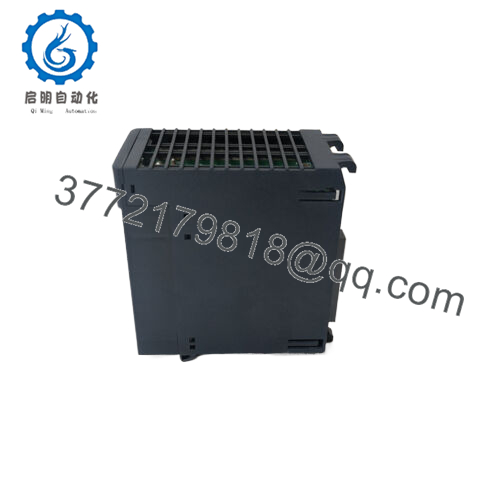
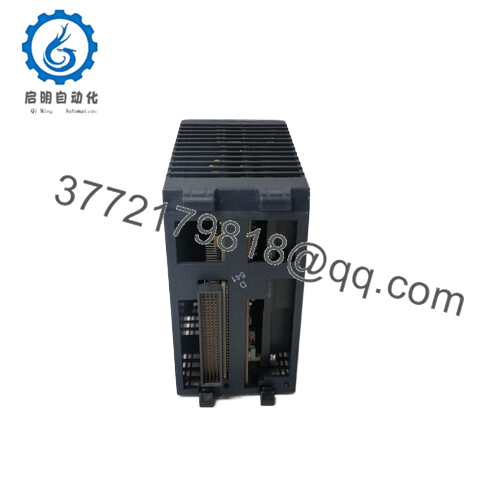
On the hardware side, the GE IC697PCM711P is a standard Series 90‑70 rack module with a single‑slot footprint, designed for installation in typical industrial control cabinets alongside CPUs, I/O, and communication modules. Its front panel usually includes serial ports for device connections and status indicators for module health and communication activity, giving technicians quick visual feedback during commissioning and troubleshooting. The module draws power from the backplane supply, with current consumption sized to remain within common 90‑70 power budgets when cabinets are properly designed. Engineers appreciate that the GE IC697PCM711P uses proven GE mechanical and connector standards, which simplifies replacement and reduces the likelihood of improper seating or intermittent contact in high‑vibration environments.
Compatibility is a core strength: the GE IC697PCM711P is used in industrial automation environments where it links legacy serial devices to a modern SCADA, acts as a protocol converter, or executes custom C‑based routines that exchange data with the Series 90‑70 CPU. Because it integrates at the backplane level, it can share data blocks with the main controller without extra gateways or network hops, which improves response times and reduces system complexity. In many plants, this module is the bridge that allows older analyzers, drives, weigh scales, or OEM machinery to be brought under unified PLC control. Over the long term, the solid‑state design and industrial temperature tolerance of the GE IC697PCM711P support extended service life in demanding conditions, minimizing unplanned downtime and protecting the investment in the existing PLC platform.

- IC697PCM711P
Detailed Technical Specifications
| Parameter | Value |
|---|---|
| Model | GE IC697PCM711P |
| Brand | GE Fanuc |
| Product Type | Programmable Coprocessor Module for Series 90‑70 PLC |
| System Platform | GE Fanuc Series 90‑70 PLC system |
| Processor Type | RISC‑based processor |
| Processor Clock Speed | Approximately 233 megahertz |
| User RAM Capacity | Approximately 2 megabytes |
| Flash / Non‑volatile Memory | Approximately 1 megabyte for application storage |
| Rack Slots Required | 1 standard Series 90‑70 backplane slot |
| Nominal Backplane Power Draw | Around 1.0 ampere at 5 volts direct current |
| Serial Interfaces | Front‑panel serial ports for device and programming connections |
| Operating Temperature Range | Typical industrial control range (for example 0 to 60 degrees Celsius) |
| Mounting Method | Plug‑in rack module on Series 90‑70 backplane |
| Cooling Method | Convection cooling within standard PLC enclosure |
| Typical Certifications | Designed to meet common industrial control standards (varies by region) |
GE IC697CPU772 – Main CPU module from the same Series 90‑70 family, typically paired with the GE IC697PCM711P to offload custom logic and serial communications from the central processor.
GE IC697CMM711 – Communication module often used alongside the GE IC697PCM711P when plants require both standard network interfaces and specialized serial or protocol handling
GE IC697PWR748 – 90 watt power supply module that can feed racks containing the GE IC697PCM711P, CPUs, and I/O modules within a Series 90‑70 cabinet.
GE IC697MDL653 – Discrete input/output module commonly installed in the same rack as the GE IC697PCM711P when the coprocessor drives logic tied directly to field signals.
GE IC697ALG230 – Analog I/O module used where the GE IC697PCM711P performs data scaling, filtering, or advanced calculations on process values before passing them to the main CPU or SCADA.
GE IC697HSC700 – High‑speed counter module that can work in conjunction with the GE IC697PCM711P for applications requiring custom counting algorithms, motion coordination, or event logging.
GE IC697BEM731 – Bus or network expansion module that may be used with the GE IC697PCM711P in larger distributed systems where multiple racks and remote devices are coordinated.
When planning installation of the GE IC697PCM711P, engineers should first verify cabinet space, backplane slot availability, and power margins for the existing Series 90‑70 rack. The module should be placed where cable routing to serial devices and programming ports is practical, while still maintaining recommended separation from high‑voltage wiring to reduce noise. Good grounding practices, including proper cabinet bonding and shield terminations for serial communication cables, help maintain reliable data exchange and minimize communication errors. It is also wise to document the memory map and data exchange strategy between the GE IC697PCM711P and the main CPU before commissioning so that maintenance teams can troubleshoot behavior without guesswork.
From a maintenance perspective, the GE IC697PCM711P benefits from periodic visual inspections to confirm secure seating in the backplane, intact connectors, and acceptable cabinet temperature and cleanliness. Engineers should schedule regular backups of the coprocessor’s application and configuration, especially after program changes, and keep a known‑good copy in the site’s version control system. Monitoring diagnostic information, such as error codes, communication statistics, or watchdog status, allows early detection of cabling issues or device misbehavior. When firmware or application updates are required, following a controlled change procedure and testing in a simulation or non‑critical environment first will keep the GE IC697PCM711P running reliably throughout its service life.