 WhatsApp: +86 16626708626
 Email:
  Phone: +86 16626708626
Description
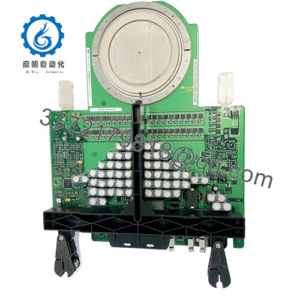
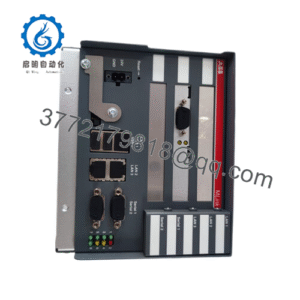
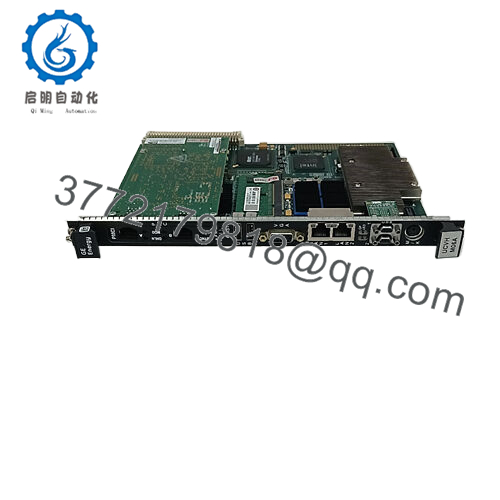
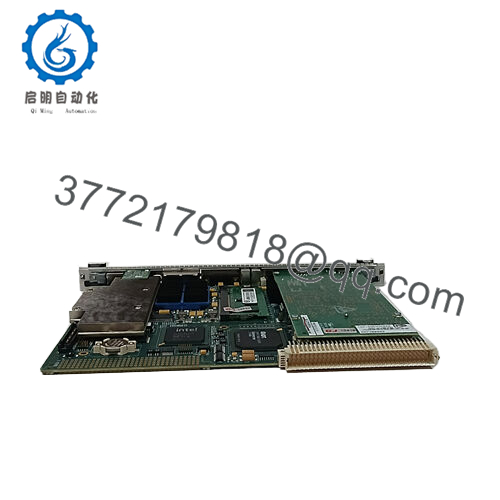
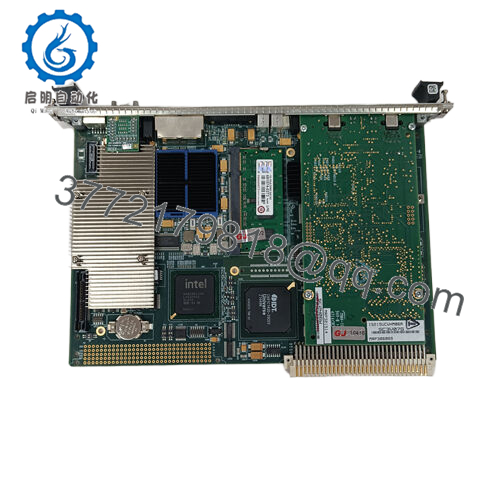
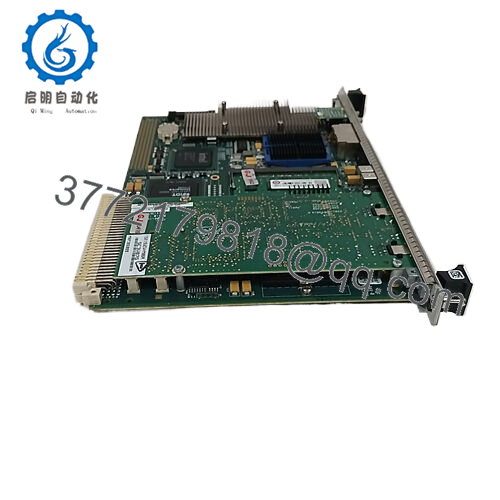
The GE IC800SSI107RS1-DE (often listed as IC800SSI107RS1-DE in the S2K Series) tackles one of the core challenges in precision motion control: delivering reliable, high-performance servo actuation in machines that demand accurate positioning, velocity control, and torque management under varying loads. In industrial automation setups—especially where older or standalone motion systems need to integrate with PLCs, handle dynamic responses, or operate in space-constrained panels—engineers frequently struggle with drives that lack flexibility in power input, suffer from overheating during duty cycles, or require extensive tuning for each motor type. GE IC800SSI107RS1-DE steps in as a compact, standalone servo controller from GE Fanuc’s S2K family, engineered to drive servo motors with consistent performance across single- or three-phase supplies. This becomes particularly valuable in applications requiring tight synchronization, rapid acceleration/deceleration, or operation in environments with fluctuating line voltages. Typical pain points like mismatched motor-drive compatibility, limited input ranges causing nuisance trips, or poor thermal handling in enclosed cabinets are mitigated here, allowing teams to achieve stable closed-loop control without constant re-engineering. For process lines, packaging machines, or material handling systems where downtime from motion faults directly impacts throughput, GE IC800SSI107RS1-DE provides a dependable bridge between command signals (from PLC or motion controller) and mechanical action, supporting high reliability in servo-driven automation while keeping system complexity in check.
The GE IC800SSI107RS1-DE operates as a standalone servo drive/controller within the S2K Series, accepting a wide AC input range to power internal electronics and deliver variable voltage/frequency output to a matched servo motor. It processes position, velocity, or torque commands—typically received via digital inputs, analog references, or serial communication—and closes the loop using feedback from an encoder or resolver on the motor. This unit fits into the motion control layer of an automation architecture, often paired with GE Fanuc PLCs (like Series 90 or VersaMax), third-party controllers, or as a standalone node in distributed systems. Its design supports both 1-phase and 3-phase operation for flexibility in global installations, with built-in power handling that accommodates line variations common in industrial settings. While not featuring advanced fieldbus integration natively (later S2K variants or add-ons handle that), it excels in point-to-point or multi-axis setups where simple, robust servo performance is prioritized over networked diagnostics. The drive mounts in standard control enclosures, interfacing directly with motor power cables and feedback lines, and contributes to overall system responsiveness by minimizing settling times and overshoot in demanding cycles. Engineers value how GE IC800SSI107RS1-DE simplifies commissioning—pre-configured parameters for common motors reduce setup time—and maintains stability across temperature swings or load changes typical in real-world production.

- IC800SSI107RS1-DE
| Specification | Details |
|---|---|
| Model Number | IC800SSI107RS1-DE |
| Brand | GE Fanuc |
| Type | S2K Series Servo Motor Controller / Servo Drive |
| Input Voltage | 90-250 VAC, 1 or 3 phase |
| Operating Temp Range | 0°C to +40°C |
| Mounting Style | Panel / enclosure mount (standard industrial) |
| Dimensions | Compact S2K form factor (approx. 200-300 mm height typical for series) |
| Weight | Approx. 2.5 kg |
| Interface/Bus | Terminal connections for power, motor, feedback; serial/analog command options |
| Compliance | Class I, Division 2, Groups A,B,C,D; Temperature Code T4 |
| Supported Protocols | N/A (standalone; command via digital/analog or basic serial) |
| Typical Power Draw | Up to 3.8 kVA max continuous |
Selecting GE IC800SSI107RS1-DE delivers motion performance that holds up under real production stresses, giving operators consistent positioning accuracy and repeatability that directly translate to higher quality output and reduced scrap. Its wide input voltage tolerance means fewer issues from plant power fluctuations, ensuring the drive stays online during brownouts or phase imbalances that might trip narrower-range units. The robust thermal design supports extended run times without derating in moderate ambient conditions, cutting the need for oversized enclosures or supplemental cooling. Maintenance crews appreciate the straightforward terminal layout and diagnostic indicators, which speed up fault isolation—often just checking status LEDs or monitoring motor current—without specialized tools. Overall, GE IC800SSI107RS1-DE reduces integration overhead in retrofit or new-build projects, as it pairs reliably with legacy GE motors and controllers while offering headroom for moderate duty cycles, helping extend the life of existing mechanical assets.
GE IC800SSI107RS1-DE sees heavy use in industries where precise, repeatable motion is critical to throughput and product consistency. In packaging and material handling lines, it’s deployed to control servo-driven conveyors, pick-and-place arms, or film feeders, handling fast cycles and quick stops under variable loads while maintaining synchronization with upstream PLC logic. Machine tool retrofits—such as lathes, grinders, or presses—rely on it for spindle or axis positioning in environments with oil mist or vibration, supporting critical uptime during long shifts. General manufacturing applications like assembly robots or textile winding machines benefit from its ability to manage dynamic torque demands in harsh, continuous-duty settings. These scenarios demand drives that resist electrical noise, maintain calibration over time, and operate reliably in 0-40°C panel temperatures, making GE IC800SSI107RS1-DE a solid choice for motion segments requiring dependable servo control without overcomplicating the architecture.
Related or alternative products in the GE Fanuc S2K family and motion ecosystem include:
IC800SSI107RS1 – Base variant without the “-DE” suffix; similar core functionality for standard applications.
IC800SSI107S1-DE – Close sibling model with potentially adjusted current ratings or certifications.
IC800SSD107RS1 – Different power tier or configuration within S2K for higher-output motors.
IC800SSI420 – Higher-capacity S2K controller for more demanding torque/speed profiles.
SL Series Servo Drive – Alternative GE Fanuc line for modular, multi-axis setups.
DSM300 Series – Motion controller module for PLC-integrated servo control as an upgrade path.
IC800SSI104 – Lower-power S2K option for lighter-duty servo applications.
Before installing GE IC800SSI107RS1-DE, confirm motor compatibility—check the S2K Series manual for supported motor models, encoder types, and wiring diagrams to avoid mismatch issues during startup. Verify input power matches your supply (90-250 VAC, 1- or 3-phase) and ensure proper grounding and shielding on feedback cables to prevent noise-induced faults. Allow sufficient panel space for heat dissipation, as the 0-40°C rating assumes adequate ventilation; avoid placing near high-heat sources. Update any connected PLC or controller firmware if integrating with GE systems for optimal parameter mapping. For ongoing maintenance, inspect power and motor terminals quarterly for tightness and signs of arcing, especially in vibrating environments. Monitor drive LEDs for fault codes (overcurrent, overtemperature, etc.) during routine rounds, and perform annual checks on motor brushes/encoders if applicable. Keep ventilation openings clear of dust buildup to sustain thermal performance. Stock a spare unit for critical lines, as swapping involves disconnecting power, re-wiring terminals, and reloading parameters—typically a few hours with proper documentation.