 WhatsApp: +86 16626708626
 Email:
  Phone: +86 16626708626
Description
In legacy Series 90-70 PLC systems—still widely deployed in industrial automation, process control, and legacy turbine or generator controls—the need for a high-performance, single-slot CPU that handles demanding real-time applications without consuming excessive rack space remains critical. Many older installations face limitations from slower processors, insufficient memory for expanding logic, or inadequate serial connectivity for HMIs, programming terminals, and peripheral devices. In environments like power generation, manufacturing lines, or continuous processes where scan times must stay tight and I/O throughput high, upgrading to a more capable CPU often becomes essential to avoid bottlenecks, support larger programs, and maintain high reliability amid aging hardware.
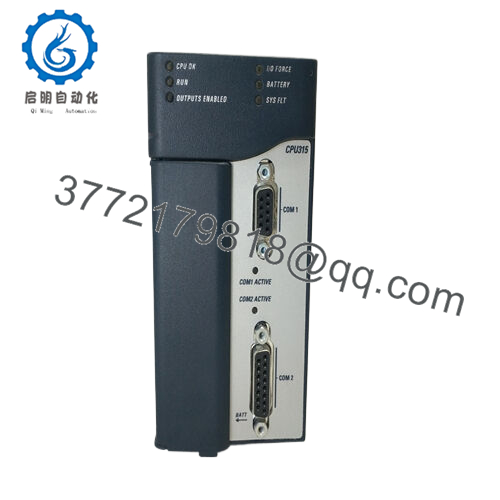
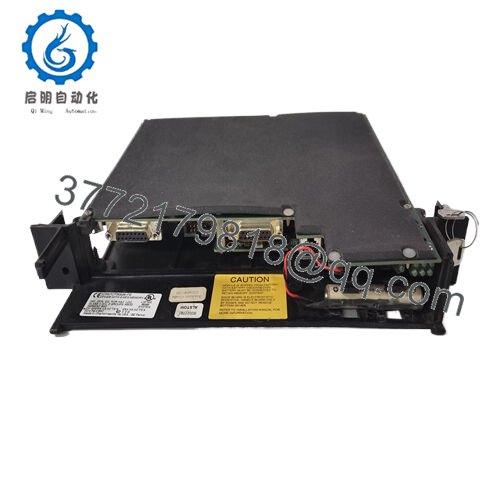
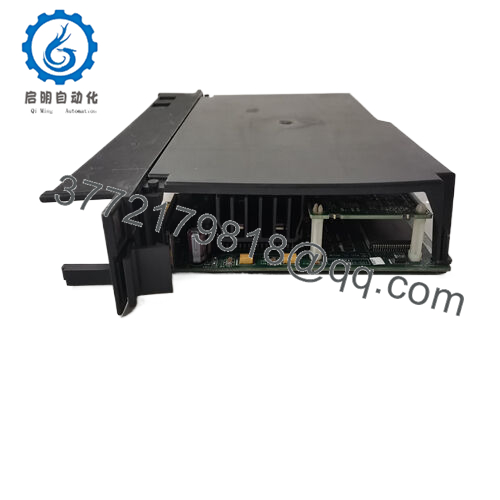
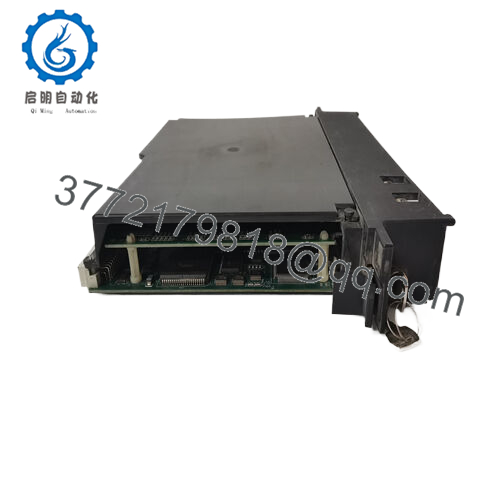
The GE ICG697CPX935-CD (commonly referenced as IC697CPX935-CD) serves precisely this role as a high-end, single-slot Central Processing Unit (CPU) in GE Fanuc’s Series 90-70 family. This 32-bit, floating-point processor delivers fast execution for complex ladder logic, function blocks, and motion control tasks, with built-in floating-point math acceleration and substantial user memory. It proves vital in retrofits, life extensions of brownfield systems, or when migrating legacy controls where full platform replacement isn’t feasible yet. By providing three serial ports and robust performance in a compact footprint, GE ICG697CPX935-CD extends the viability of Series 90-70 racks, reduces scan-time-related delays, and supports seamless integration with Genius I/O, Field Control, or legacy discrete/analog modules while preserving existing field wiring and I/O investment.
In the Series 90-70 rack architecture, the GE ICG697CPX935-CD occupies a single slot in the main CPU rack, interfacing directly with the backplane for high-speed access to all installed I/O modules (up to 12K points in any mix). It communicates with distributed Genius I/O blocks via a Genius bus controller (e.g., IC697BEM731), handles serial links to operator interfaces or modems through its three built-in ports (configurable for SNP, Modbus, or CCM protocols), and supports programming via GE’s Logicmaster 90 or VersaPro software. The CPU executes application code deterministically, manages interrupt-driven tasks, and provides diagnostics for bus faults, memory integrity, and runtime errors visible via LEDs or programming tools.
This positioning enables scalable, high-density configurations—pairing with expansion racks for remote I/O or additional modules—while maintaining compatibility with older Series 90-70 ecosystems. In redundant setups (with appropriate hardware), it contributes to fault-tolerant operation, though primary strength lies in standalone or simplex high-performance control. The design focuses on reliability in industrial settings, with no moving parts and robust thermal characteristics for extended service in non-conditioned cabinets.
| Specification | Details |
|---|---|
| Model Number | IC697CPX935-CD |
| Brand | GE Fanuc (now Emerson Automation) |
| Type | Single-Slot CPU (32-bit, floating-point) |
| Input Voltage | 5 V DC (backplane supplied) |
| Operating Temp Range | 0°C to +60°C (typical Series 90-70) |
| Mounting Style | Rack slot (Series 90-70 main rack) |
| Dimensions | Standard single-slot Series 90-70 form factor |
| Weight | Approx. 1–1.5 kg |
| Interface/Bus | Series 90-70 backplane; Genius bus compatible via controller |
| Compliance | CE, legacy industrial standards |
| Supported Protocols | SNP, Modbus RTU, CCM (via serial ports) |
| Typical Power Draw | 3.1 A at 5 V (approx.) |

- ICG697CPX935-CD
Adopting the GE ICG697CPX935-CD brings noticeable performance uplift to aging Series 90-70 systems—faster logic execution and larger memory support more sophisticated control strategies, tighter loops, and expanded data handling without rack changes. This directly translates to improved process stability, reduced cycle times in discrete or hybrid applications, and fewer bottlenecks during peak loads or data-intensive operations.
The CPU’s three serial ports simplify connectivity to legacy HMIs, printers, or modems, cutting custom interface costs and easing troubleshooting via direct terminal access. Its rugged, single-slot design withstands vibration and temperature variations common in plant floors, contributing to extended MTBF and lower unplanned downtime. For sites sustaining Series 90-70 platforms, GE ICG697CPX935-CD minimizes migration urgency, standardizes CPU spares across similar racks, and delivers long-term value through Emerson’s continued (though legacy) support ecosystem.
Legacy power generation facilities with Series 90-70 turbine controls use the GE ICG697CPX935-CD for sequencing, governor logic, and auxiliary monitoring, ensuring reliable execution in baseload or peaking units where critical system uptime prevents costly derates. Manufacturing and material handling lines deploy it in high-speed discrete control, managing large I/O counts and fast response requirements under continuous operation.
Process industries like chemicals or pulp & paper rely on GE ICG697CPX935-CD for batch or continuous loops in brownfield setups, where performance consistency and serial integration support operator oversight in noisy, distributed environments.
For compatible or alternative options within the Series 90-70 CPU family, consider:
IC697CPU772 – Lower-performance 32-bit CPU for less demanding applications
IC697CPM790 – Redundancy-capable CPU for hot-standby configurations
IC697CPU731 – Earlier 16/32-bit model with smaller memory footprint
IC697CPX928 – Similar high-end CPU with variations in speed or memory
IC697CPU915 – Mid-range option for balanced performance and cost
IC697BEM731 – Genius bus controller that pairs with CPX935 for distributed I/O
IC697CHS750 – Rack chassis commonly used with this CPU
IC697ACC600 – Expansion memory or accessory modules for enhanced capability
Before installing the GE ICG697CPX935-CD, confirm rack power supply capacity (ensure 5 V rail supports the 3.1 A draw) and backplane compatibility with other modules to prevent bus conflicts. Verify firmware revision matches your application software (Logicmaster/VersaPro), clear existing memory if repurposing, and configure serial ports per protocol needs during initial setup. Use proper ESD precautions and secure the module firmly in the slot.
Ongoing maintenance involves checking status LEDs for faults during routine inspections, monitoring battery-backed memory (replace lithium battery every 5–7 years), and verifying serial connections for corrosion in humid environments. Run diagnostics via programming software annually to check memory integrity and bus health. Failures are uncommon but often stem from power surges, battery depletion, or backplane wear; keep spares for critical systems given legacy status.