 WhatsApp: +86 16626708626
 Email:
  Phone: +86 16626708626
Description
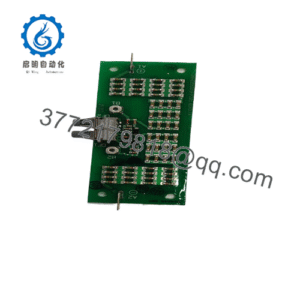
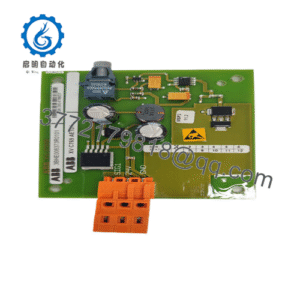
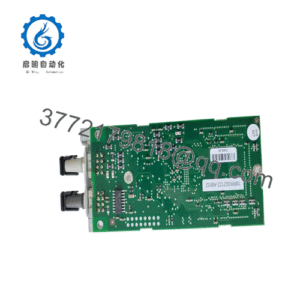
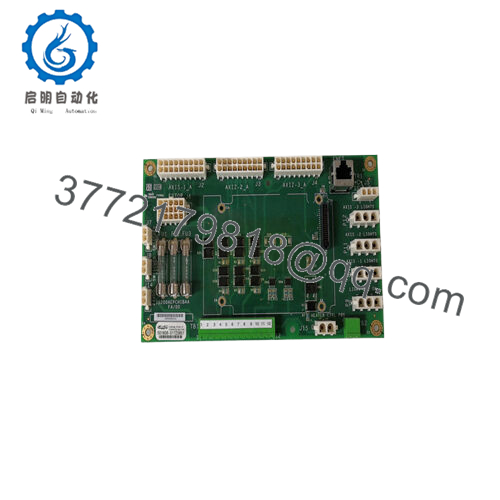
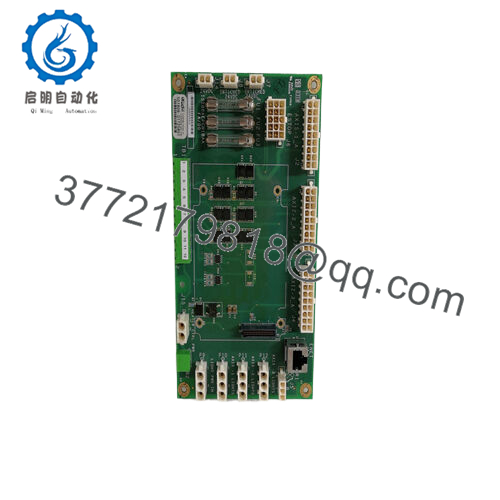
In power plants where turbine trips can cost millions in lost output, the GE IS200AEPAH1ACB steps up as the critical exciter power amplifier board, ensuring generators stay synchronized and stable under wild load swings. Turbine technicians in gas-fired stations or wind farms lean on it to deliver precise field excitation current, preventing voltage dips that scramble grids. Deployed in GE Speedtronic Mark VIe control systems, it handles the high-stakes job of boosting AC to DC for rotor fields, directly supporting everything from startup sequencing to protective dropouts during faults. Imagine a peaking plant ramping to meet evening demand: the GE IS200AEPAH1ACB ramps exciter output smoothly, dodging overfluxing while operators monitor via HMI overlays. In offshore wind arrays battered by salt spray, it thrives amid vibration and EMI, feeding stable power to IGBT bridges that drive megawatt-scale rotors. Used in industrial automation for heavy-duty turbine control, this board tackles challenges like harmonic distortion and thermal runaway in continuous-duty cycles. Engineers specify it for retrofit upgrades where legacy exciters falter under modern grid codes, integrating with IONet backbones for real-time diagnostics. Applicable in control systems from hydro dams to combined-cycle plants, the GE IS200AEPAH1ACB cuts field flashing times and holds synchronism during islanding—vital when black-start reliability defines plant contracts. Far beyond basic amplification, it empowers operators to push limits safely, scaling from 50MW frames to utility-scale fleets without hardware overhauls
Product Role in Turbine Control
The GE IS200AEPAH1ACB is an exciter power amplifier board from GE’s IS200 series, engineered as the muscle behind field excitation in Mark VIe turbine management platforms. It converts turbine-generated AC pilot power into regulated DC for the generator rotor, sitting at the core of the static exciter architecture alongside gate pulse boards and power bridges. Compatible with redundant VME racks in Speedtronic setups, it processes commands from the controller via fiber-optic IONet, adjusting output based on AVR feedback loops. Integrators value its drop-in fit for GE 9FA or Frame 7 turbines, where it handles pulse-width modulation for SCR or IGBT exciters, ensuring sub-1% voltage regulation. In simplex or dual configurations, the GE IS200AEPAH1ACB syncs with PDCC contactors and metering modules, offloading heat via chassis conduction. This positioning makes it indispensable for engineers modernizing legacy Mark VIs, bridging analog exciters to digital precision without full rack swaps. Conversational in its reliability, it supports Proficy Toolbox for tuning, letting teams dial in ceiling currents or under-excitation limits via laptop tweaks. Ultimately, it fortifies the excitation chain, turning volatile grid ties into predictable performance.
Core Strengths and Performance
Turbine leads praise the GE IS200AEPAH1ACB for its unflinching response—high-speed DSP logic modulates exciter pulses at 5kHz rates, slamming full field during disturbances to hold synchronism in under 50ms. Robust fiber inputs reject noise from arc flash zones, while onboard diagnostics ping controller racks with bit-mapped faults like overcurrent or pilot undervoltage, slashing mean-time-to-repair. Rugged FR4 board with conformal coating endures 60g shock and EMI from nearby busbars, mounting securely in ventilated VME slots.
Compact at 8×5 inches, the GE IS200AEPAH1ACB draws 15W from backplane rails, sipping power amid 125VDC environments—key for battery-backed blackout rides. Dual-channel design allows hot-swaps in TMR setups, with EEPROM-stored calibration surviving power glitches. Thermal fuses and crowbar circuits guard against bridge shorts, extending MTBF past 100,000 hours in dusty genset bays.
Reliability shines in diagnostics: soft-start ramps limit inrush to pilot transformers, and varistor clamps spike transients from generator faults. CE/UL certified for Class 1 Div 2, it pairs with Mark VIe’s SIL2 logic for grid-compliant operation, making integrators’ lives easier in IEC 61850 tie-ins.
Technical Specifications
| Parameter | Value |
|---|---|
| Model | GE IS200AEPAH1ACB |
| Brand | GE (General Electric) |
| Type | Exciter Power Amplifier Board |
| Series | IS200 / Speedtronic Mark VIe |
| Power Supply | 5 VDC or 24 VDC (backplane) |
| Power Consumption | 10-15 W maximum |
| Operating Temperature | -30°C to +70°C |
| Storage Temperature | -40°C to +85°C |
| Dimensions (W x H x D) | 200 x 150 x 25 mm |
| Weight | 0.4-0.76 kg |
| Interfaces | Fiber Optic IONet, Ethernet |
| Communication | Modbus TCP/IP, High-speed serial |
| Mounting | VME Rack / Plug-in |
| Certifications | CE, UL Class 1 Div 2 |
| Cooling | Conduction / Natural convection |

- IS200AEPAH1ACB
Compatible Products
- IS200EPCH1A – Pilot exciter channel board that feeds AC input directly to GE IS200AEPAH1ACB for staged power buildup.
- IS210BPBPG2A – Bridge personality board pairing for IGBT rectification in the same exciter stack.
- IS200AEPAG1A – Analog exciter variant for lower-power hydro apps, sharing firmware protocols.
- IS200AEPAH1ABB – Prior revision with enhanced EMI shielding, direct drop-in predecessor.
- IS210DMCIH1A – Mark VIe I/O module for AVR feedback loops tied to GE IS200AEPAH1ACB.
- IS200EDPH1A – Exciter door panel harness simplifying cabling to the amplifier board.
- IC695CPU315 – PACSystems CPU for hybrid controls interfacing via Ethernet with the exciter chain.|
Installation and Upkeep
Rack the GE IS200AEPAH1ACB into designated VME slots after verifying backplane continuity with a multimeter—loose pins cause 80% of field faults. Secure with ejector tabs and torque fiber connectors to 0.5 Nm; route pilots away from HV bus ducts using shielded trays. Preload EEPROM via ToolboxST over Ethernet channel, matching turbine model data like rated kVA and PF. Apply thermal joint compound under heatsinks if retrofitting, and stagger power-up with controllers to test pilot sequencing solo. Ground the chassis shield to rack frame, torqued at 9 in-lbs, dodging ground loops that mimic faults.
Quarterly inspections catch early wear: probe test points for ripple under load, and log diagnostic buffers for pilot dropouts or pulse asymmetry. Firmware pushes from USB stick take 5 minutes offline—mirror from redundant board first. Clean fiber ends with 99% IPA swabs yearly, as haze builds in humid plants. Cycle soft-start relays monthly via HMI to verify crowbar response; amber LEDs signal pilot loss instantly. This discipline wards off nuisance trips, pushing board life past a decade in turbine duty.