 WhatsApp: +86 16626708626
 Email:
  Phone: +86 16626708626
Description
The GE IS200EPDMG1BAA solves a critical vulnerability in excitation control for large generators: ensuring stable, protected, and redundant power delivery to the exciter cabinet’s control, I/O, and protection circuits without single points of failure that could trigger generator trips or force load shedding. In utility-scale power plants, combined-cycle facilities, or heavy industrial sites with synchronous generators, the excitation system must maintain field current reliably during normal operation, transients, and fault conditions. Power interruptions, voltage sags from station battery dips, or unprotected surges can destabilize voltage regulation, leading to AVR malfunctions, underexcitation, or overvoltage events that compromise grid stability or equipment integrity.
GE IS200EPDMG1BAA becomes essential when upgrading or maintaining EX2100 excitation systems integrated with Mark VI or Mark VIe turbine controls, where the power backbone needs to handle dual AC inputs (typically 120 V) alongside 125 V DC from station batteries, distribute regulated outputs to multiple boards (like EPSM, EPRO, EBKP), and incorporate fuse protection plus switchable isolation for maintenance. This module prevents cascading failures by conditioning and safeguarding power paths in noisy, high-current environments typical of generator halls. It supports high reliability demands in process control and industrial automation for power generation, reducing risk during black starts, load ramps, or emergency shutdowns where excitation power continuity is non-negotiable.
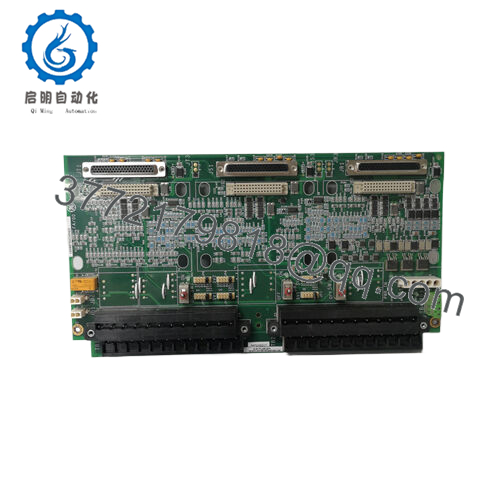
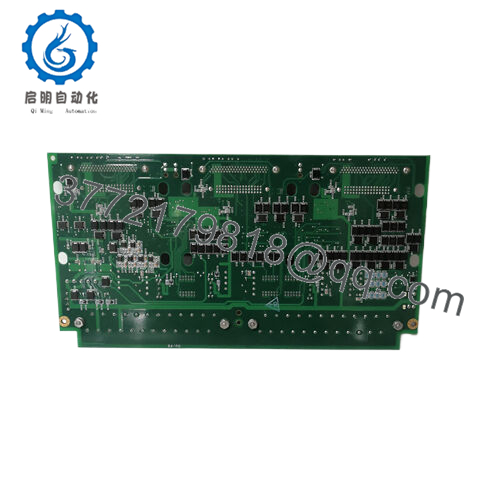
The GE IS200EPDMG1BAA functions as the Exciter Power Distribution Module (EPDM) in GE’s EX2100 static excitation control system, often paired with Mark VI/Mark VIe turbine platforms. It acts as the central power hub inside the exciter cabinet, receiving primary inputs from one or two 120 V AC supplies and/or 125 V DC station battery, then conditioning, filtering, and distributing fused, regulated power to downstream exciter components such as power supplies (EPSM), processor boards, I/O terminals, protection modules, and cooling fans. The board includes multiple fused branches (typically 14 fuses for overload/short-circuit protection), switches for isolating sections during servicing, and status LEDs for quick visual health checks.
Positioned as the entry point for all cabinet power in the EX2100 architecture, GE IS200EPDMG1BAA interfaces via terminal blocks and plug connectors to route DC outputs (e.g., 24 V or 125 V derived) and AC feeds without active conversion—relying on passive distribution, surge suppression, and grounding provisions to maintain signal integrity and EMC compliance in electrically harsh turbine environments. It supports simplex or redundant configurations, allowing dual AC feeds for failover and battery backup integration, ensuring uninterrupted excitation during grid disturbances or auxiliary power loss. In the broader automation stack, it sits upstream of the control processors and I/O, providing the reliable foundation that lets higher-level Mark VIe logic execute voltage regulation, field forcing, and protective functions with confidence.
| Specification | Details |
|---|---|
| Model Number | IS200EPDMG1BAA |
| Brand | GE (General Electric, now GE Vernova) |
| Type | Exciter Power Distribution Module (EPDM) |
| Input Voltage | 125 V DC (station battery), up to 2 × 120 V AC |
| Operating Temp Range | -30 °C to +65 °C (typical for EX2100/Mark VI boards) |
| Mounting Style | Cabinet-mounted, screw terminals and plugs |
| Dimensions | Approx. 26.1 × 18.6 × 2 cm (varies slightly by source) |
| Weight | Approx. 1–1.5 kg |
| Interface/Bus | Terminal blocks (24-point), 10 plug connectors, internal EX2100 wiring |
| Compliance | Industrial standards for power gen (CE, UL equivalents) |
| Supported Protocols | N/A (passive power distribution) |
| Typical Power Draw | Dependent on loads; handles up to 5–10 A per fused channel |

- IS200EPDMG1BAA
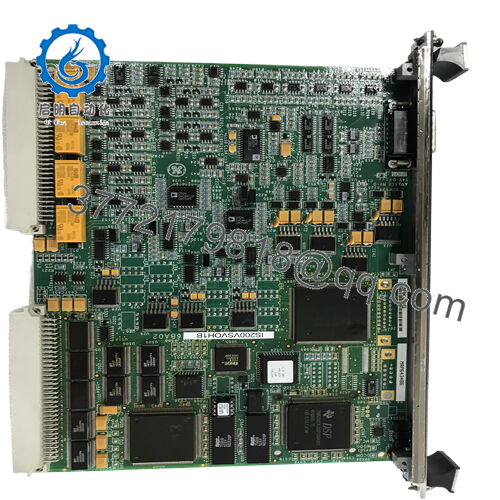
Opting for GE IS200EPDMG1BAA delivers rock-solid excitation power integrity that translates to fewer generator forced outages and more predictable voltage control. Engineered for the extreme demands of industrial automation in power generation, its fused protection, dual-input redundancy, and robust filtering ensure clean, stable supplies to sensitive exciter electronics, even during severe grid events or battery voltage droops—helping sustain AVR performance and avoid pole-slipping or loss-of-field conditions.
Maintenance crews appreciate the board’s clear LED status indicators and sectional switches, which allow safe isolation of power branches for troubleshooting or board swaps without full cabinet de-energization. This design reduces mean time to repair and simplifies compliance checks during outages. Over the lifecycle, GE IS200EPDMG1BAA lowers risk by standardizing power distribution across EX2100 cabinets, cutting spare parts complexity and supporting extended run times between major inspections in baseload or peaking operations.
GE IS200EPDMG1BAA is routinely deployed in gas turbine combined-cycle plants, where it powers exciter controls during frequent start/stop cycles and load following, maintaining field stability amid rapid transients. In coal or nuclear steam turbine facilities, it ensures continuous excitation for grid-synchronized generators under baseload conditions, where critical system uptime prevents costly derates or shutdowns. Heavy industrial sites like petrochemical plants or steel mills use it for turbine-driven generators in captive power setups, handling harsh electrical noise and vibration while supporting high reliability for uninterrupted process power. These applications leverage its dual-feed capability and protective features to keep excitation responsive in environments where generator availability directly affects production continuity.
IS200EPDMG1B – Base or closely related revision, often functionally equivalent
IS200EPDMG1AAA – Earlier suffix variant in EX2100 series
IS200EPSMG1A – Exciter Power Supply Module, often paired downstream
IS200EPMCH1 – EPMC control/bridge interface board in EX2100
IS200EBKPG1 – Backplane or expander board for exciter I/O
IS200ESELH – Selector board in redundant EX2100 setups
IS200EGDMH – Gate driver module, downstream power handling
IS200EXAMG – Exciter aux module, complementary in cabinet layout
Before installing GE IS200EPDMG1BAA, verify compatibility with your specific EX2100 cabinet revision and Mark VI/Mark VIe firmware—cross-check GE’s EX2100 manuals or toolboxST for input wiring, fuse ratings, and supported dual-AC configurations. Handle with ESD precautions, ensure proper grounding via mounting holes, and confirm terminal torque specs to avoid loose connections under vibration. Pre-installation, test incoming 125 V DC and 120 V AC sources for stability, and confirm airflow/cooling in the exciter cabinet meets requirements.
Ongoing maintenance involves periodic (quarterly to semi-annual) inspections: check fuse integrity visually and with continuity tests, verify LED statuses during operation, inspect terminals for corrosion or heat discoloration, and confirm switch positions align with operational needs. Annually, or per plant schedule, perform powered functional checks of distribution paths under load simulation, log any transient events from the exciter historian, and apply GE service advisories for component upgrades. Store spares in ESD-safe, climate-controlled conditions for immediate deployment during forced outages.