 WhatsApp: +86 16626708626
 Email:
  Phone: +86 16626708626
Description
In gas and steam turbine power plants where hundreds of pressure, level, and temperature transmitters sit out in heat-soaked pipe racks, the GE IS200TBAIH1CDC is the quiet backbone that gets those analog signals safely into the Mark VIe control system. It is used wherever operators need stable, noise-immune measurements from 4–20 milliamp loops and 1–5 volt transmitters feeding critical protection, sequencing, and performance logic. In combined-cycle units, the GE IS200TBAIH1CDC ties drum level, condenser vacuum, and fuel gas pressure devices back to the VAIC/PAIC analog input boards, ensuring that a single bad loop does not inject noise into the rest of the rack.
You will see this board in refinery compressors, pipeline pumping stations, and large boiler houses where simplex Mark VIe cabinets handle balance-of-plant logic, as well as in triple modular redundant (TMR) turbine control panels where reliability is paramount. In TMR applications, the GE IS200TBAIH1CDC fans each analog input out cleanly to three separate control racks (JR1, JS1, JT1), allowing each VAIC/PAIC module to see the same field signal and vote on it for fault tolerance. It also returns analog outputs and their feedback currents to the controllers, supporting valve positioners, pressure controllers, and other final control elements. Used in industrial automation and fully applicable in safety‑related control systems, this is the terminal interface that turns a complex field of transmitters into orderly, diagnosable analog channels the Mark VIe can trust.
Product Introduction & Positioning
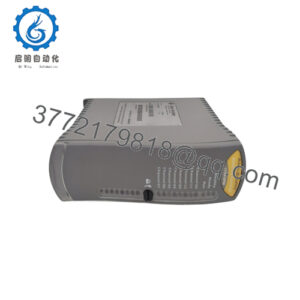
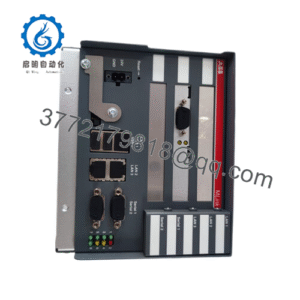
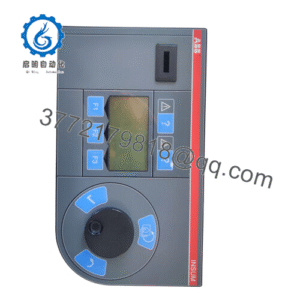
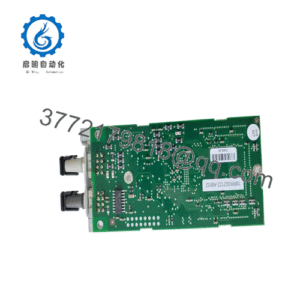
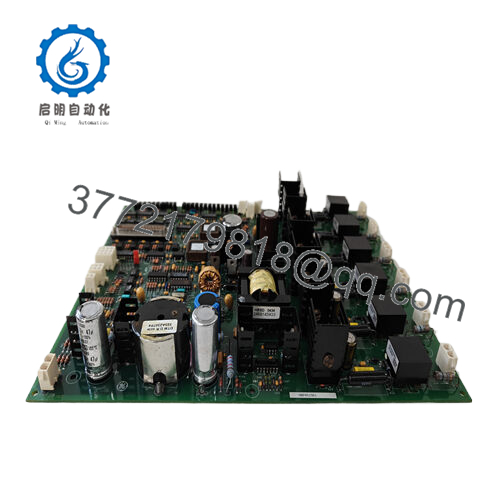
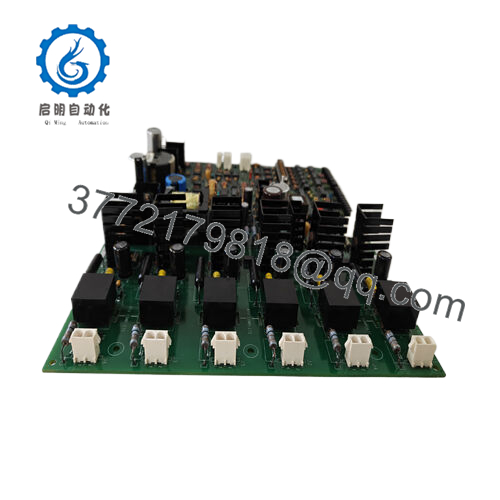
The GE IS200TBAIH1CDC is an analog input/output terminal board developed for GE’s Mark VI/Mark VIe turbine control systems. Functionally, it is the field termination layer for one VAIC or PAIC analog I/O controller: it collects up to ten analog inputs and two analog outputs from the controller card and routes them to field transmitters and control devices through clearly labeled screw terminals. The board handles the necessary signal conditioning at the terminal level, including current‑limiting, load resistors, and distribution of 24 V direct current loop power to connected instruments.
Within the control system architecture, the GE IS200TBAIH1CDC sits between the Mark VIe I/O controller (VAIC/PAIC) and the plant instrumentation marshalling points. In simplex systems it provides a straightforward point‑to‑point path for each channel; in TMR systems it becomes the hub for fanning the same analog signals to three independent racks, while diode‑sharing 24 V direct current supplies from each VAIC so that loss of one controller does not collapse transmitter power. For engineers and integrators, the GE IS200TBAIH1CDC is valuable because it turns a complex analog section into a standard, replaceable hardware slice: field wiring stays on the terminal board and the controller can be swapped without disturbing the instrument terminations, reducing outage time and wiring risk.
Key Technical Features & Functional Benefits
One of the main strengths of the GE IS200TBAIH1CDC is how it standardizes analog input characteristics for the Mark VIe platform. Each channel is designed for a 1–5 volt direct current input span, with onboard resistance networks to support both 4–20 milliamp and ±1 milliamp transmitter types via 250 ohm or 500 ohm burden resistors. This allows plant instrumentation teams to use the same terminal board for a range of device types without external shunt resistors or ad‑hoc panel hardware. The board also supports ±5 volt and ±10 volt direct current input ranges, making it suitable for specialty sensors and position feedback devices.
On the output side, the GE IS200TBAIH1CDC provides current loops rated for 4–20 milliamp or higher (up to 200 milliamp into 50 ohms), and it monitors output current with series resistors so the controller can detect open circuits, short circuits, or overloaded conditions. This feedback capability is especially useful for valve positioners and other critical final elements, where knowing the actual loop current is just as important as commanding it. In TMR configurations, the analog outputs are driven by currents from all three VAIC modules, improving fault tolerance and reducing the chance that a single card failure will pull down the loop.
From a hardware design perspective, the GE IS200TBAIH1CDC is built for dense, reliable mounting in turbine control panels. It is compact—approximately 100 millimetres wide by 125 millimetres high by 25 millimetres deep, with a weight around 0.25 kilograms—yet it supports twelve channels and associated power distribution while consuming less than 31 watts. Connectors on the board carry identification devices that store the board type, serial number, revision, and connector location (JR, JS, JT), which the PAIC/VAIC interrogates at power‑up. If there is any mismatch—for example, a wrong board type or incorrect connector location—the system raises a hardware incompatibility fault, helping technicians avoid configuration errors during maintenance.
In the long term, the GE IS200TBAIH1CDC contributes heavily to reliability. The design supports simplex or TMR operation without requiring different part numbers, and the diode‑shared 24 V direct current supplies from three VAICs provide redundancy for transmitter power in TMR applications. The terminal board’s analog circuitry and noise suppression features are optimized for turbine environments, where electrical noise, temperature variation, and vibration are constant factors. By centralizing analog signal handling and integrating self‑identification and fault reporting, the board helps keep the Mark VIe system diagnosable and maintainable across the full service life of the turbine.

- IS200TBAIH1CDC
Detailed Technical Specifications
| Parameter | Value |
|---|---|
| Model | GE IS200TBAIH1CDC |
| Brand | General Electric (Mark VI/Mark VIe series) |
| Type | Analog Input/Output Terminal Board |
| Power Consumption | Less than 31 watts |
| Number of Channels | 12 channels (ten analog inputs, two analog outputs) |
| Input Span (Transmitters) | 1–5 volt direct current |
| Supported Input Types | 4–20 milliamp, ±1 milliamp, ±5 volt direct current, ±10 volt direct current |
| Input Burden Resistance | 250 ohms for 4–20 milliamp, 500 ohms for ±1 milliamp |
| Output Load Capability | 500 ohms for 4–20 milliamp, 50 ohms for 200 milliamp |
| Operating Temperature | Approximately –30 to +65 degrees Celsius |
| Mounting | Mark VI/Mark VIe control panel terminal board mounting |
| Dimensions | About 100 mm wide x 125 mm high x 25 mm deep |
| Weight | Approximately 0.25 kilograms |
| System Application | Supports simplex and triple modular redundant configurations |
Related Modules or Compatible Units
IS200VAICH1A – Primary analog input controller board that connects to the GE IS200TBAIH1CDC for signal acquisition and output control.
IS200PAICH1A – Peripheral analog input/output controller used in Mark VIe systems, working closely with the GE IS200TBAIH1CDC for diagnostics and connector identification.
IS200TBAIH1CCC – Related terminal board variant with similar function but different revision or connector configuration, often interchangeable in compatible panels.
IS200TBQEH1 – Digital or mixed I/O terminal board typically mounted in the same Mark VIe rack to handle non‑analog signals.
IS200AEPSG2A – Power supply module providing the regulated 24 V direct current used by transducers connected through the GE IS200TBAIH1CDC.
IS200VTURH1 – Speed and vibration terminal board that complements analog process inputs for complete turbine monitoring.
Installation Notes & Maintenance Best Practices
Before installing the GE IS200TBAIH1CDC, integrators should verify that the associated VAIC or PAIC analog controller is the correct type and revision, and that the rack and connector locations (JR, JS, JT) match the project configuration documentation. The board must be mounted with sufficient clearance for cable entry and label visibility; the compact footprint helps, but allowing room around the terminal area simplifies loop checks and later maintenance. All 4–20 milliamp and voltage loops should be landed with attention to polarity and shielding, with shields bonded at a single point as per Mark VIe grounding practices to minimize noise coupling from nearby power cables or variable‑frequency drives. In TMR systems, the three associated VAIC/PAIC boards must have their 24 V direct current supplies properly diode‑shared into the GE IS200TBAIH1CDC, and loop checks should confirm that loss of one controller does not remove transmitter power.
During operation, maintenance teams should incorporate the GE IS200TBAIH1CDC into periodic inspections, focusing on connector integrity, terminal tightness, and evidence of corrosion or contamination in turbine enclosures. Reviewing controller diagnostic alarms for analog channel faults, connector ID mismatches, or output current anomalies will often pinpoint issues at the terminal board before they manifest as process trips. When replacing the board, technicians should pay attention to the built‑in identification devices on each cable connector; if the PAIC detects a mismatch in board type, serial number, or connector location, it will raise a hardware incompatibility fault that must be resolved before returning the panel to service. Documenting any changes to channel use, burden resistors, or transmitter ranges ensures long‑term traceability and smoother future upgrades.