 WhatsApp: +86 16626708626
 Email:
  Phone: +86 16626708626
Description
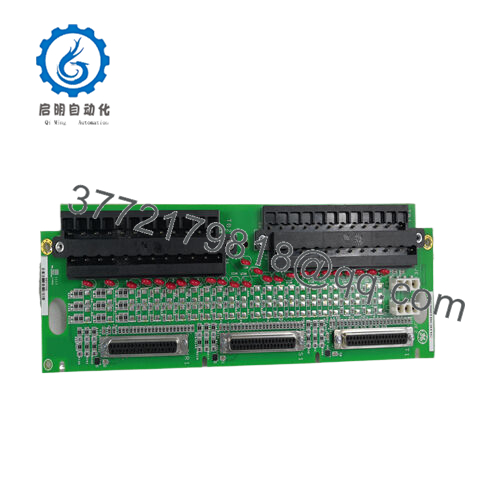
In gas and steam turbine power plants where dozens of limit switches, pressure switches, and auxiliary contacts scatter across noisy auxiliary skids, the GE IS200TDBSH2AAA sits quietly between that harsh field wiring and the Mark VI control cabinet, making discrete signals usable and dependable. You will find it on lube oil skids watching pump permissives, in hydraulic power units tracking solenoid feedbacks, and on cooling water systems verifying valve end stops—all places where a single misread contact can block a start sequence or trigger a nuisance trip during a critical dispatch. Used in industrial automation and widely applicable in turbine control systems, the GE IS200TDBSH2AAA is designed to gather groups of 24 V direct current discrete points, present them cleanly to Mark VI I/O packs, and, in many installations, “fan” one sensor to multiple input boards to support higher integrity voting.
Engineers choose the GE IS200TDBSH2AAA when they need a robust discrete terminal solution that supports simplex architectures but still allows medium‑integrity schemes. One field device—like a pressure switch on a critical bearing header—can be wired once into this board, then electrically distributed to up to three separate I/O modules, each in its own control rack. That reduces field wiring complexity while still enabling redundancy where the sensor itself is reliable but the downstream electronics require diversity. In balance‑of‑plant applications around the turbine, it helps organize dozens of on/off points into structured terminal groups, simplifying both commissioning checks and later troubleshooting when maintenance teams have minutes, not hours, to find a bad contact before the unit is due back online.
Product Introduction & Positioning
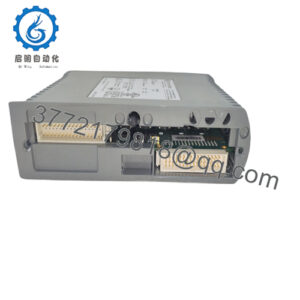
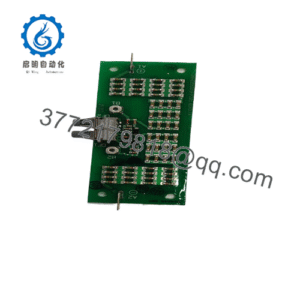
The GE IS200TDBSH2AAA is a discrete input/output terminal board intended for use in General Electric’s Mark VI turbine control system family. Functionally, it is a field termination and distribution module: it accepts groups of 24 V direct current discrete signals from switches and contacts and routes them into Mark VI I/O modules, while providing the necessary isolation, grouping, and wiring convenience required in turbine panels. The “H2” hardware revision is associated with simplex discrete configurations, where the board supports a single path from field to logic, but the design still allows one sensor input to be fanned out to three different I/O boards for medium‑integrity strategies.
Within a Mark VI architecture, the GE IS200TDBSH2AAA typically mounts in the terminal section of the control cabinet, aligned with the associated discrete input or mixed I/O modules. The board forms the physical and electrical interface between plant wiring (from junction boxes and marshaling cabinets) and the plug‑in I/O packs, ensuring that each contact is properly referenced to the system’s 24 V direct current supply and returns. Its value for integrators lies in this standardization: instead of custom terminal strips and ad‑hoc jumpers, they get a documented, replaceable board designed and tested to operate with Mark VI discrete modules, including clear labeling, known ratings, and defined fan‑out schemes.
Key Technical Features & Functional Benefits
The GE IS200TDBSH2AAA is built around 24 V direct current discrete logic, which is the norm in turbine and balance‑of‑plant applications. Each channel is suitable for typical dry contact inputs that close to 24 V direct current, and the board groups these inputs to share a common supply and return, simplifying power distribution and fuse protection. Because the board is designed specifically for Mark VI discrete modules, engineers can rely on known thresholds and leakage characteristics, reducing guesswork when setting up permissives and interlocks.
A standout functional benefit of the GE IS200TDBSH2AAA is the ability to fan a single sensor to up to three I/O boards. This is used in “medium‑integrity” designs where the sensor itself is considered highly reliable, but designers want independent I/O channels—perhaps across different controllers or voting groups—to improve fault tolerance. Instead of wiring the same contact three times through separate terminal blocks, the board provides a structured way to branch that signal, with defined paths and known loading, reducing wiring errors and keeping the panel layout clean.
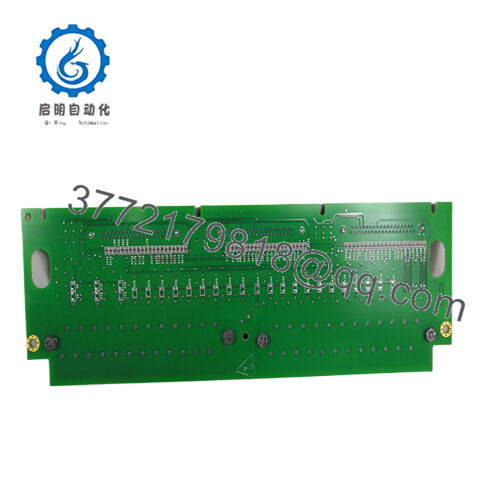
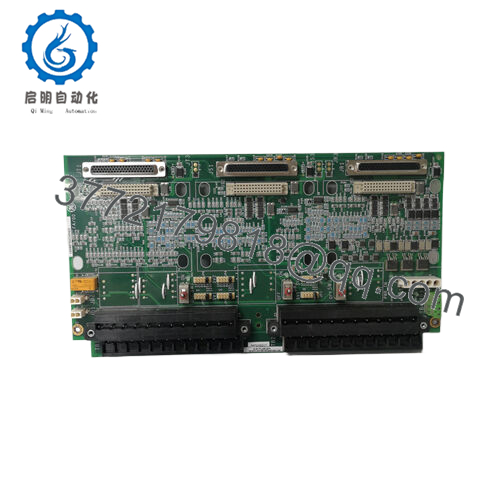
From a hardware perspective, the GE IS200TDBSH2AAA is laid out for DIN‑rail or flat mounting in turbine cabinets, which helps panel builders adapt to different cabinet designs and depth constraints. The terminal board form factor provides screw or clamp terminals for field wiring on one side and connector interfaces to the I/O modules on the other, so technicians can isolate or replace an I/O pack without disturbing the field connections. Operating temperature capability typically spans from approximately –40 to +70 degrees Celsius, aligning with Mark VI expectations for turbine‑hall installations where ambient conditions can shift significantly.
Over the lifecycle of the control system, the GE IS200TDBSH2AAA supports long‑term reliability by using proven terminal technologies and by localizing the discrete signal conditioning to a dedicated board. If terminals age, corrode, or suffer mechanical damage, the board can be swapped as a field‑replaceable unit while leaving upstream I/O packs and controllers untouched. That separation of concerns helps plant owners manage spares and maintenance more efficiently, especially in fleets where multiple units share the same Mark VI hardware set.

- IS200TDBSH2AAA
Detailed Technical Specifications
| Parameter | Value |
|---|---|
| Model | GE IS200TDBSH2AAA |
| Brand | General Electric (Mark VI series) |
| Type | Simplex Discrete Input/Output Terminal Board |
| Typical Input Voltage | 24 volt direct current discrete contacts |
| Application | Simplex discrete I/O, with fan‑out to multiple I/O boards |
| Mounting | DIN‑rail or flat panel mounting in Mark VI control cabinets |
| Operating Temperature Range | Approximately –40 to +70 degrees Celsius |
| Power System | 24 volt direct current wetting for switches and contacts |
| Fan‑out Capability | One sensor can be fanned to three I/O boards for medium‑integrity use |
| System Compatibility | Mark VI turbine control discrete input/output modules |
| Functional Role | Field termination and signal distribution for discrete I/O |
| Environmental Use | Turbine and balance‑of‑plant enclosures in industrial environments |
Related Modules or Compatible Units
IS200TDBSH2A – Base part designation for the same discrete simplex terminal board family, often used interchangeably with GE IS200TDBSH2AAA depending on revision and ordering code.
IS200TDBTH2A – Related discrete I/O terminal board for Mark VIe systems, serving similar roles in newer architectures.
IS220PDIAH1B – Mark VIe discrete input I/O module that uses dedicated terminal boards for field connection, conceptually similar in function.
IS220PDIOH1B – Discrete input/output I/O module whose field wiring is landed on compatible terminal boards like the GE IS200TDBSH2AAA in legacy systems.
IS200TBCIH2C – Terminal board for isolated discrete inputs, complementary when mixed isolated/non‑isolated schemes are required.
IS200AEPSG2A – Power supply module providing 24 volt direct current used to wet discrete inputs through the GE IS200TDBSH2AAA.
(Where direct pairings are not explicitly listed, the related part numbers above reflect typical Mark VI discrete I/O and terminal board ecosystem components.)
Installation Notes & Maintenance Best Practices
When planning installation of the GE IS200TDBSH2AAA, integrators should start by grouping discrete signals logically—such as start permissives, auxiliary contacts, or limit switches—so that field wiring can be routed cleanly to the appropriate groups on the board. The board is designed for DIN‑rail or flat mounting, so cabinet layout should allow enough front access for terminations and for visual inspection of labels and any on‑board status indicators. All 24 volt direct current wetting supplies should be fused appropriately and referenced to the control system ground per Mark VI grounding practices, with shielded cables used in high‑noise areas and shields bonded at a single point. In medium‑integrity arrangements, extra care is needed when fanning a single sensor to multiple I/O packs to ensure that each branch is clearly labeled and documented.
For maintenance, the GE IS200TDBSH2AAA should be included in routine visual inspections, checking for loose screws, discoloration, or contamination on terminals, especially in turbine compartments where oil mist and vibration are commonplace. Periodic functional testing of key contacts—such as start/stop permissives and trip switches—should be carried out from the field device through to the controller diagnostics to confirm that both the wiring and the terminal board are performing as expected. If an I/O module is replaced, technicians should verify that the fan‑out wiring and referencing on the GE IS200TDBSH2AAA remain correct and that no inadvertent cross‑connections have occurred. Keeping wiring diagrams up to date and noting any changes to fan‑out schemes will make future fault‑finding and upgrades far smoother.