 WhatsApp: +86 16626708626
 Email:
  Phone: +86 16626708626
Description
In utility‑scale gas and steam turbine plants, power quality inside the control cabinet is just as critical as grid power outside. Surges, brownouts, or noisy auxiliary feeds can cause nuisance trips, relay chatter, or loss of diagnostic data—issues that are expensive to chase and easy to overlook. The GE IS200WETCH1AAA is designed specifically to address that hidden vulnerability. It sits in Mark VI Speedtronic cabinets as a dedicated converter power module and auxiliary power distribution board, taking in “rough” direct current or alternating current from turbine sources and turning it into clean, stable rails for the control electronics. In combined‑cycle units, the GE IS200WETCH1AAA typically supplies conditioned power to discrete I/O, analog conditioning boards, communication modules, and smaller auxiliary loads that must keep working during grid disturbances and turbine transients.
In gas turbine packages and mechanical‑drive sets in oil and gas or petrochemical plants, the GE IS200WETCH1AAA is used where long cable runs, inverter supplies, or generator‑derived buses introduce ripple, spikes, and ground noise. By converting and isolating incoming power before it reaches sensitive circuitry, it helps keep vibration monitoring, flame detection, valve actuation feedback, and critical logic rails stable even when upstream power is far from ideal. Used in industrial automation and fully applicable in turbine control systems, it becomes a quiet reliability layer: when it does its job, sequence logic, protection, and performance monitoring behave predictably and operators see fewer inexplicable faults in the Mark VI environment. For plant engineers under pressure to deliver availability and clean trip records, that stability is a major practical benefit.
Product Introduction & Positioning
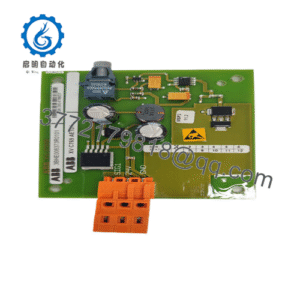
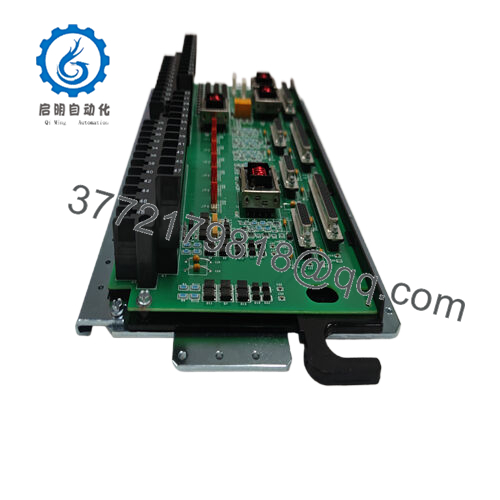
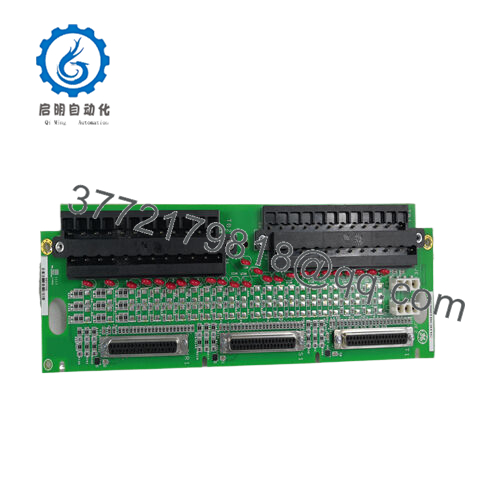
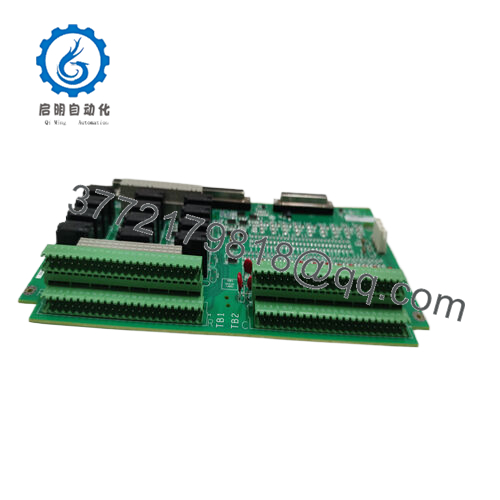
The GE IS200WETCH1AAA is a converter power module and auxiliary power distribution board developed for GE’s Mark VI Speedtronic turbine control platform. Functionally, it is not a CPU or I/O processor but a dedicated power conditioning and distribution printed circuit board. It accepts flexible input power—typically from cabinet direct current links or alternating current–derived feeds specified in the Mark VI design—and uses onboard transformers, regulators, inductors, capacitors, diodes, and fuses to create multiple regulated, isolated outputs. These outputs are tailored to supply auxiliary loads such as logic power rails, sensor excitation, relay circuits, and local electronics near the control processors.
Within the control system architecture, the GE IS200WETCH1AAA is usually mounted in the power section or “top box” area of the Mark VI cabinet. It interfaces through terminal strips and board connectors rather than through a processor backplane, and it sits logically between the main power supply hardware and the downstream control and I/O boards. That means it shapes and distributes power without carrying out any application logic itself. For system integrators and maintenance engineers, this positioning is valuable: it centralizes auxiliary power conditioning into a field‑replaceable module, reducing the need for bespoke panel‑level power solutions and making troubleshooting more straightforward when issues arise in low‑voltage control circuits.
Key Technical Features & Functional Benefits
A core strength of the GE IS200WETCH1AAA is its multi‑regulator design. The board is populated with numerous voltage regulators and associated passive components that step, filter, and stabilize the incoming source into several clean rails, so different loads (discrete inputs, analog signal conditioning, communications, and logic) can be powered with appropriate levels and isolation. This directly improves noise immunity: ripple and transients from generators, inverters, or long feeder cables are significantly attenuated before they reach sensitive electronics, which in turn reduces spurious alarms, erratic relay behavior, or intermittent communication faults.
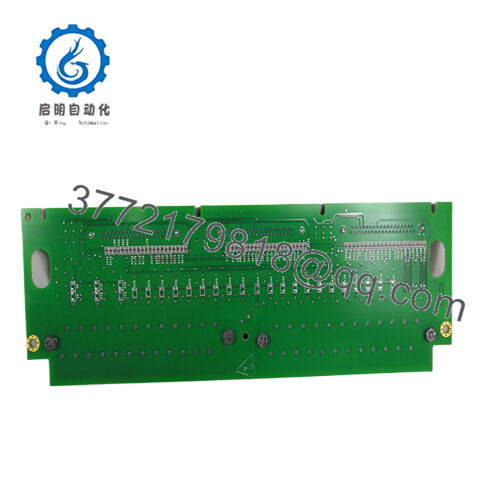
The hardware layout of the GE IS200WETCH1AAA is engineered for turbine cabinet realities. The board incorporates at least one isolation transformer, multiple fuses (typically arranged as pairs feeding different sections), and heat‑dissipating components sized for the expected thermal loads. It is a compact printed circuit assembly, roughly 26 cm by 19 cm with a low profile, designed for rack or panel mounting with terminal strips providing clear input and output wiring points. This compact footprint allows installation in crowded Mark VI racks without compromising airflow, while the use of terminal strips simplifies field wiring and later replacement.
Because the GE IS200WETCH1AAA is a passive power module rather than an intelligent processor, it introduces few additional points of logical failure. It does not require firmware configuration, software downloads, or network addressing. Once wired according to GE’s Mark VI schematics, it simply converts and distributes power as specified. That simplicity is a benefit in high‑availability turbine systems, where every configurable component represents potential misconfiguration risk. Over the long term, its rugged construction—industrial‑grade components, suitable creepage/clearance distances, and mechanical robustness—helps it withstand vibration, temperature cycling, and electrical stress common in turbine halls, contributing to higher mean time between failures for the overall control system.
Another important benefit is compatibility with both simplex and redundant Mark VI designs. Although the GE IS200WETCH1AAA itself does not implement redundancy logic, it is designed to work within architectures that include simplex, dual, or triple‑modular‑redundant controllers and I/O. By providing clean, dependable auxiliary power across these configurations, it supports the modular scaling of Mark VI systems without major redesign of the power conditioning layer.

- IS200WETCH1AAA
Detailed Technical Specifications
| Parameter | Value |
|---|---|
| Model | GE IS200WETCH1AAA |
| Brand | GE (General Electric), Mark VI Speedtronic series |
| Type | Converter Power Module / Auxiliary Power Distribution Board |
| Input Voltage | Flexible direct current or alternating current–derived sources (per Mark VI cabinet design) |
| Output Function | Multiple regulated, isolated auxiliary power rails for control circuits |
| Operating Temperature | Typically –20 °C to +60 °C (cabinet‑dependent Mark VI standard) |
| Mounting Style | Rack‑mounted or panel‑mounted printed circuit board with terminal strips |
| Dimensions | Approx. 26 cm × 19 cm × 2–5 cm (compact Mark VI form factor) |
| Weight | Approx. 0.3–0.5 kg |
| Interfaces / Bus | Terminal strips for inputs/outputs; board‑level connectors for distribution |
| Cooling | Natural convection, with heat‑dissipating components on board |
| Environmental Rating | Industrial, vibration‑resistant; CE‑type compliance typical for Mark VI series |
| Typical Power Draw | Dependent on connected load; low inherent consumption due to efficient regulation |
Related Modules or Compatible Units
IS200WETAH1AEC – Variant in the same family, focusing on similar auxiliary power conversion tasks within Mark VI cabinets.
IS200WEMAH1ACA – Enhanced auxiliary management module often used alongside GE IS200WETCH1AAA for broader power/control coordination.
IS200CPFPG1AAA – Control power supply or fuse/protection board that feeds or complements the auxiliary rails from GE IS200WETCH1AAA.
IS200BPIHH1AAA – Bridge/interface power board used in related exciter or control power paths, integrating with the same turbine control stack.
IS200AVGAG1A – Gate driver or amplifier‑related board relying on conditioned power from modules such as GE IS200WETCH1AAA in turbine systems.
IS200DAMBG1A – Driver/amplifier module that pairs with auxiliary power distribution for actuator or power‑electronics control.
Installation Notes & Maintenance Best Practices
Before installing the GE IS200WETCH1AAA, engineers should verify that the planned input source—whether a direct current link or an alternating current–derived feed—matches the voltage range, polarity, and grounding scheme specified in the Mark VI cabinet documentation. Terminal strip assignments for inputs and each conditioned output need to be cross‑checked against the GE wiring diagrams to ensure the correct loads are placed on the appropriate regulated rails. Because the board hosts regulators and a transformer, the cabinet layout should leave enough clearance around the module for heat to dissipate and for cables to be neatly routed without obstructing airflow. Coordinating overall cabinet power—so that upstream power supplies, protection devices, and this converter board share a coherent grounding and protection scheme—is critical to avoid nuisance trips or overloads.
From a maintenance standpoint, the GE IS200WETCH1AAA should be included in periodic visual inspections, looking for signs of overheating (discoloration near regulators or the transformer), loose terminal screws, or contamination from dust and oil mist. Checking the condition of the onboard fuses and verifying that output voltages remain within tolerance under typical and peak loads can catch issues early, especially in plants with frequent grid disturbances. Since the board itself requires no firmware or configuration, replacement is largely a matter of safe power isolation, wiring verification, and mechanical swap; documenting terminal assignments and having a pre‑labeled spare on hand can reduce outage time significantly. Keeping accurate records of installation dates, load assignments, and any observed power anomalies will help guide predictive maintenance and fleet‑wide reliability improvements.