 WhatsApp: +86 16626708626
 Email:
  Phone: +86 16626708626
Description
In wind farms where turbine yaw drives battle gusts up to 50 m/s to keep blades perpendicular to prevailing winds, a communication dropout between nacelle controllers and grid-tie inverters can cascade into grid faults, shedding megawatts and invoking penalties. Solar tracker fields spanning acres demand bridge interfaces that fuse SCADA oversight with string converters, optimizing tilt angles without latency that forfeits peak sun hours. Hydrokinetic arrays in tidal channels coordinate pitch mechanisms amid saltwater corrosion, needing robust data conduits to synchronize power curves across submerged nodes. The GE IS210AEBIH1ADC addresses these renewable energy challenges in industrial automation as an Alternative Energy Bridge Interface Board for Mark VIe systems, shuttling Ethernet packets and serial protocols to orchestrate inverter commands and sensor fusion. Used in industrial automation for wind turbine control and power conversion, it embeds in nacelle cabinets, applicable in control systems from 2 MW onshore to 12 MW offshore platforms.
Gas peaking plants retrofitting with hybrid storage use the GE IS210AEBIH1ADC to link battery BMS to gas turbine sequences, balancing ramp rates during frequency regulation. Biomass gasifiers deploy it for syngas cleanup skids, polling flame temps over RS-485 while streaming Ethernet diagnostics to central HMIs. EV charging hubs leverage its protocol translation for DC fast-charger fleets, aggregating kWh meters into demand response signals. In these dynamic grids, the board supports Modbus TCP/RTU bridging with 10BaseT Ethernet, enabling sub-second polls that prevent curtailments. Field teams choose it for drop-in swaps into legacy enclosures, preserving nacelle wiring during repowers.
Off-grid microgrids benefit from the GE IS210AEBIH1ADC‘s reset switch for field reboots, maintaining islanded stability amid diesel genset handoffs. Geothermal binary cycles use it to marshal ORC expander feedbacks, correlating brine flows to heat rejection curves. By knitting serial islands into Ethernet fabrics for industrial automation, it unlocks predictive analytics, lifting capacity factors from 92% to 97% in variable renewables.
Product Introduction & Positioning
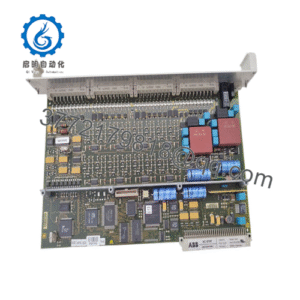
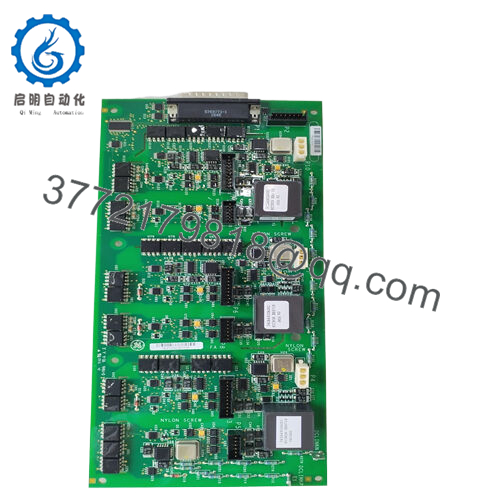
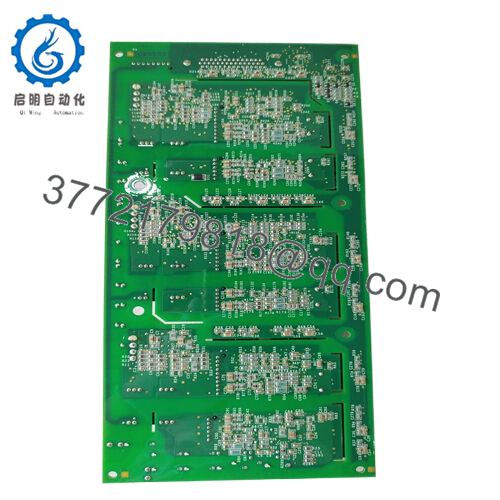
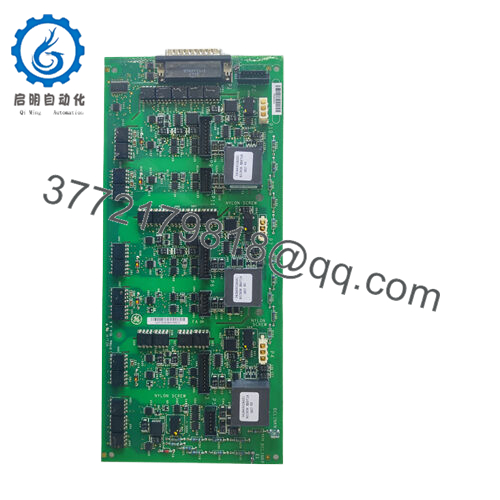
The GE IS210AEBIH1ADC acts as a compact bridge interface board in GE’s Mark VIe turbine controls, converting between 10BaseT Ethernet and dual COM ports (RS-232/RS-485) for legacy device integration in wind and alternative energy apps. Featuring a single reset button and GE silkscreening, it mounts via corner holes in VME or DIN enclosures, handling Modbus, SNP, and serial I/O passthrough to link inverters, trackers, or met stations to IONet backplanes. In nacelle stacks, the GE IS210AEBIH1ADC proxies tag data bidirectionally, supporting up to 10 concurrent sessions for HMI refreshes.
Positioned for hybrid renewables, the GE IS210AEBIH1ADC slots downstream of RTVI processors, auto-negotiating duplex for EGD-like exchanges over twisted-pair. Integrators tap its versatility for brownfield wind farms, bridging Series 90 PLCs to Proficy without gateway boxes. Value stems from plug-and-play headers matching AE daughtercards, with onboard diagnostics lighting faults via Toolbox.
For architects, the GE IS210AEBIH1ADC extends Mark VIe to edge IIoT, tunneling OPC UA over serial for cloud historians. Half-height form aids dense converter bays, positioning it as the glue for multi-vendor microgrids where Ethernet meets legacy RS-485

- IS210AEBIH1ADC
- IS210AEBIH1ADC
Key Technical Features & Functional Benefits
Turbine techs rely on the GE IS210AEBIH1ADC‘s isolated serial transceivers, surviving 2kV surges from lightning-struck guy wires while delivering 115.2 kbps async baud rates error-free. Ethernet PHY clamps packets to 100 Mbps half-duplex, buffering 64 KB for bursty inverter polls without drops. Reset switch forces clean reboots mid-gust, restoring comms in seconds versus full power cycles.
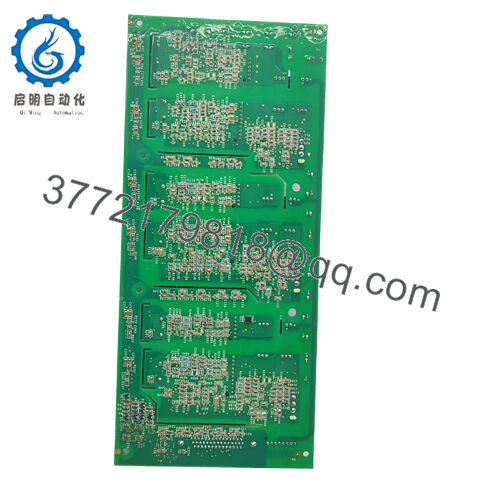
Low-profile PCB (29x13cm) fits behind panels with 2.7cm depth, drawing <2W from 5V rails—fanless for IP65 nacelles. Dual COMs daisy-chain up to 32 drops via multi-drop RS-485, with configurable parity/stop bits matching ABB or Siemens drives. Front Ethernet RJ45 auto-MDIX skips crossover cables, easing installs on swaying hubs.
Ruggedness includes conformal coating for 95% RH salt fog, with MTBF >150K hours per Bellcore. Self-test on boot flags PHY link or UART overruns via status pins, slashing ladder climbs. Firmware-upgradable over Ethernet adapts to new protocols like DNP3, future-proofing 25-year turbine lives.
Detailed Technical Specifications
| Parameter | Value |
|---|---|
| Model | GE IS210AEBIH1ADC |
| Brand | GE (Emerson) |
| Type | Alternative Energy Bridge Interface |
| Power Supply | +5 VDC (0.4A max) |
| Operating Temperature | -40°C to +85°C |
| Mounting | PCB standoffs, corner holes |
| Dimensions | 292 x 130 x 27 mm (L x W x H) |
| Weight | 0.32 kg |
| Interfaces | 10BaseT Ethernet, 2x COM (RS232/485) |
| Certifications | CE, UL, Class I Div 2 |
| Cooling | Passive |
| Environmental Rating | IP20, 5-95% RH non-condensing |
Related Modules or Compatible Units
RTVI – Processor board docking the GE IS210AEBIH1ADC for serial-to-IONet conversion.
IS210AEBIH1BED – Enhanced variant with faster Ethernet for GE IS210AEBIH1ADC upgrades.
IS200WETBH1B – Wind Ethernet terminal pairing with GE IS210AEBIH1ADC in nacelle drops.
FG-151X – Line-side IGBT interface bridged by GE IS210AEBIH1ADC in converters.
IS210AEAAH1B – Analog expander sharing rack space with GE IS210AEBIH1ADC.
Proficy Machine Edition – Software configuring GE IS210AEBIH1ADC mappings.
IS215AEPCH1D – Power converter board linked via GE IS210AEBIH1ADC serial.
Installation Notes & Maintenance Best Practices
Secure the GE IS210AEBIH1ADC with M3 standoffs in slot 4-7, orienting Ethernet away from high-current busbars—apply ferrite clamps on Cat5 to suppress 150 kHz VFD noise. Crimp 24 AWG to DB9 pins per RS-485 polarity (A+, B-), limiting stubs <50m total. Ground via mounting holes single-point to chassis <1 ohm; preload firmware via JTAG before sealing. Verify link LEDs post-power, pinging 192.168.x.x defaults to baseline throughput.
Biannual inspections swab gold fingers with no-residue IPA, checking for green patina from nacelle humidity. Quarterly, loop Modbus queries via HMI, timing responses—reboot if >200ms latency signals buffer overflows. Annual EEPROM reads confirm config retention; flash patches offline per GE alerts. Ethernet cable pulls test continuity, swapping if IL >2 dB from bird strikes.