 WhatsApp: +86 16626708626
 Email:
  Phone: +86 16626708626
Description
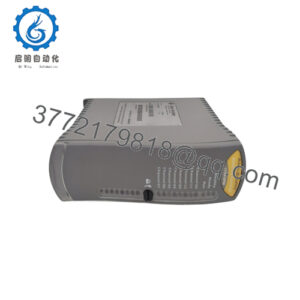
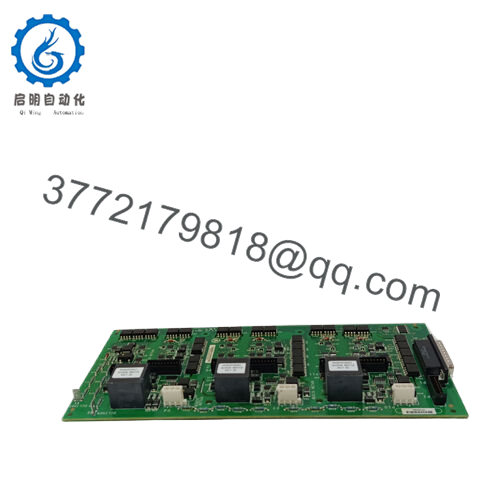
The GE IS210AEBIH1BED addresses a key need in GE turbine control architectures: providing a specialized bridge interface for analog excitation or feedback signals in wind turbine or gas/steam turbine applications, where precise signal acquisition and processing are essential for reliable operation and protection.
In industrial automation for power generation—especially GE Mark VI or Mark VIe systems in wind turbines or integrated turbine controls—engineers often face challenges with interfacing bridge circuits (e.g., for strain, position, excitation, or analog feedback) alongside additional digital inputs for status or limit monitoring. Issues like signal noise from long runs, ground potential differences, or limited expansion on standard I/O boards can lead to inaccurate feedback, false alarms during variable wind loads or turbine synchronization, or reduced system responsiveness in dynamic conditions.
The GE IS210AEBIH1BED becomes essential when your Mark VI/Mark VIe rack requires an AE Bridge Interface card (AEBI designation) that combines analog bridge signal handling with digital input expansion, often tailored for wind turbine control or similar applications needing high-integrity feedback loops. It’s particularly valuable in wind farm deployments, combined-cycle plants, or retrofits where bridge-type signals (e.g., from strain gauges, position transducers, or excitation circuits) must be accurately conditioned and digitized alongside discrete status inputs. By offering robust signal conditioning, isolation features, and backplane compatibility, GE IS210AEBIH1BED ensures high reliability in I/O signal paths, minimizes noise-induced errors, and supports precise turbine control—critical for critical system uptime in renewable or conventional generation where feedback accuracy impacts synchronization, load control, and protection.
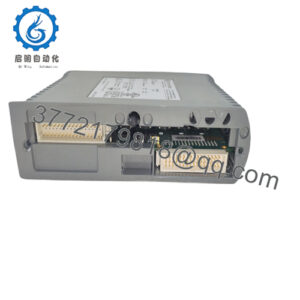
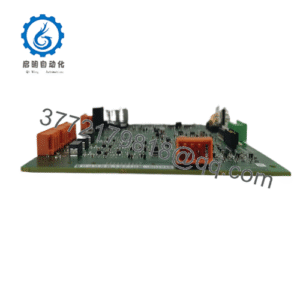
The GE IS210AEBIH1BED functions as an AE Bridge Interface card (AEBI series) within GE’s Mark VI/Mark VIe turbine control family, serving as a specialized I/O expansion and signal conditioning board. It processes bridge-related analog signals (e.g., differential voltage/current from strain, position, or excitation circuits) while incorporating digital input channels for discrete monitoring (e.g., status, limits, or permissive signals), feeding conditioned data to the controller via the VME backplane or IONet.
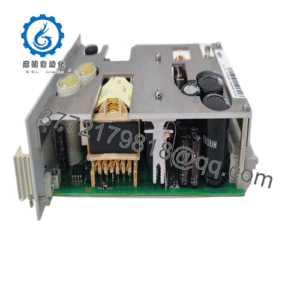
In a typical industrial automation stack, the board mounts in the Mark VI/Mark VIe I/O section (often alongside processors like IS215WETAH or analog packs), connecting field wiring through terminal blocks or harnesses. It provides isolation, scaling, and buffering to mitigate noise in turbine environments, supports diagnostic feedback to the controller, and enables expanded coverage for auxiliary systems like pitch control in wind turbines or exciter monitoring in gas/steam units. While not a standalone processor, it integrates with the Mark VI’s architecture (including TMR where applicable) for fault-tolerant operation through redundant paths and status reporting. The GE IS210AEBIH1BED shines in setups requiring precise bridge interfacing with digital expansion, eliminating custom wiring modifications in turbine fleets.
| Specification | Details |
|---|---|
| Model Number | IS200AEBIH1BED |
| Brand | GE (GE Vernova / GE Power) |
| Type | AE Bridge Interface Card / Digital Input Expansion Board (Mark VI / Mark VIe series) |
| Input Voltage | Typically 24 VDC nominal (system-dependent) |
| Operating Temp Range | 0 to 60 °C (32 to 140 °F; typical for Mark VI boards) |
| Mounting Style | Rack/panel mount in Mark VI I/O chassis |
| Dimensions | Approx. 170–270 mm x 105 mm (board form factor) |
| Weight | Approx. 0.3–0.75 kg |
| Interface/Bus | Mark VI backplane / VME compatible |
| Compliance | CE, UL, industrial standards |
| Supported Protocols | Internal Mark VI communication (Modbus, Ethernet variants possible via system) |
| Typical Power Draw | Low (board-level, system-dependent) |

- GE IS210AEBIH1BED
Opting for the GE IS210AEBIH1BED enhances signal fidelity and expandability in turbine applications. Engineered as part of the proven Mark VI platform, its bridge interface design ensures accurate handling of sensitive analog signals under turbine vibration and EMI, while integrated digital expansion reduces the need for additional cards—streamlining cabinet layout and cutting engineering time for I/O additions.
Maintenance crews benefit from diagnostic LEDs and controller-integrated fault reporting, enabling faster identification of signal or wiring issues during outages. Its rugged construction (often conformal-coated) supports long-term performance in harsh power plant conditions, minimizing drift or failures common in generic interfaces. In fleet management, GE IS210AEBIH1BED lowers total cost by preserving compatibility with existing Mark VI infrastructure, facilitating phased upgrades without full system replacement, and contributing to higher availability through reliable process control in demanding generation assets.
The GE IS210AEBIH1BED is widely deployed in power generation where turbine control precision impacts output and reliability. In wind farm operations, it’s used within Mark VIe-based controls to interface excitation bridges and expand digital monitoring for pitch/yaw discrete inputs or blade position feedback, ensuring stable operation in variable wind conditions. Combined-cycle and simple-cycle gas turbine plants incorporate it for exciter bridge interfacing and auxiliary digital signals in fuel valve, igniter, or vibration monitoring—supporting precise synchronization and protection during ramping.
Steam turbine and industrial generator sites also favor this board for similar feedback expansion, maintaining continuous monitoring in high-steam or co-gen environments. Across these, the GE IS210AEBIH1BED excels when fault-tolerant I/O interfacing in legacy or hybrid turbine fleets directly influences operational safety and efficiency.
Here are some compatible or related products in the GE Mark VI / Mark VIe and IS210 series:
- IS210AEBIH1B – Base revision of the AEBI bridge interface (often interchangeable with minor firmware/config differences)
- IS210AEBIH1BAA – Variant optimized for specific wind turbine bridge applications
- IS210AEBIH1BDA – Alternate revision with potential enhanced digital channels or conformal options
- IS210AEAAH1BHB – Related analog expansion board for broader I/O in Mark VI racks
- IS215WETAH1BB – Common Mark VI processor card that pairs with this interface
- IS200AEBEG1A – Similar bridge/exciter interface in older Mark VI lines
- IS210AEBIH3BEC – Higher-revision AEBI card for advanced wind turbine configs
- Mark VIe I/O Packs (e.g., IS220 series) – Modern Ethernet-based successors for IONet upgrades
Before installing the GE IS210AEBIH1BED, confirm compatibility with your Mark VI rack revision and backplane slot—check part numbers against GE’s configuration tools (e.g., ToolboxST) to ensure firmware alignment. Verify 24 VDC supply stability to the rack, inspect field wiring for polarity and shielding (critical for bridge signals), and pre-configure any jumpers or settings per application-specific drawings. Bench-test if possible to validate signal paths and LED responses before rack insertion.
For ongoing maintenance, incorporate board status checks into routine turbine walkdowns—monitor controller diagnostics for any bridge or input faults, and visually inspect for dust, corrosion, or loose connectors annually, especially in humid or oily environments. Use GE’s Toolbox software for trend data review after events, and perform loop checks during outages to confirm calibration. Since these boards are solid-state with no moving parts, failures are uncommon, but stocking spares supports quick swaps in redundant setups to minimize downtime.