 WhatsApp: +86 16626708626
 Email:
  Phone: +86 16626708626
Description
In many turbine and process control projects, engineers turn to the GE IS210AEBIH1BED when they need a reliable bridge between harsh field signals and high‑value turbine control hardware. This board is widely used in industrial automation within GE Mark VI / Mark VIe‑based systems for gas, steam, and wind turbines, where it acts as an interface layer that conditions and routes signals between sensors, actuators, and higher‑level control modules. It is commonly deployed in power generation applications such as thermal power, nuclear plants, hydropower stations, and combined‑cycle units to support precise monitoring and regulation of generator sets and turbine auxiliaries. In oil and gas facilities—onshore plants, offshore platforms, refineries, and gas treatment sites—the GE IS210AEBIH1BED helps handle critical process signals tied to compressors, pumps, and safety‑related interlocks. The same hardware concept carries over to large‑scale industrial automation in metallurgy, chemicals, and heavy manufacturing, where robust signal isolation and noise immunity are needed to keep control systems stable in electrically noisy environments. Because it functions as a bridge/interface card, the GE IS210AEBIH1BED is applicable in control systems that must move data reliably between field I/O and turbine controllers, support multiple communication protocols, and maintain accurate real‑time monitoring in mission‑critical processes. Its role in these scenarios is not just to pass signals through, but to condition, isolate, and standardize them so that the core turbine controller can make deterministic decisions without being affected by wiring distances, environmental interference, or varying signal levels.
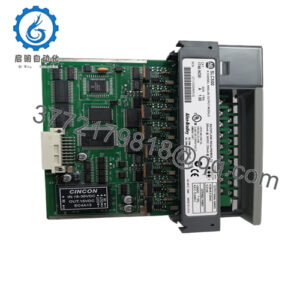
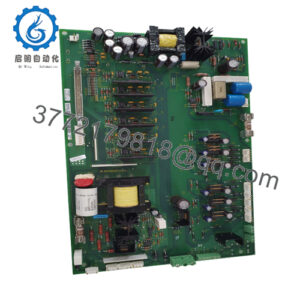
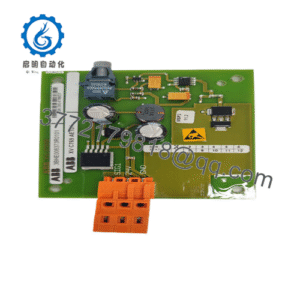
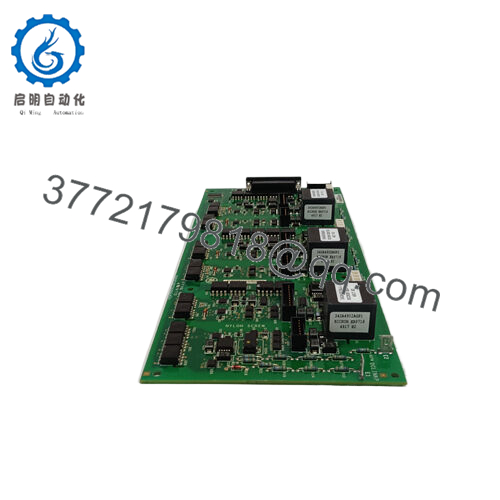
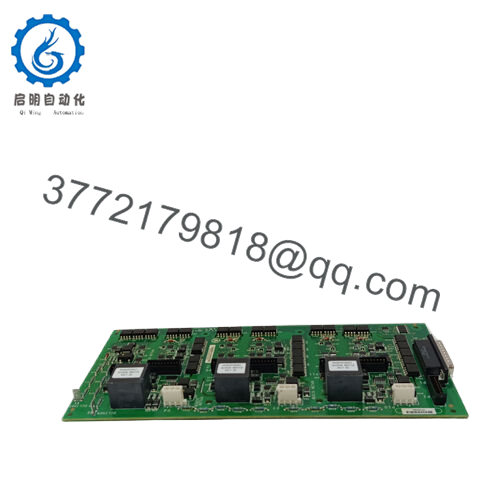
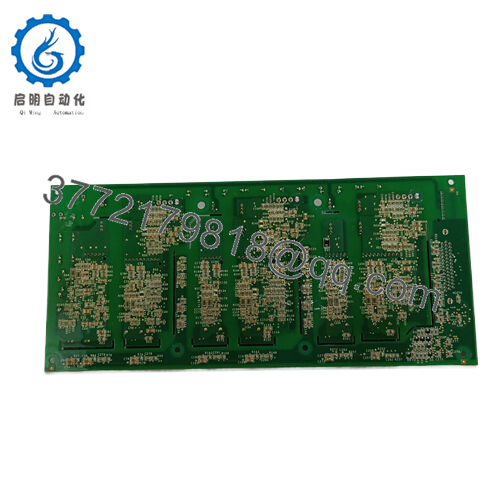
The GE IS210AEBIH1BED is best described as an AE Bridge Interface Card or high‑performance I/O pack module designed for GE’s Mark VI / Mark VIe turbine control systems. It is a printed circuit board that provides signal conditioning, isolation, and data acquisition between field devices and the main controller processors, effectively serving as a bridge between analog/digital I/O and the internal control network. In a typical Mark VI or Mark VIe architecture, the GE IS210AEBIH1BED resides in a dedicated rack or panel position, connected both to field terminals and to controller or I/O pack backplanes, where it passes normalized, filtered signals into the control logic. This positioning allows it to support turbine monitoring, protection, and auxiliary equipment control while offloading low‑level signal handling from the central CPU hardware. From a system perspective, it helps tie together multiple functional areas—such as vibration monitoring, process variables, and status feedback—so they can be processed coherently by the turbine controller. Engineers and integrators value the GE IS210AEBIH1BED because it is purpose‑built for GE turbine platforms, aligns mechanically and electrically with Mark VI / Mark VIe modules, and is engineered for continuous duty in demanding environments, reducing integration risk compared with generic interface hardware.
One major strength of the GE IS210AEBIH1BED is its functional performance as a signal interface and data acquisition board. It typically supports a configurable number of I/O channels (for example, mixed analog and digital points) so that a single module can handle multiple process variables tied to one turbine section or subsystem. A high‑performance embedded processor on the board manages local filtering, scaling, and communication tasks, which means raw field data is cleaned and structured before it reaches the main controller. This local intelligence helps improve response and noise rejection, particularly in power plants and refineries where electrical interference and long cable runs are common.
From a hardware design standpoint, the GE IS210AEBIH1BED follows a modular PCB form factor suitable for rack or panel mounting in Mark VI / Mark VIe control cabinets. It is generally powered by a low‑voltage DC supply (commonly in the 24 VDC range) and offers robust isolation between field side and control side to enhance safety and noise immunity. Protection levels are typically in the IP20 range, aligning with installation inside enclosed electrical cabinets rather than direct field mounting. Dimensions are compact enough to fit standard GE turbine control racks while still providing access to connectors, status indicators, and any configuration elements. This combination of compact size, robust isolation, and standardized mounting makes the GE IS210AEBIH1BED attractive for both OEM turbine skids and retrofit projects where cabinet space is limited.
Compatibility is a key benefit of the GE IS210AEBIH1BED. It is engineered to integrate directly with GE Mark VI / Mark VIe control systems, using communication interfaces such as Modbus, Profibus, CAN, or Ethernet (depending on configuration) to exchange data with controllers and higher‑level networks. This allows it to fit into architectures where the turbine control system must talk to plant DCS, vibration systems, or remote monitoring platforms without requiring additional interface hardware. The board’s ability to support widely used industrial protocols simplifies integration with third‑party devices and supervisory systems, which is especially valuable in large plants that mix multiple vendors’ equipment. For existing GE installations, the GE IS210AEBIH1BED often serves as a direct or near‑drop‑in replacement for earlier bridge/interface boards, protecting prior investment in wiring, terminal strips, and cabinet layout.
In terms of long‑term reliability, the GE IS210AEBIH1BED is designed for continuous operation in demanding environments encountered in turbine compartments, electrical rooms, and process areas. Typical operating temperature ranges extend from well below freezing to elevated temperatures (for example, −40 °C up to +70 or +85 °C, depending on specific variant), which allows the board to tolerate cabinet temperature swings seen in outdoor or minimally conditioned spaces. Industrial‑grade components, conformal coating options (where used), and robust PCB construction help the module withstand vibration and electrical noise over years of operation. The use of galvanic isolation on I/O channels and communication ports reduces the risk of damage from ground loops or surges, further supporting long service life. For operators, this translates into fewer unexpected interface failures and a more predictable maintenance schedule across the turbine control system’s lifecycle.
Detailed Technical Specifications
| Parameter | Value |
|---|---|
| Model | GE IS210AEBIH1BED |
| Brand | General Electric (GE) |
| Product Type | AE Bridge Interface Card / High‑performance I/O pack PCB |
| Control System Series | GE Mark VI / Mark VIe turbine control systems |
| Typical Input Voltage | 24 V Direct Current (nominal, application‑dependent) |
| I/O Channels | Multi‑channel mixed analog / digital I/O (configurable per variant) |
| Processor | High‑performance embedded processor for local signal processing |
| Communication Interfaces | Supports industrial protocols such as Modbus, Profibus, CAN, Ethernet |
| Operating Temperature Range | Wide range, typically from −40 °C up to +70…+85 °C |
| Protection Rating | IP20 (cabinet‑mounted electronic assembly) |
| Mounting | Rack or panel mounting in standard GE control cabinets |
| Approximate Dimensions | Compact modular PCB format suitable for turbine control racks |
| Typical Weight | Light‑weight board (on the order of a few hundred grams) |
| Intended Operating Environment | Indoor industrial control enclosures for power, oil & gas, and process |

- GE IS210AEBIH1BED
Related Modules or Compatible Units
IS210AEBIH1B – Base AE Bridge Interface Card model on which GE IS210AEBIH1BED ordering variant is based, used in similar turbine control roles.
IS210AEACH1A – Master input/output board in the same Mark VI / Mark VIe ecosystem, often paired with bridge/interface cards for extended I/O.
IS210BPPBH2CAA – Backup protection module used alongside bridge/interface boards to provide coordinated turbine protection.
IS215UCCCM04AB – CPCI controller board that can work with interface and I/O packs like GE IS210AEBIH1BED in Mark VIe architectures.
IS220PHRAH1A – Turbine‑specific I/O module designed for Mark VIe systems, complementary to bridge/interface PCBs in the signal chain.
For installation, integrators should begin by confirming that the control cabinet offers the correct rack or panel location, including mechanical support, backplane or connector compatibility, and adequate clearance for cable routing around the GE IS210AEBIH1BED. Power supply capacity and grounding must be verified to ensure the 24 VDC feed and reference earth are stable and compliant with GE’s control system design guidelines. It is good practice to separate high‑energy power and drive cables from low‑level signal wiring, and to observe recommended shield termination practices at the cabinet to minimize noise ingress. Before energizing the system, address assignments, communication settings, and any board‑specific parameters should be configured in the turbine control engineering tools so that the controller correctly recognizes and uses the GE IS210AEBIH1BED.
Ongoing maintenance of the GE IS210AEBIH1BED centers on environmental control, inspection, and diagnostics rather than frequent replacement. Periodic checks should include visual inspection for loose connectors, discoloration, or contamination; verification that cabinet temperature and humidity remain within specified limits; and review of diagnostic messages from the turbine control system that might indicate channel faults or communication issues. Where supported, built‑in self‑tests and loop‑back checks can be scheduled during outages to confirm that all I/O channels through the board remain within calibration tolerances. Keeping detailed records of firmware or configuration revisions associated with each GE IS210AEBIH1BED in service also helps technicians quickly correlate system behavior with hardware changes during troubleshooting.