 WhatsApp: +86 16626708626
 Email:
  Phone: +86 16626708626
Description
The persistent challenge in wind turbine control systems lies in maintaining seamless, high-speed data exchange between distributed control elements—especially in large-scale onshore and offshore wind farms where nacelle-mounted hardware faces extreme vibration, temperature cycling, and electromagnetic noise. Communication bottlenecks or unreliable Ethernet bridging can lead to delayed pitch/yaw commands, lost sensor synchronization, SCADA dropouts, or reduced fault diagnostics, all of which cut into availability and accelerate component wear. In renewable energy fleets using GE’s Mark VIe platform, engineers need a compact, rugged interface that reliably bridges turbine-local I/O to higher-level networks without introducing latency or vulnerability points.
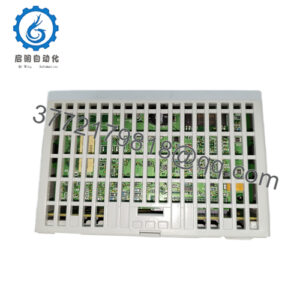
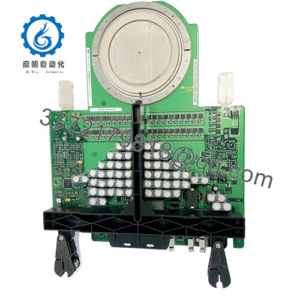
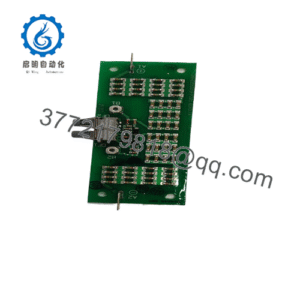
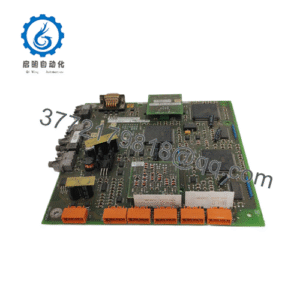
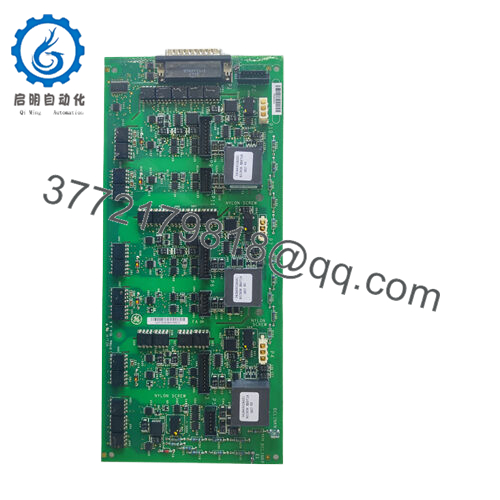
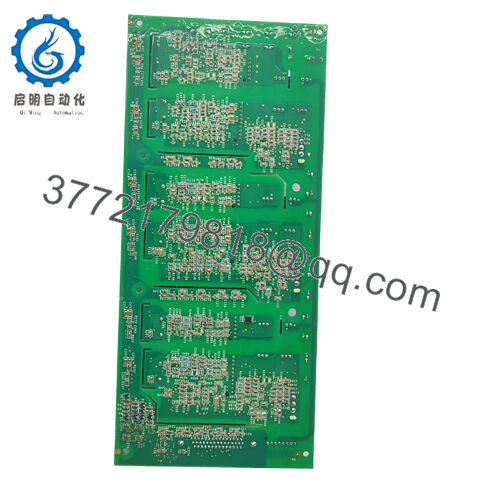
The GE IS210AEBIH3BEC steps in as the Advanced Ethernet Bridge Interface (AEBI) card, specifically tailored for the Mark VIe Wind turbine control architecture. This board provides the critical electrical and protocol interface between local terminal boards (handling field I/O like sensors and actuators) and one or two Ethernet networks, enabling deterministic, redundant communication paths essential for real-time turbine oversight. It becomes particularly vital during fleet upgrades, nacelle retrofits, or when expanding to newer GE wind models that demand enhanced network resilience to support advanced features like condition-based maintenance or grid code compliance. By ensuring stable bridging in noisy environments, GE IS210AEBIH3BEC safeguards critical system uptime, minimizes communication-related trips, and supports the high-reliability demands of modern process control in renewable generation.
Within the GE Mark VIe Wind control stack, the GE IS210AEBIH3BEC mounts as a plug-in card on compatible terminal boards or I/O packs in the turbine’s control cabinet (typically nacelle or tower base). It connects the turbine’s internal control bus—carrying data from analog/digital inputs, speed sensors, and pitch/yaw drives—to external Ethernet networks via dual ports for redundancy or segmentation. This setup allows integration with IONet (Mark VIe’s deterministic Ethernet backbone) for fast, synchronized controller-to-controller traffic, while also supporting links to plant-level SCADA or remote monitoring systems.
The board handles protocol translation and isolation where required, suppressing noise and ensuring packet integrity under harsh conditions. Its design supports dual-redundant configurations—bridging to separate networks or backup paths—to maintain operation during single-link failures, a common requirement in remote wind sites. Diagnostic capabilities feed status back to the main processor for monitoring, while the conformal-coated PCB withstands environmental stresses. This positioning keeps the communication layer modular and scalable, allowing engineers to focus on turbine performance tuning rather than wrestling with network instability or custom cabling.
| Specification | Details |
|---|---|
| Model Number | IS210AEBIH3BEC |
| Brand | GE (General Electric) |
| Type | Advanced Ethernet Bridge Interface (AEBI) Card |
| Input Voltage | 3.3 V DC (±5%) typical |
| Operating Temp Range | -40°C to +70°C (typical for Mark VIe Wind) |
| Mounting Style | Plug-in to terminal board/backplane (Mark VIe compatible) |
| Dimensions | Approx. 14.8 cm (L) x 10.3 cm (W) x 3.2 cm (H) |
| Weight | Approx. 0.24–0.65 kg |
| Interface/Bus | Ethernet (2 x 10/100 Mbps ports), internal Mark VIe bus |
| Compliance | CE, RoHS, industry standards for wind turbine controls |
| Supported Protocols | Ethernet-based (IONet compatible in Mark VIe) |
| Typical Power Draw | 2 W typical, 3 W maximum |

- IS210AEBIH3BEC
Selecting the GE IS210AEBIH3BEC delivers consistent, low-latency communication that keeps turbine subsystems in tight synchronization, directly contributing to smoother power output, reduced mechanical stress, and higher capacity factors. Its rugged, conformal-coated construction ensures long-term reliability in corrosive, high-vibration nacelle environments, cutting down on premature failures and associated downtime costs. Maintenance personnel gain from straightforward diagnostics—status visible via controller tools—and quick board swaps during outages, without disrupting field wiring or requiring extensive reconfiguration.
The card’s dual-port capability supports network redundancy out of the box, allowing continued operation through cable faults or switch issues common in sprawling wind farms. This fault tolerance, combined with its compact footprint, simplifies cabinet layouts in space-constrained retrofits and eases spares logistics across multi-model fleets. Engineered as part of GE’s enduring Mark VIe ecosystem, GE IS210AEBIH3BEC reduces integration overhead, standardizes communication practices, and future-proofs turbine controls against evolving grid and data requirements.
In offshore wind installations, the GE IS210AEBIH3BEC bridges critical I/O data in harsh marine conditions, ensuring reliable links for remote monitoring and predictive analytics in GE multi-MW turbines. Onshore utility-scale farms deploy it to maintain synchronized control across arrays, supporting fast response to grid frequency changes or curtailment signals.
Hybrid renewable sites integrating wind with solar or storage also rely on GE IS210AEBIH3BEC for stable Ethernet bridging, enabling coordinated control under variable loads. These scenarios underscore its value in applications demanding vibration resistance, network redundancy, and continuous uptime to maximize energy yield and asset longevity.
For compatible or alternative options within the Mark VIe Wind and related families, consider:
IS210AEBIH3B – Base or prior revision of the AEBI card, often interchangeable with minor hardware differences
IS210AEBIH3BED – Updated variant with potential enhancements in port stability or firmware support
IS210AEBIH3BBC – Similar bridge interface with different revision level for specific turbine configurations
IS210AEBIH2BE – Earlier series equivalent for legacy Mark VIe installations
IS210AEBI series (e.g., IS210AEBIH3BEC-W01) – Conformal-coated or assembly variants for enhanced environmental protection
IS210AEPSG1 series – Complementary power supply boards that pair with AEBI for complete interface setups
IS200AEBIH family – Legacy IS200 equivalents for older Mark VI wind controls requiring bridge upgrades
104W5469P001 – Associated assembly or replacement kit tied to AEBI functionality in GE wind platforms
Before installing the GE IS210AEBIH3BEC, double-check compatibility with your specific terminal board or I/O pack—revision mismatches can prevent proper bus recognition or Ethernet negotiation. Confirm Ethernet port assignments align with network topology (e.g., IONet redundancy), verify grounding to minimize noise pickup, and ensure controller firmware supports the AEBI card’s features to avoid initialization errors. Provide adequate ventilation in the nacelle enclosure, as enclosed high-density racks can elevate operating temperatures.
Ongoing maintenance centers on periodic visual inspections for dust ingress, connector security, and conformal coating integrity during scheduled turbine downtimes. Monitor diagnostic logs or LED indicators (if present) for link status, packet errors, or thermal warnings via the Mark VIe HMI. Annual network integrity tests—pinging across bridges and checking redundancy failover—help detect degradation early. Failures are infrequent but typically relate to physical shock, moisture ingress, or Ethernet cable issues rather than core electronics; stocking spares ensures rapid recovery in remote locations.