 WhatsApp: +86 16626708626
 Email:
  Phone: +86 16626708626
Description
In modern turbine and generator control systems, the GE IS210BPPCH1AEC is used wherever high‑speed, Ethernet‑based I/O processing is needed between Mark VIe controllers and distributed field hardware. It appears widely in industrial automation across gas and steam power plants, combined‑cycle stations, and large mechanical‑drive applications where Mark VIe platforms coordinate turbine operation, auxiliaries, and balance‑of‑plant equipment. In these environments, the GE IS210BPPCH1AEC works inside I/O packs that sit close to terminal boards, collecting temperature, pressure, status, and protection signals and then forwarding processed data over IONet or similar internal Ethernet networks. Typical scenarios include turbine speed and load control, combustion monitoring, vibration and protection loops, and auxiliary equipment such as lube oil, fuel forwarding, and cooling systems that depend on deterministic, frame‑based data exchange. Because it is a Mark VIe I/O pack processor card, the GE IS210BPPCH1AEC is applicable in control systems that must support online repair of I/O packs, dual 100 Mb Ethernet paths, and tight integration with ControlST‑based engineering tools. In retrofit or life‑extension projects, it is often deployed as part of turbine control upgrades that retain existing field wiring and terminal boards while migrating to newer I/O and controller technology, helping owners modernize communication performance without opening every junction box. For both OEMs and plant engineers, the GE IS210BPPCH1AEC becomes a key piece of the Mark VIe distributed I/O concept—moving time‑critical signal processing out near the process while keeping the central controller focused on coordination and advanced logic
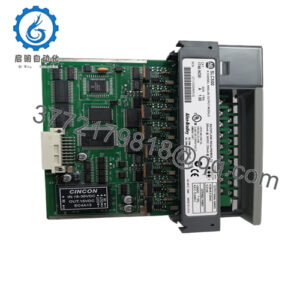
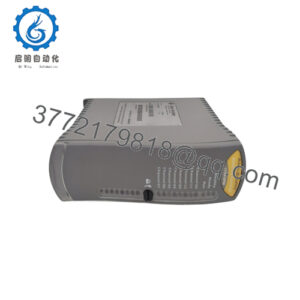
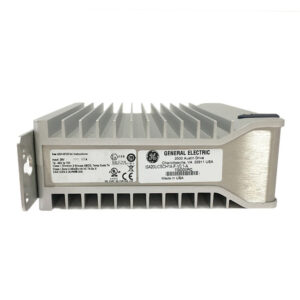
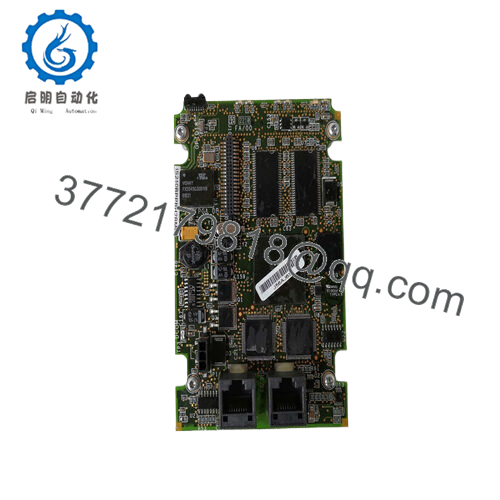
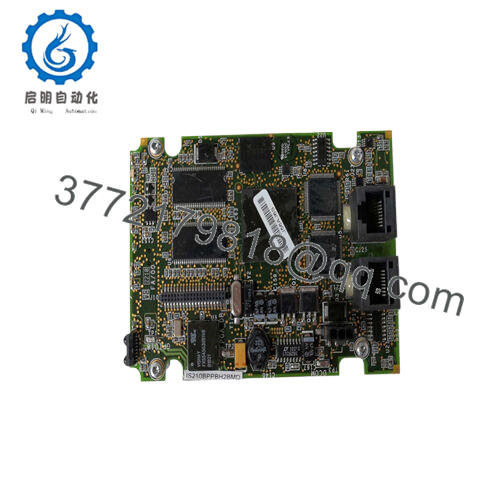
The GE IS210BPPCH1AEC is an internal UCPA‑class Mark VIe I/O Pack Processor Card manufactured by GE Fanuc for use in Mark VIe turbine control systems. Functionally, it is a high‑performance processor board mounted inside an I/O pack assembly, responsible for executing the I/O application code, handling communications with the controller over IONet, and managing power and diagnostics for the pack. Within the Mark VIe architecture, the GE IS210BPPCH1AEC sits between the Ethernet‑connected controller modules (such as UCSA/UCSx) and the terminal boards that host actual field wiring, forming the active “intelligence” of each I/O module. The card processes raw field signals received through the terminal board, applies scaling and checking, and packages this data into deterministic Ethernet frames that are exchanged with the controller at configured frame rates. It is designed to operate under the ControlST software environment, with compatibility indicated for ControlST versions such as V04.04 or later, so that configuration, diagnostics, and firmware management are handled through a unified engineering toolset. Engineers value the GE IS210BPPCH1AEC because it provides Mark VIe‑native performance and diagnostics in a compact form factor, supports redundancy schemes with TMR‑capable BPPx‑based packs, and reduces integration risk by following GE’s standard I/O pack design conventions.
A major functional strength of the GE IS210BPPCH1AEC is its role as a “local brain” for the Mark VIe I/O pack. The board is based on a high‑performance chipset (sources describe the series as using Intel 82576‑class Ethernet and embedded processing) that supports 10/100 Mb Ethernet networking and real‑time packet handling. This allows the I/O pack to meet frame‑rate requirements such as 10, 20, 40, 80, 160, or 320 ms, matching the dynamics of turbine protection, speed control, and auxiliary regulation. By handling signal acquisition, filtering, limit checking, and status reporting locally, the GE IS210BPPCH1AEC reduces network and controller load, which improves system responsiveness and tolerance to transient disturbances.
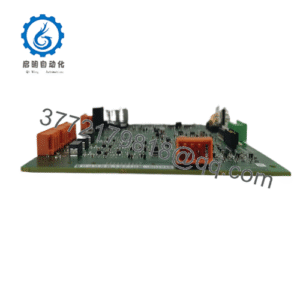
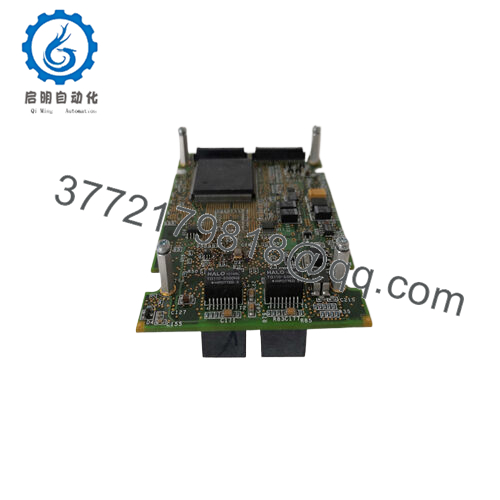
On the hardware side, the GE IS210BPPCH1AEC uses a double‑sided printed circuit board with components mounted on both top and bottom surfaces, implemented with surface‑mount technology for compactness and reliability. The board incorporates multiple connectors, integrated circuits, capacitors, resistors, and other discrete components, all arranged around edge cutouts and round alignment holes that make mounting consistent within the I/O pack housing. Listings describe it as a high‑performance processor board designed specifically for turbine control applications, emphasizing stable operation in vibration‑prone environments and within the limited space of turbine‑side control modules. In practice, this means the GE IS210BPPCH1AEC can be installed in compact Mark VIe enclosures near turbine skids, contributing to shorter signal paths and improved noise immunity when combined with appropriate wiring and grounding practices.
From a compatibility standpoint, the GE IS210BPPCH1AEC is tightly integrated with the Mark VIe ecosystem. It is identified as an I/O pack processor board meant to work with Mark VIe I/O module hardware, including terminal boards and enclosures that supply a regulated 28 V DC feed and dual 100 Mb Ethernet ports. The board is described as compatible with ControlST‑based systems and with earlier BPPB‑based I/O packs in TMR configurations, which helps when mixing newer packs into existing triple‑modular‑redundant architectures. Because it is part of a family of BPPx/BPPC boards, the GE IS210BPPCH1AEC supports GE’s IONet concept—dual‑redundant or non‑redundant Ethernet links between controllers and I/O—with automatic reconfiguration and online repair capabilities at the I/O pack level. This gives engineers the ability to replace a faulty I/O pack containing the GE IS210BPPCH1AEC while the rest of the system remains in service, a key feature for minimizing downtime in baseload or mission‑critical units.
In terms of long‑term reliability, the GE IS210BPPCH1AEC benefits from Mark VIe’s overall I/O pack design philosophy. I/O modules in this family use 28 V DC power with internal solid‑state circuit breakers and soft‑start functions that protect the electronics from inrush and short‑circuit events, which helps extend service life of the processor card. The dual full‑duplex 100 Mb Ethernet ports, internal temperature sensing, and LED status indicators provide continuous feedback on pack health, allowing early detection of overheating, communication faults, or application issues. Accuracy of I/O modules is specified over the full operating temperature range, and online repair combined with automatic reconfiguration reduces the likelihood that a single board failure such as the GE IS210BPPCH1AEC will lead to extended outages.

- IS210BPPCH1AEC
Detailed Technical Specifications
| Parameter | Value |
|---|---|
| Model | GE IS210BPPCH1AEC |
| Brand | GE Fanuc / General Electric |
| Product Type | Mark VIe I/O Pack Processor Card (internal UCPA processor) |
| Primary Function | Processing input/output signals and managing Ethernet communication in I/O packs |
| Control System Series | GE Mark VIe turbine control system |
| Nominal Power Supply Voltage | Typically within 9–16 V DC range, nominal 12 V DC for internal processor section |
| External I/O Pack Supply | Designed to operate with Mark VIe 28 V DC I/O pack power systems |
| Processor / Chipset | High‑performance processor board based on Intel 82576‑class Ethernet/CPU chipset |
| Ethernet Interfaces | Dual 100 Mb full‑duplex Ethernet ports via I/O pack connections |
| Software Compatibility | Compatible with ControlST‑based Mark VIe systems (e.g., ControlST V04.04 or later) |
| System Use | Not intended for Mark VIeS safety systems; usable with BPPB‑based TMR I/O packs |
| Board Design | Double‑sided SMT PCB with components on both sides, edge cutouts and round mounts |
| Typical Application Environment | Turbine and generator control, balance‑of‑plant and industrial Mark VIe I/O modules |
| Country of Origin | USA (typical listing for this part family) |
Related Modules or Compatible Units
IS210BPPCH1A / IS210BPPCH1ACA – Earlier I/O pack processor board variants in the same family, used with Mark VIe systems for similar I/O processing roles.
IS210BPPCH1AD – Another BPPC‑series processor circuit board designed for integration within Mark VIe I/O packs, closely related in function to GE IS210BPPCH1AEC.
IS220‑series I/O Packs – Mark VIe I/O pack modules (such as IS220PTCCH1B thermocouple packs) that rely on similar processor technology for local signal handling and communication.
Mark VIe Controllers (UCSx family) – Main Mark VIe controllers that communicate over IONet with I/O packs containing the GE IS210BPPCH1AEC for distributed I/O processing.
Mark VIe Terminal Boards – DIN‑rail or base‑mounted terminal boards and blocks that host field wiring and mechanically support the I/O packs driven by the GE IS210BPPCH1AEC.
For installation, engineers should verify that the target Mark VIe I/O pack or assembly is specified for use with the GE IS210BPPCH1AEC, including mechanical fit, connector alignment, and correct nominal supply voltage range. Adequate cabinet space, airflow, and shielding practices are important, since the processor card relies on the I/O pack enclosure and surrounding cabinet for environmental protection and heat dissipation. Before bringing the turbine or process unit online, the I/O pack containing the GE IS210BPPCH1AEC must be recognized and configured in ControlST, including IONet addressing, frame rate settings, redundancy (if applicable), and association with the correct terminal board and I/O points. This ensures consistent behavior with other BPPx‑based packs and allows online repair and automatic reconfiguration features to function as intended.
In normal operation, the GE IS210BPPCH1AEC is largely maintenance‑free, but long‑term reliability still depends on basic best practices. Periodic inspections during planned outages should include checking I/O pack LEDs for abnormal power, attention, or Ethernet status indications and confirming that cabinet temperatures remain within Mark VIe specifications. It is good practice to review IONet diagnostics and event logs within ControlST to identify intermittent communication issues or unusual application behavior that might point to developing hardware problems on the processor card. Keeping at least one spare GE IS210BPPCH1AEC or equivalent BPPx‑series board on hand, along with up‑to‑date configuration backups, allows for quick swap‑out if the installed card fails, minimizing downtime for turbine and generator assets that rely on this Mark VIe I/O pack processor.