 WhatsApp: +86 16626708626
 Email:
  Phone: +86 16626708626
Description
Because of this role, the module is applicable in control systems where redundancy and safety integrity are central design drivers, such as aero‑derivative turbines, utility steam turbines, and process‑critical mechanical drives. Typical tasks handled by GE IS220PPROH1A include backup overspeed detection, independent generator synchronization checks, and watchdog monitoring of the primary control logic. If the main controller becomes unresponsive or mis‑evaluates turbine speed, the protection pack can still command an emergency trip via dedicated trip terminal boards. In real‑world terms, that means plant owners use the module to reduce the risk of catastrophic turbine damage, protect generators and gearboxes, and comply with internal or regulatory safety standards that call for diverse, independent protection channels.
Product introduction and positioning
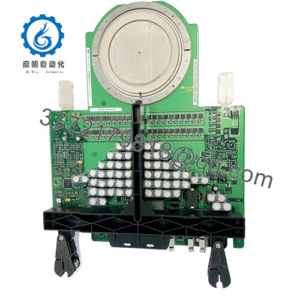
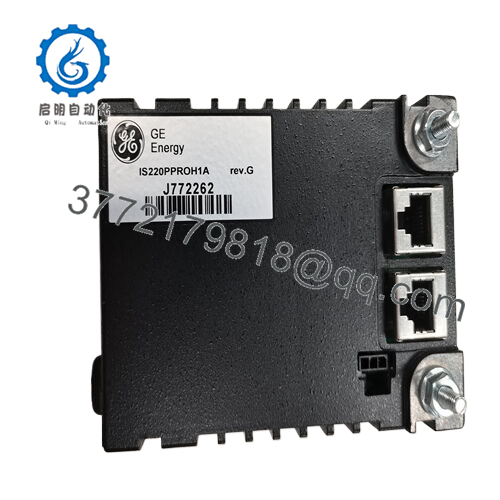
The GE IS220PPROH1A is a turbine‑specific protection I/O pack from General Electric’s Mark VI/Mark VIe family, designed as a backup turbine protection module rather than a general‑purpose I/O card. It combines processing, data acquisition, and communication hardware in a compact assembly that mounts directly with its associated trip or protection terminal board. In a typical Mark VIe architecture, GE IS220PPROH1A sits alongside the main control modules on the turbine control panel, but its logic and decision path are configured to operate independently so it can execute emergency trips based on its own inputs. This positioning clearly distinguishes it from standard analog or digital I/O packs that simply extend the reach of the main controller.
System‑wise, GE IS220PPROH1A forms part of the backup overspeed and trip chain, interfacing to specialized terminal boards that route trip commands to hydraulic dump valves, breaker trip coils, and other shutdown actuators. It also connects to plant networks over Ethernet, allowing it to share status and alarms while keeping real‑time protection functions local. For engineers and integrators, the value of this module lies in its tight coupling to the Mark VI/Mark VIe platform and its purpose‑built firmware, which minimize integration effort compared with third‑party safety relays. At the same time, using a dedicated protection pack like GE IS220PPROH1A helps meet internal safety design rules by clearly separating control and protection roles, simplifying hazard analysis and documentation.
Key technical features and functional benefits
Functionally, GE IS220PPROH1A is built to provide fast, deterministic backup protection for turbines. It accepts multiple speed‑related signals—typically overspeed, acceleration, and deceleration indicators—and evaluates them using onboard logic that is independent of the main controller’s calculations. This means that even if the primary speed acquisition chain or control algorithm fails, the protection pack still has the information it needs to recognize an overspeed condition and initiate an emergency trip. Many implementations configure trip thresholds and validation logic to align with plant protection philosophies, giving protection engineers a predictable, well‑documented response profile.
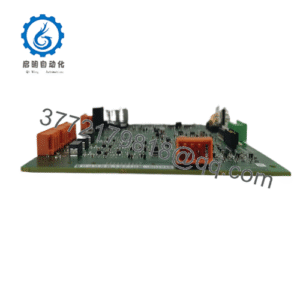
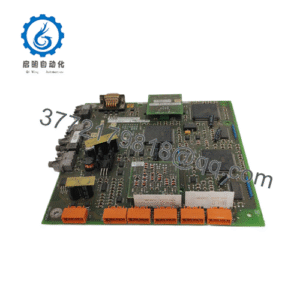
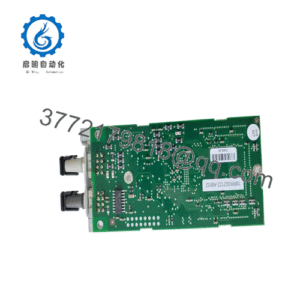
On the hardware side, GE IS220PPROH1A integrates a local processor, data acquisition circuitry, and dual Ethernet ports in one I/O pack enclosure. The Ethernet interfaces typically connect to the Mark VI/Mark VIe control network, providing both configuration access and real‑time status while keeping the core trip path local to the pack and its terminal board. LED indicators on the face of the module usually show power status, Ethernet link and activity, and pack health, giving technicians at‑panel feedback while commissioning or troubleshooting. This combination of local intelligence and clear visual diagnostics reduces time to identify wiring issues, network problems, or internal faults.
Compatibility is another important characteristic of GE IS220PPROH1A. It is designed to work with specific GE terminal boards used for turbine trip and protection functions, allowing a direct interface to turbine field devices without extensive interposing wiring. The pack can be deployed in simplex or triple‑modular‑redundant (TMR) schemes, depending on the turbine and control panel design, which lets engineering teams match the protection architecture to the required safety integrity and availability. For plants already standardized on Mark VI or Mark VIe, using GE IS220PPROH1A simplifies spare parts management and keeps configuration and diagnostic tools consistent across both control and protection layers.
From a long‑term reliability standpoint, GE IS220PPROH1A is engineered for continuous operation in turbine control environments that see vibration, electrical noise, and temperature variation. The pack includes internal watchdog and self‑diagnostic functions that monitor processor health, power supply status, and communication integrity, and can raise alarms if any of these parameters drift out of tolerance. When combined with conservative mounting and wiring practices, this design supports a long service life and high availability of the protection function. For asset owners, that translates to fewer nuisance trips, predictable lifecycle support, and a higher level of confidence that backup protection will perform as intended when it is finally called upon.

- IS220PPROH1A
Detailed technical specifications
| Parameter | Value |
|---|---|
| Model | GE IS220PPROH1A |
| Brand | General Electric |
| Series | Mark VI / Mark VIe turbine control |
| Product Type | Backup Turbine Protection (PPRO) I/O pack |
| Primary Function | Independent backup overspeed and turbine trip protection |
| Typical System Role | Backup protection path alongside main Mark VI/Mark VIe controller |
| Processor and Logic | Local processor with dedicated protection firmware and data acquisition |
| Ethernet Interfaces | Two 10/100 Ethernet ports for IONet or control network communication |
| Typical Supply Voltage | Low‑voltage DC via associated terminal board (per Mark VI/Mark VIe design) |
| Mounting Method | Direct mounting on compatible turbine protection / trip terminal boards |
| Field Wiring | Direct connection to turbine speed pickups and trip devices via terminal boards |
| Status Indication | Front LED indicators for power, Ethernet link/activity, and pack health |
| Operating Environment | Turbine control panels in gas and steam turbine applications |
| Protection Architecture Support | Suitable for simplex and TMR‑based backup protection configurations |
Related modules or compatible units
GE IS220PTURH1A – Turbine protection and speed I/O module commonly used for primary speed and protection functions, with GE IS220PPROH1A providing a backup protection path.
GE IS220PPRXH1B – Variant protection I/O pack used in similar Mark VIe safety roles, often seen in alternative or newer panel designs.
GE IS220PDIAH1A – Discrete input I/O pack that collects auxiliary status signals used by both the main controller and backup protection chains.
GE IS220PSDCH1A – Trip or solenoid driver I/O pack used to actuate hydraulic dump valves and trip devices commanded by modules such as GE IS220PPROH1A.
GE IS220TREGH1A – Gas turbine emergency trip terminal board that routes trip commands from protection I/O packs to the turbine trip hardware.
GE IS220TRELH1A – Large steam turbine emergency trip terminal board often used with GE IS220PPROH1A in steam turbine applications.
GE IS220TRESH1A – Small and medium steam turbine emergency trip terminal board for applications where the same protection concept is applied on smaller machines.
Installation notes and maintenance best practices
When installing GE IS220PPROH1A, the first priority is to ensure that it is mated with the correct, compatible terminal board in the turbine control panel. The terminal board defines the field wiring pattern, supply routing, and trip outputs, so matching part numbers and wiring diagrams to the specific turbine type is essential. Panel layout should provide sufficient space for field wiring bend radius and allow easy access to the pack’s LEDs and connectors, since these are critical for commissioning and future diagnostics. Careful segregation of speed pickup wiring and trip circuits from high‑noise power cabling helps maintain signal integrity and prevents spurious overspeed detection.
Before energizing a newly installed GE IS220PPROH1A, protection engineers should verify configuration parameters such as speed thresholds, debounce times, and logic voting schemes against the approved turbine protection philosophy. A full functional test—simulating overspeed and trip conditions while monitoring both the pack’s response and the behavior of associated trip hardware—should be completed and documented. During service, maintenance should focus on periodic visual inspection for connector looseness, signs of overheating, or contamination, combined with review of event logs and alarm histories to catch intermittent issues. Firmware and configuration changes should always follow formal management‑of‑change procedures, with backups and clear records, to ensure that the behavior of GE IS220PPROH1A remains aligned with safety studies and commissioning test results.