 WhatsApp: +86 16626708626
 Email:
  Phone: +86 16626708626
Description
In gas turbine and steam turbine control systems, the margin for error in overspeed protection, emergency trip logic, and backup safeguarding is razor-thin—any delay or failure in detecting excessive rotor acceleration, deceleration anomalies, or synchronization issues can result in catastrophic overspeed events, blade liberation, or generator damage. In power generation plants, combined-cycle facilities, and industrial cogeneration setups running GE heavy-duty turbines, primary control loops handle day-to-day regulation, but regulatory bodies, insurance requirements, and operational best practices demand an independent, hardware-based backup layer that operates autonomously if the main Mark VIe processors or networks falter. Engineers often struggle with integrating reliable, SIL-capable protection that avoids common-mode failures while fitting into compact, distributed I/O architectures without excessive wiring or custom logic.
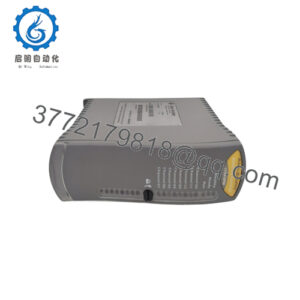
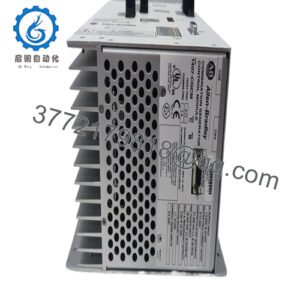
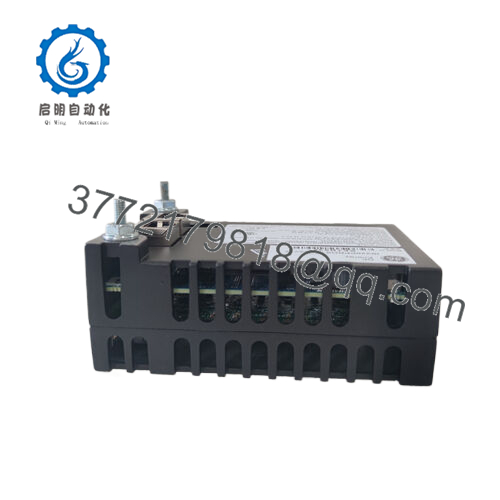
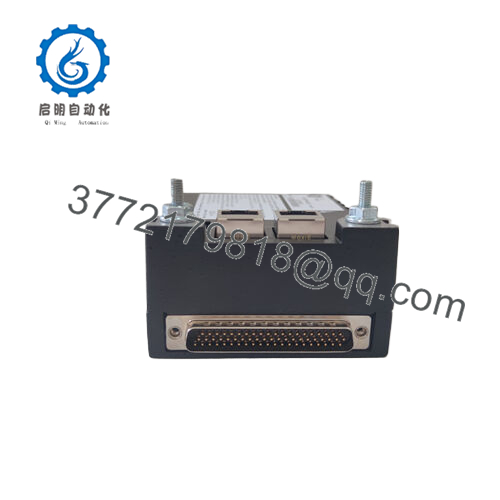
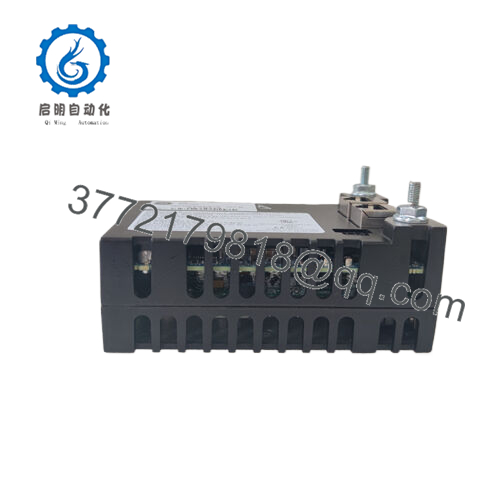
The GE IS220PPROS1B addresses this head-on as the Emergency Turbine Protection I/O Pack (part of the PPRO family) in GE’s Mark VIe and Mark VIeS control platforms. This I/O pack delivers dedicated, hardware-implemented backup protection functions—primarily overspeed detection from speed sensors, acceleration/deceleration monitoring, and emergency trip command execution—ensuring rapid, deterministic response even under primary system faults. It becomes essential in high-availability applications where critical system uptime is tied to safety and asset integrity, such as during startup/shutdown sequences, load rejection events, or when complying with standards like API 670 or IEC 61511. By providing a standalone safety layer within the same distributed control ecosystem, GE IS220PPROS1B minimizes risk exposure, reduces the likelihood of forced outages from protection gaps, and supports seamless integration into existing Speedtronic Mark VIe setups.
In the Mark VIe architecture, the GE IS220PPROS1B functions as a compact I/O pack that mounts directly onto an approved terminal board (typically WPPx series or compatible) in the turbine control cabinet. It interfaces with passive or active speed sensors (e.g., magnetic pickups or proximity probes) to process raw frequency signals for overspeed, accel/decel, and related parameters using hardwired logic circuits—bypassing software dependencies for maximum reliability. The pack communicates status and trip commands back to the main controller via the IONet Ethernet backbone while maintaining independent trip outputs to fuel valves, emergency shutdown relays, or breaker interfaces.
This design supports triple-redundant or dual configurations common in Mark VIeS safety systems, allowing the protection layer to vote or act unilaterally in fault scenarios. Diagnostics feed into the controller for alarming and trending, but core protection remains hardware-driven to eliminate latency or cyber vulnerabilities. Positioned in the safety-critical segment of the I/O stack, GE IS220PPROS1B complements primary control packs (like PSTx or PDTx) by adding diversity and independence, enabling engineers to achieve high SIL ratings without fully duplicating the entire control system.
| Specification | Details |
|---|---|
| Model Number | IS220PPROS1B |
| Brand | GE (General Electric) |
| Type | Emergency Turbine Protection I/O Pack (PPRO series) |
| Input Voltage | 24 V DC nominal |
| Operating Temp Range | -30°C to +65°C |
| Mounting Style | Plug-in to terminal board (Mark VIe compatible) |
| Dimensions | Approx. 14.3 cm (H) x 23.1 cm (W) x board depth |
| Weight | Approx. 0.45 kg |
| Interface/Bus | IONet Ethernet (Mark VIe), terminal board connections |
| Compliance | CE, RoHS, hazardous location approvals (with compatible terminal boards), SIL-capable in Mark VIeS |
| Supported Protocols | IONet (Ethernet-based Mark VIe communication) |
| Typical Power Draw | ≤3 VA |

- IS220PPROS1B
Opting for the GE IS220PPROS1B brings measurable improvements in turbine safety and operational confidence. Its hardware-centric protection logic delivers sub-millisecond response times to overspeed or trip conditions, far outpacing software-only alternatives and providing a true independent safeguard that satisfies stringent regulatory and insurance mandates. In practice, this translates to fewer nuisance trips from primary system glitches while still catching genuine threats, helping maintain higher equivalent availability and reducing lost generation revenue in baseload or peaking plants.
The pack’s rugged, conformal-coated design withstands the vibration, heat, and electrical noise inherent to turbine environments, contributing to extended service intervals and lower lifecycle maintenance costs. When used in redundant Mark VIeS architectures, it enhances fault tolerance—allowing continued safe operation during partial failures—and supports predictive diagnostics through controller-integrated monitoring. Ultimately, GE IS220PPROS1B streamlines compliance efforts, standardizes protection across turbine fleets, and lets reliability teams sleep better knowing a dedicated backup layer is always watching.
Heavy-duty gas turbines in combined-cycle power plants deploy the GE IS220PPROS1B as the backup overspeed and emergency trip module, ensuring rapid fuel cutoff during load shed or grid instability events to protect rotors and avoid costly repairs. Industrial cogeneration facilities—such as those in petrochemical or refining operations—rely on it for independent protection in high-demand steam turbines, where continuous uptime directly impacts process continuity and safety.
Utility peaking plants also integrate GE IS220PPROS1B in Mark VIe controls for fast-start turbines, providing robust safeguards against acceleration transients during rapid ramping. These applications emphasize its strengths in harsh, high-stakes settings requiring vibration tolerance, deterministic hardware logic, and compliance with turbine protection standards.
For compatible or alternative options within the Mark VIe/Mark VIeS protection ecosystem, consider:
IS220PPROS1A – Prior revision of the PPRO pack, often field-interchangeable with firmware updates
IS220YPROS1B – Companion YPRO pack for additional protection channels or synchronization checks
IS220PPRAH1A – Related protection I/O variant focused on specific trip logic enhancements
IS220PDIAH1B – Discrete input pack that pairs with PPRO for expanded trip input handling
IS220PTURH1A – Turbine I/O pack for primary speed/overspeed in non-backup roles
IS220PSCAH1A – System control assembly pack for broader Mark VIe integration
WPPF series terminal boards – Approved mounting bases for PPRO packs in hazardous locations
IS220PPDAH1B – Power distribution or auxiliary protection variant for complementary setups
Before installing the GE IS220PPROS1B, verify terminal board compatibility (e.g., WPPx series) and ensure slot assignment matches Mark VIe configuration files to avoid recognition issues. Confirm sensor wiring—speed probes must meet frequency range and shielding requirements—and check controller firmware for support of this PPRO revision. Grounding and power supply stability are critical; use isolated 24 V DC feeds to prevent noise-induced false trips. Allow space for airflow around the pack in enclosed cabinets.
For ongoing maintenance, inspect terminal connections and sensor cables annually for corrosion or looseness, particularly in humid or oily turbine halls. Review diagnostic logs via the Mark VIe HMI for overspeed test results, trip latch status, and any hardware faults during scheduled outages. Perform functional overspeed/accel tests per OEM guidelines (typically every 1–3 years) using simulator tools or controlled run-ups. Failures are rare and usually trace to external wiring issues, sensor degradation, or physical damage rather than the pack itself; maintain hot spares for minimal downtime.