 WhatsApp: +86 16626708626
 Email:
  Phone: +86 16626708626
Description
In distributed Mark VIe control systems for gas and steam turbines, the challenge of reliably capturing discrete status signals from field devices—such as limit switches, pressure switches, valve position indicators, or contactor feedbacks—often stems from electrical noise, ground potential differences, or long cable runs in industrial environments. These issues can introduce false readings, intermittent faults, or degraded signal integrity that trigger unnecessary alarms, compromise sequencing logic, or delay critical operations like startup permissives and trip resets. In power generation, oil & gas, and heavy industrial applications, where process control demands high reliability and minimal spurious trips, engineers require isolated digital inputs that provide robust galvanic separation, noise immunity, and straightforward DIN-rail mounting without sacrificing scan performance or diagnostic visibility.
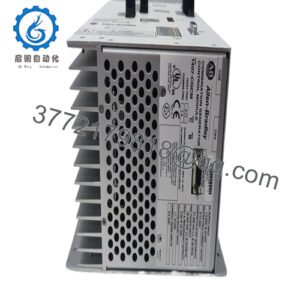
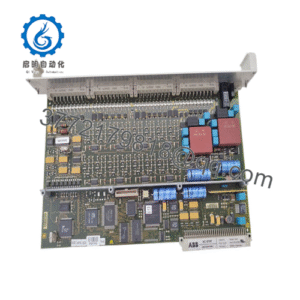
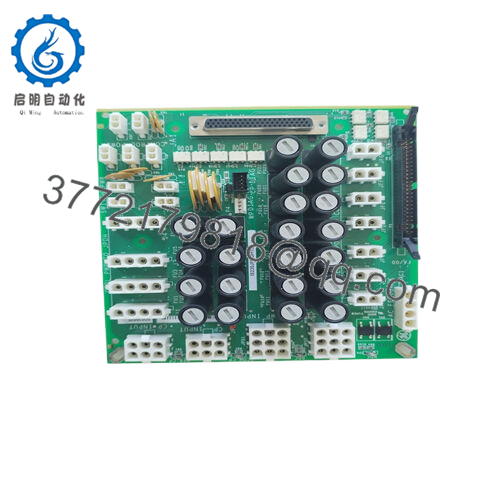
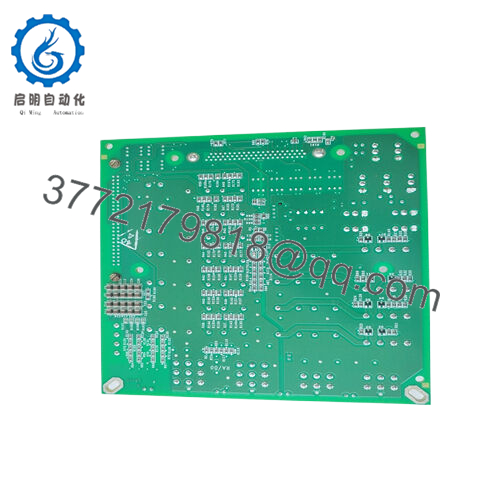
The GE IS230SNIDH1A meets this need as an Isolated Digital DIN-Rail Module (often cross-referenced with base hardware like IS200SDIIH1ADB) within GE’s Mark VIe and Mark VIeS ecosystems. This compact unit serves as a dedicated interface for handling multiple isolated discrete inputs, converting field contact states into clean, optically isolated signals for the control system. It proves essential in retrofits, expansions, or new installations where distributed I/O placement reduces marshalling complexity, improves noise rejection in harsh plant floors, and supports SIL-rated safety applications requiring channel independence. By delivering dependable input isolation in turbine control and auxiliary systems, GE IS230SNIDH1A helps maintain critical system uptime, cuts down on troubleshooting time for wiring-related issues, and ensures consistent performance across variable environmental conditions.
In the Mark VIe architecture, the GE IS230SNIDH1A mounts on standard DIN rails near field devices or in remote I/O cabinets, connecting directly to dry contacts or powered switches via screw terminals. It processes inputs through optical isolation barriers (typically supporting 24 V DC or similar excitation) before passing digital states to an associated I/O pack or controller via the system’s Ethernet-based IONet network. This distributed approach allows flexible placement—close to sensors for shorter runs and better signal quality—while integrating seamlessly with Mark VIe processors, safety modules, or plant-level HMIs.
The module includes built-in diagnostics for open/short detection, channel health monitoring, and status reporting back to the controller, enabling predictive maintenance without manual probing. In redundant or TMR (triple modular redundant) setups common in Mark VIeS, multiple units can provide diverse input paths for voting logic. Its design prioritizes simplicity in wiring and configuration, reducing custom engineering for isolation transformers or barriers and letting focus shift to application-specific logic rather than signal conditioning challenges.
| Specification | Details |
|---|---|
| Model Number | IS230SNIDH1A |
| Brand | GE (General Electric) |
| Type | Isolated Digital DIN-Rail Module (Discrete Input) |
| Input Voltage | Typically 24 V DC (field excitation) |
| Operating Temp Range | -40°C to +70°C (typical Mark VIe range) |
| Mounting Style | DIN rail |
| Dimensions | Compact DIN-rail form factor (approx. standard width for multi-channel unit) |
| Weight | Approx. 0.5–1 kg |
| Interface/Bus | Terminal connections to field; IONet via associated I/O pack |
| Compliance | CE, RoHS, hazardous location approvals (with system config) |
| Supported Protocols | Compatible with Mark VIe IONet Ethernet |
| Typical Power Draw | Low (module-dependent, often <5 W) |

- IS230SNIDH1A
Choosing the GE IS230SNIDH1A yields practical gains in signal reliability and system maintainability. Its galvanic isolation effectively blocks ground loops and common-mode noise, delivering stable discrete readings that keep sequencing, interlocks, and permissives accurate—even in electrically noisy turbine halls or remote skids. This directly supports higher plant availability by minimizing false indications that could force conservative shutdowns or extended startups.
The DIN-rail mounting and compact footprint simplify cabinet design and field expansions, particularly in brownfield upgrades where space is limited and wiring changes must be minimal. Diagnostic feedback integrated into Mark VIe tools allows operators to pinpoint issues quickly—such as a stuck contact or wiring fault—shifting maintenance from reactive to condition-based. Over the long term, GE IS230SNIDH1A reduces engineering overhead by standardizing isolated input handling across projects, ensuring repeatable performance and easing spares management in multi-unit fleets.
In gas turbine combined-cycle power plants, the GE IS230SNIDH1A captures valve limit switches, breaker status, and permissive contacts for safe startup and synchronization sequences, where noise-immune inputs prevent misoperations during critical transitions. Oil & gas facilities use it for discrete monitoring in compressor trains or process skids, maintaining reliable feedback under vibration and EMI-heavy conditions.
Industrial cogeneration and utility boiler controls also deploy GE IS230SNIDH1A for auxiliary system interlocks, supporting continuous uptime in applications requiring fast, accurate discrete response amid electrical transients. These deployments highlight its role in environments demanding isolation, diagnostic depth, and integration ease for enhanced safety and efficiency.
For compatible or alternative options within the Mark VIe discrete I/O family, consider:
IS230SDIIH1A – Related isolated digital input variant or base hardware equivalent
IS220PDIAH1B – DIN-rail or pack-based discrete input module for higher channel counts
IS420UCSBH series – Processor-linked I/O packs that interface with SNID modules
IS230SRTDH1A – Similar isolated input module with potential differences in channel density or excitation
IS230STCIH2A – Turbine-specific contact input module for primary discrete handling
IS220YDOAS1B – Discrete output counterpart for complementary control loops
IS230PCAAH1B – Core analog/digital interface that pairs in mixed I/O setups
WROBH1A – Terminal board options for mounting isolated modules in hazardous areas
Before installing the GE IS230SNIDH1A, confirm compatibility with your Mark VIe I/O pack or controller revision—mismatches in firmware or network config can delay recognition. Verify field wiring polarity and excitation voltage match module specs, use shielded twisted-pair cable grounded at one end to optimize noise rejection, and ensure DIN-rail grounding for safety and EMC performance. Check cabinet ventilation, as dense groupings can elevate local temperatures.
Routine maintenance involves annual terminal torque checks, visual inspection for corrosion or dust (especially in harsh atmospheres), and reviewing diagnostic logs for channel faults or isolation degradation via the Mark VIe toolbox. Functional tests during outages—verifying input response with simulated contacts—help confirm ongoing integrity. Failures are uncommon and typically linked to external wiring damage, moisture, or overvoltage events rather than internal electronics; keep spares on-site for swift replacement.