 WhatsApp: +86 16626708626
 Email:
  Phone: +86 16626708626
Description
In many gas turbine plants, combined-cycle power stations, and heavy industrial facilities, high-speed Ethernet networks now carry the signals that once depended on hardwired links and proprietary busses. The GE IS420ESWBH1A is typically installed in turbine control panels, balance-of-plant cabinets, and critical process skids where reliable input/output networking is non‑negotiable for safe, efficient operation. Engineers use it to tie distributed I/O packs, controllers, and operator workstations into a coherent Industrial Ethernet backbone, so that trip logic, sequencing, and protection functions execute without packet loss or unpredictable latency. In this role, the GE IS420ESWBH1A supports real-time data exchange between Mark VIe I/O modules and control processors, making it highly applicable in control systems for power generation, petrochemical plants, and large mechanical drive applications
Because this switch is used in industrial automation rather than office networking, it is designed to live inside control cabinets that see vibration, electrical noise, and wide temperature swings. Operators depend on it to keep diagnostic data, alarm messages, and analog measurements flowing even when surrounding equipment is starting, stopping, or tripping. In a typical Mark VIe installation, the GE IS420ESWBH1A acts as an IONet Switch, aggregating up to sixteen copper Ethernet node connections and forwarding traffic to higher-level network segments through its fiber uplink, which is especially useful when cabinet-to-cabinet distances or electromagnetic interference make copper runs impractical. It is commonly used anywhere a simplex Mark VIe I/O network must be constructed with deterministic behavior and robust isolation between process-level devices and plant-wide networks
Beyond turbine control, you will also find this model in compressor stations, industrial boilers, and critical rotating equipment skids where OEMs have standardized on the Mark VIe platform. Here it provides a stable Ethernet infrastructure that supports condition monitoring, advanced diagnostics, and remote support, enabling maintenance teams to troubleshoot control issues without being physically present at each panel. In short, this switch is used wherever engineers need a compact, rugged, and deterministic Ethernet I/O network that is directly applicable in control systems, not just generic IT environments.
Product introduction & positioning
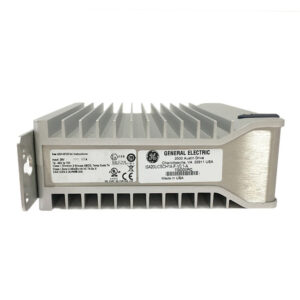
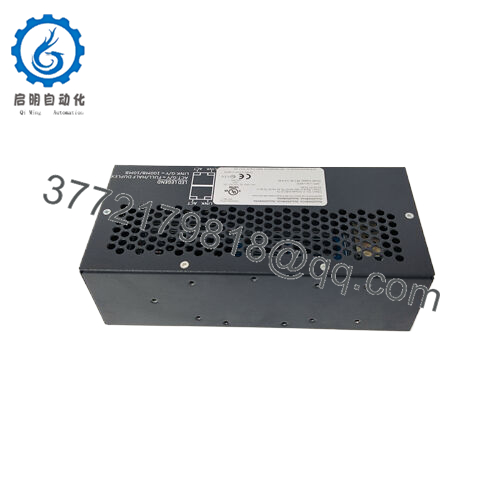
The GE IS420ESWBH1A is a 16‑port Industrial Ethernet IONet Switch designed for use within General Electric’s Mark VIe and Mark VIeS control system families. Within this architecture, it functions as a dedicated I/O network switch, linking distributed I/O packs, terminal boards, and controllers over 10/100Base‑TX copper Ethernet while providing a fiber uplink for longer runs or noisy environments. Unlike general-purpose IT switches, it is engineered as part of the GE Distributed Control System, with behavior and performance tuned to the requirements of real-time industrial automation and turbine control.
In the Mark VIe control system, the GE IS420ESWBH1A typically resides in I/O or controller cabinets as an IONet hub, forming the backbone for simplex I/O networks. I/O packs digitize field signals and rely on the IONet switch to deliver those values to the controller with consistent timing and high integrity, while also carrying configuration data and diagnostic messages. From a network topology standpoint, the switch sits at the edge layer, aggregating I/O device connections and handing traffic off via its fiber interface to higher-level switches or control networks, such as plant Ethernet segments or gateway nodes.
For system integrators and plant engineers, the GE IS420ESWBH1A offers a straightforward way to expand or retrofit Mark VIe I/O networks without introducing third-party network components that may complicate validation or SIL calculations. Because it is part of the Mark VIe/VIeS family and supported by GE documentation, it aligns well with existing engineering tools, lifecycle practices, and spare parts strategies. This positioning makes the switch particularly attractive for projects where maintaining OEM consistency, minimizing integration risk, and ensuring long-term support are just as important as raw port count or bandwidth.
Key technical features & functional benefits
One of the most important strengths of the GE IS420ESWBH1A is its port configuration tailored to industrial automation. It provides sixteen 10/100Base‑TX RJ45 copper ports, allowing a high density of I/O packs and local devices to be tied into a single IONet segment. This is complemented by a 100Base‑FX multi‑mode fiber port with an LC‑type connector, which is ideal for connecting to upstream switches or remote cabinets over longer distances while maintaining noise immunity and signal integrity. The combination of copper and fiber interfaces makes the switch flexible for both panel‑level wiring and inter‑cabinet links, reducing the need for additional media converters.
From a hardware design perspective, the GE IS420ESWBH1A is engineered for panel and DIN‑rail environments rather than office racks. It supports mounting in parallel or perpendicular orientations, and it can be installed using BVP1 or BVP4 clips depending on configuration, which helps integrators fit it into crowded control cabinets. Compact dimensions and a 24–28 V direct current supply make it easy to power from typical control cabinet power distribution schemes. The wide operating temperature range, extending roughly from −40 °C up to around +70 °C (−40 to 158 °F depending on source), allows the switch to remain stable in turbine enclosures and outdoor-rated cabinets where ambient conditions are far more demanding than in climate-controlled IT rooms.
In terms of functional performance, the GE IS420ESWBH1A is part of GE’s ESWx Industrial Ethernet switch family, which is designed to support the deterministic, high‑reliability communications required in real-time control. These switches comply with Ethernet standards such as 802.3, 802.3u, and 802.3x, and they incorporate buffering and forwarding behavior suitable for high volumes of cyclic I/O and diagnostic traffic without introducing problematic jitter. When used across Mark VIe I/O networks, this helps ensure that I/O modules consistently receive controller outputs and that fault status information is propagated quickly, supporting safe operation and fast trip responses.
Long‑term reliability is supported both by the electrical and mechanical design and by the way the GE IS420ESWBH1A integrates into the Mark VIe ecosystem. It is documented in GE manuals such as the Mark VIe Industrial Ethernet/IONet Switches guide, and it is classified as an active product, which is important for plants planning long service lives and maintaining qualified spares. Using an OEM switch reduces uncertainty around firmware compatibility, control system certification, and long-term support, which in turn lowers lifecycle risk for critical assets like gas turbines, steam turbines, and large compressors. For operators who are standardizing on GE’s control platform, this model offers a well‑aligned, low‑risk solution for building and expanding their I/O networks.

- IS420ESWBH1A
Detailed technical specifications
| Parameter | Value |
|---|---|
| Model | IS420ESWBH1A |
| Brand | General Electric (GE) |
| Product Type | Industrial Ethernet IONet Switch, 10/100Base‑TX with fiber uplink |
| Series | Mark VIe / Mark VIeS control system family |
| Number of Copper Ports | 16 × 10/100Base‑TX RJ45 ports |
| Fiber Interface | 1 × 100Base‑FX multi‑mode fiber port, LC‑type connector |
| Power Supply | 24–28 volts direct current nominal output / supply range |
| Operating Temperature Range | Approximately −40 °C to +70 °C (−40 to 158 °F) |
| Mounting Options | DIN‑rail or panel mounting; parallel or perpendicular using clips |
| Typical Dimensions | About 162 mm high × 115 mm wide × 72 mm deep (approx. 7.4 × 3.4 × 2.2 in) |
| Functional Abbreviation | ESWB (ESWx Industrial Ethernet switch family) |
| Applicable Standards | IEEE 802.3, 802.3u, 802.3x Ethernet compatibility |
| Control System Compatibility | GE Mark VIe and Mark VIeS Distributed Control Systems |
| Environmental Use Case | Industrial automation cabinets, turbine and process control panels |
Related modules or compatible units
IS420ESWAH1A – 8‑port ESWA Industrial Ethernet switch used where fewer copper ports are required but the same Mark VIe IONet compatibility is needed
IS420ESWAH3A – Another ESWA variant with 8 copper ports, often used in smaller I/O cabinets or localized subsystems within the same control architecture.
IS420ESWBH3A – 16‑port ESWB model similar in role to IS420ESWBH1A, typically used where copper-only connectivity is sufficient and no fiber uplink is required.
IS420ESWCH1A – A related ESWx switch model used in applications that demand slightly different port combinations or redundancy strategies within Mark VIe networks.
IS420ESWCH3A – Variant within the ESWx family intended for alternative cabinet layouts or specific network segmentation schemes in large Mark VIe deployments.
IS420UCSBH1A – Mark VIe control module that often communicates over the same industrial Ethernet networks provided by ESWx switches, forming part of the controller layer.
IS420ESWAH2A – ESWA series unit typically applied in installations where compact switches with fewer ports serve as local drops from a main ESWB backbone.
Installation notes & maintenance best practices
When planning installation of the GE IS420ESWBH1A, engineers should begin by verifying cabinet space, airflow, and wiring paths so that Ethernet patching and fiber routing can be executed cleanly. The switch must be mounted on a suitable DIN‑rail or panel surface, with adequate clearance for RJ45 and LC connectors and bend radius for fiber jumpers. Power supply design should account for the required 24–28 V direct current range and include proper overcurrent protection and grounding, tying the switch into the cabinet’s protective earth scheme to minimize noise and transient susceptibility. It is also important to consider network topology at this stage, defining which I/O packs, controllers, and higher-level switches will connect to each port, and documenting port assignments so that future maintenance is straightforward
Ongoing maintenance for the GE IS420ESWBH1A should focus on visual inspection, connection integrity, and periodic network health checks rather than frequent physical intervention. At routine outage intervals, technicians should check that copper and fiber connectors remain firmly seated, labels are legible, and there is no sign of overheating, corrosion, or mechanical damage to the housing or cabling. Network diagnostics from the Mark VIe system and associated tools can be used to monitor communication statistics, detect excessive errors or dropped packets, and confirm that all I/O packs on the IONet are communicating as expected. If firmware updates are issued through GE for ESWx switches, they should be evaluated within the plant’s change management process and applied in a controlled manner to maintain consistency across redundant or related network segments.