 WhatsApp: +86 16626708626
 Email:
  Phone: +86 16626708626
Description
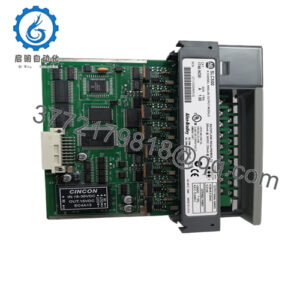
The GE IS420UCSCH1A is a compact Mark VIe controller module used as a central processor for turbines and balance‑of‑plant equipment in power generation and other heavy‑industry applications. It appears in gas and steam turbine control systems, combined‑cycle blocks, and large mechanical‑drive installations where a standalone, Ethernet‑rich controller must coordinate distributed I/O packs over IONet while exchanging data with HMIs, historians, and plant DCS networks. In these projects, the GE IS420UCSCH1A executes real‑time control logic for start‑up sequencing, load control, protection functions, and auxiliary systems such as fuel, lube‑oil, and cooling, while simultaneously serving higher‑level functions like data aggregation and cloud or on‑prem analytics via its embedded Field Agent capability. Because it is a rugged Speedtronic‑class controller designed for harsh industrial environments, it is applicable in control systems where deterministic response, high availability, and long‑term vendor support are more critical than generic PLC flexibility.
In many modernization and life‑extension projects, the GE IS420UCSCH1A is chosen to replace aging Mark V or early Mark VI hardware while retaining existing sensors, actuators, and much of the field wiring. It acts as a drop‑in Mark VIe control core that can work with IS220‑series I/O packs and Mark VIe terminal boards, making it attractive for fleet owners who want to move to a common ControlST‑based platform across multiple units and sites. The controller’s small physical footprint and robust environmental ratings allow it to be panel‑mounted in turbine control rooms or compact skids, so OEMs and integrators can deploy it in both greenfield projects and constrained retrofit spaces. For operators, standardizing on the GE IS420UCSCH1A means easier spare‑parts management, consistent configuration tools, and a clearer upgrade path as GE Vernova evolves the broader Mark VIe/UCSE product line.
The GE IS420UCSCH1A is a UCSC‑type Mark VIe controller, often described as a compact, standalone Speedtronic embedded controller for GE Vernova’s Mark VIe series. It belongs to the UCSE/UCSc family and runs the QNX Neutrino real‑time, multi‑tasking operating system, which is used across Mark VIe controls to execute application‑specific turbine and plant logic. Architecturally, it is a quad‑core controller able to host high‑speed, high‑reliability industrial applications, with hardware and software pre‑installed for turbine or balance‑of‑plant control. Unlike earlier UCSA‑type controllers, the GE IS420UCSCH1A is focused purely on control and communications; it does not itself host application I/O, but instead communicates with Mark VIe I/O modules over dedicated industrial Ethernet.
Within a Mark VIe system, the GE IS420UCSCH1A sits at the core of the control hierarchy. It connects downward to I/O packs through three IONet ports (R, S, and T), which support simplex, dual, TMR, and shared I/O arrangements, and upward to HMIs, engineering workstations, and other plant systems over general‑purpose Ethernet ports. The controller can be used singly or as part of a redundant set; in redundant configurations, each controller in the set has access to all attached I/O networks so that input data is available to every controller, supporting bumpless transfer and fault‑tolerant operation. Engineers value the GE IS420UCSCH1A for its integration with ToolboxST/ControlST tools, its embedded Field Agent (EFA) technology for secure cloud or local web‑based applications, and its ability to host modern analytics while still maintaining deterministic real‑time control.
A central strength of the GE IS420UCSCH1A is its processing and operating‑system platform. Sources describe UCSC/UCSE‑class controllers as using multi‑core processors (quad‑core in the case of this model) combined with sufficient RAM and solid‑state storage to run complex control, communication, and analytics workloads concurrently. QNX Neutrino provides the real‑time kernel, offering deterministic scheduling and high reliability even under heavy load, which is essential for turbine protection and fast‑acting control loops. This combination supports “real‑time virtualization” concepts, where control and non‑critical applications can coexist without compromising the timing requirements of the core control tasks.nseautomation+4
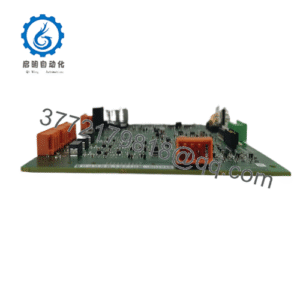
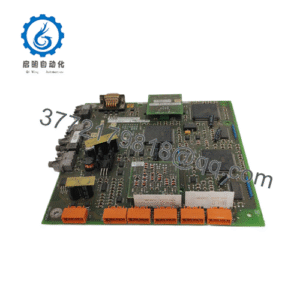
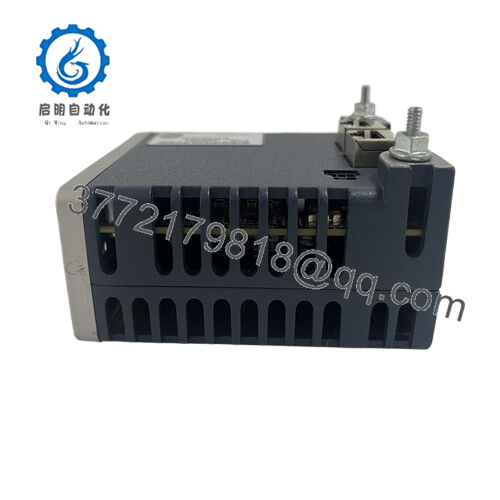
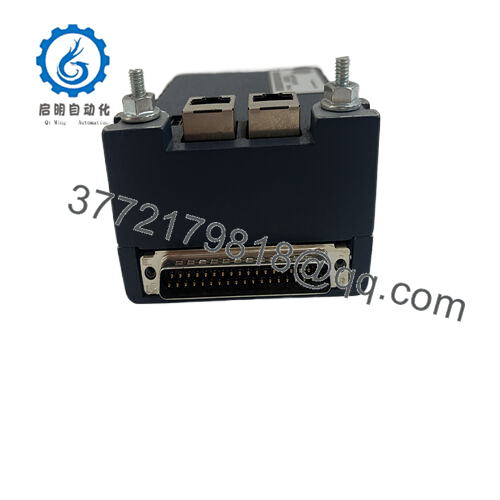
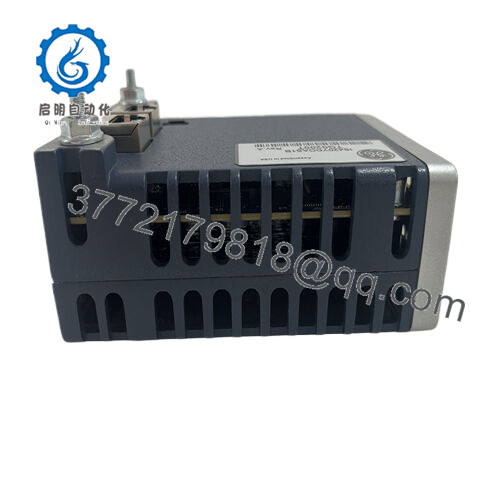
Hardware design also reflects turbine‑class requirements. The GE IS420UCSCH1A is a compact module, with published dimensions around 5.5 × 15.3 × 20.3 cm, small enough to mount in tight cabinet spaces while still leaving room for cabling and airflow. It uses convective cooling, eliminating reliance on internal fans and reducing maintenance points, and is specified for operating temperatures from roughly −40 to +58 °C, with storage down to about −45 °C and up to +85 °C. Input power is a wide 18–50 V DC range at roughly 23–37 W, allowing the controller to tolerate supply variations common in industrial DC systems while keeping power consumption modest. Front‑panel connectors and LEDs provide quick access to Ethernet ports and clear visual indication of power, boot, communication, and fault status, which simplifies commissioning and troubleshooting in the field.
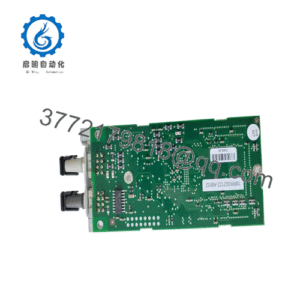
Connectivity and compatibility are other major advantages. The GE IS420UCSCH1A includes multiple Ethernet ports (sources note as many as eight in the UCSE/UCSC family), three of which are dedicated IONet ports for I/O module communications, with others reserved for engineering (UDH/ENET) and plant interfaces. The embedded Field Agent capability allows the controller to support Predix cloud applications or locally hosted web applications over secure connections, delivering real‑time data to higher‑level monitoring and analytics platforms. At the same time, it remains fully compatible with Mark VIe I/O modules via IONet and, where present, additional fieldbus interfaces such as PROFINET, making it a flexible hub in mixed‑protocol plants. Because it is part of the UCSE/Mark VIe family, firmware updates, configuration, and diagnostics are managed through ToolboxST/ControlST, giving engineers a consistent environment across multiple controller generations.
Long‑term reliability and safety are built into both the hardware and system role of the GE IS420UCSCH1A. The controller is designed for continuous operation in harsh power‑plant environments, with humidity ratings around 5–95% non‑condensing and rugged construction suitable for turbine control rooms and auxiliary equipment shelters. Documentation notes that UCSC/UCSE controllers can achieve SIL3‑level safety certifications in appropriate architectures, making them suitable for use in safety‑related applications and Mark VIeS‑style configurations when combined with the correct I/O and system design. The use of solid‑state drives, absence of batteries and jumpers, and convective cooling all help reduce wear‑out mechanisms and simplify lifecycle support. For operators, these features translate into predictable maintenance intervals and reduced risk of sudden controller failures.

- IS420UCSCH1A
Detailed Technical Specifications
| Parameter | Value |
|---|---|
| Model | GE IS420UCSCH1A |
| Brand | General Electric / GE Vernova |
| Product Type | Compact standalone Mark VIe UCSC/UCSE controller module |
| Control System Series | Mark VIe turbine and balance‑of‑plant control |
| Processor | Quad‑core industrial processor (UCSC/UCSE Mark VIe control unit) |
| Operating System | QNX Neutrino real‑time, multi‑tasking OS |
| Input Voltage Range | 18–50 V DC, typical power consumption about 23–37 W |
| I/O Hosting | Does not host application I/Os directly; uses external Mark VIe I/O modules via IONet |
| IONet Ports | 3 dedicated IONet ports (R, S, T) for simplex, dual, TMR, and shared I/O |
| Other Ethernet / Service Ports | Additional Ethernet ports plus USB‑C interfaces for configuration and serial redirection |
| Operating Temperature Range | Approximately −40 to +58 °C (convective cooling) |
| Storage Temperature Range | Approximately −45 to +85 °C |
| Relative Humidity | 5–95% non‑condensing |
| Physical Size | About 5.5 × 15.3 × 20.3 cm; weight around 1 kg |
| Key Software Tools | Configured and maintained using ToolboxST / ControlST |
| Typical Applications | Gas/steam turbines, safety systems, combined‑cycle plants, general industrial automation |
Related Modules or Compatible Units
IS420UCSCH2A – Related UCSC controller variant in the same Mark VIe family, often paired with GE IS420UCSCH1A in redundant configurations.
IS220UCSAH1A – Earlier UCSA‑type Mark VIe controller used in similar turbine and BoP roles, offering a migration path to newer UCSC/UCSE hardware.
UCSE‑series Controllers (e.g., UCSE) – Newer Mark VIe standalone controllers described in GE Vernova documentation with similar QNX and IONet architecture.
IS220‑series I/O Packs – Distributed I/O modules that connect to GE IS420UCSCH1A over IONet for field signal acquisition and actuation
Mark VIe IONet Switches (e.g., IS420ESWBH3A) – Industrial Ethernet switches used to build the IONet backbone between controllers and I/O packs.
Installation Notes & Maintenance Best Practices
Before installing the GE IS420UCSCH1A, engineers should verify that the DC power supply lies within the 18–50 V range and can deliver the required 23–37 W with margin under worst‑case temperature conditions. The controller should be panel‑mounted with sufficient clearance around its enclosure to support convective cooling and to allow easy access to Ethernet, USB‑C, and any other service ports on the front. IONet cabling from the R, S, and T ports should be routed separately from high‑voltage and high‑current conductors, and clearly labeled to distinguish them from plant‑wide Ethernet or office networks. During commissioning, configuration with ToolboxST/ControlST must include assigning controller IDs, configuring IONet addresses and frame rates, enabling redundancy where required, and verifying time synchronization and communication with all connected I/O packs.
Maintenance for the GE IS420UCSCH1A focuses on environmental control, diagnostics, and configuration management rather than frequent hardware replacement. Technicians should periodically inspect the controller for secure mounting, clean connectors, and unobstructed airflow, while monitoring cabinet temperatures and humidity to ensure they remain within the specified envelope. Regular review of controller and network diagnostics in ToolboxST/ControlST—such as IONet error counts, time‑sync status, and event logs—helps identify developing network or hardware issues before they cause trips. Keeping updated backups of the controller’s application and configuration, along with at least one spare GE IS420UCSCH1A or compatible UCSC/UCSE unit on site, allows rapid replacement if a fault is detected, minimizing downtime in mission‑critical turbine and plant operations.