
 WhatsApp: +86 16626708626
 Email:
  Phone: +86 16626708626
Description
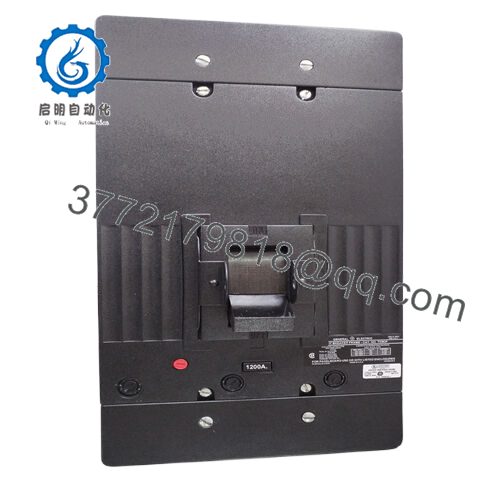
In the high-stakes arena of industrial power distribution, where molded case circuit breakers must swiftly interrupt faults like short circuits or overloads to avert equipment damage, fires, or cascading failures in manufacturing lines or utility feeders, engineers often contend with the limitations of undersized protection that falters under heavy loads, leading to nuisance trips or insufficient arc quenching. The fallout is tangible: in a steel mill or data center, a delayed break can escalate a minor fault into hours of downtime, costing thousands in lost output while risking non-compliance with NEC or IEEE standards. This is where the GE TKM3F1200 asserts its role as a robust 1200 A molded case circuit breaker frame from GE Vernova’s K1200 line, engineered to tackle these demands in industrial automation by delivering thermal-magnetic protection with high interrupting capacity. Positioned for process control in three-phase systems, it ensures high reliability in I/O signal safeguarding, preventing the propagation of faults that could compromise downstream controls or motor drives.
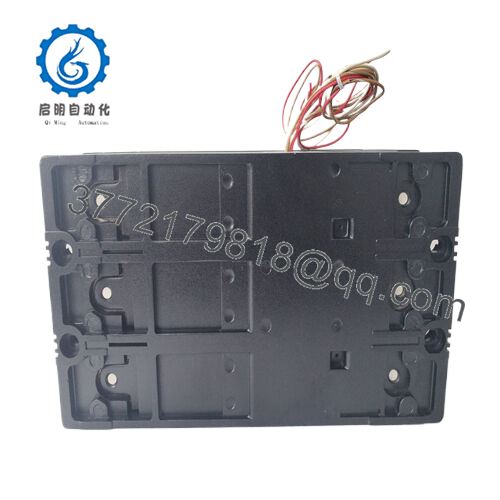
Envision a heavy industrial panel feeding large pumps in a wastewater facility or transformers in a commercial high-rise, where inrush currents from 1000+ HP motors or harmonic distortions from VFDs strain breakers, eroding modular integration and inviting thermal runaway. The GE TKM3F1200 rises to the occasion, its bolt-on design mounting securely in panelboards or MCCs to handle 600 V applications, with a 30 kA interrupting rating at 480 V that quenches arcs reliably under fault conditions up to 65 kA symmetrical. Supporting interchangeable trip units for customizable long-time and instantaneous settings, it aligns with UL 489 for molded case breakers, easing upgrades in legacy setups without full panel redesigns and reducing the engineering overhead of mismatched ratings. In these pulse-pounding contexts, the frame’s robust enclosure withstands vibration and dust, maintaining contact integrity to avoid false opens that disrupt PLC sequences, while optional accessories like shunt trips enable remote alarming for predictive maintenance. For crews retrofitting resilient feeders or scaling data-heavy grids, this breaker addresses the push for fault-tolerant architectures, where protection scales with load without sacrificing selectivity.
Ultimately, selecting the GE TKM3F1200 empowers the core objective of operational continuity, where precise trip curves minimize energy waste from overprotection and bolster safety by limiting let-through I²t to safe levels. In process control environments demanding continuous uptime, its compact footprint and line-lug terminations make it a versatile choice, instilling confidence that power flow remains guarded against the unforeseen surges of industrial realities.
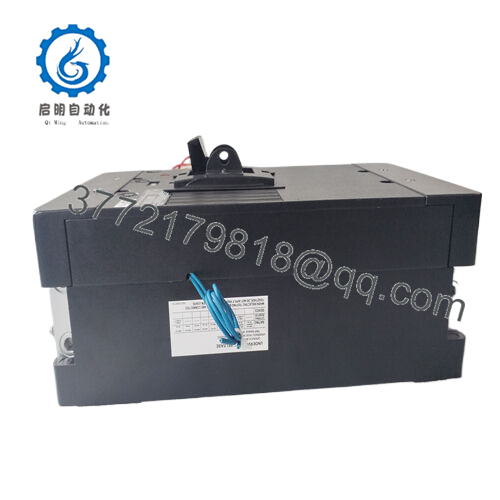
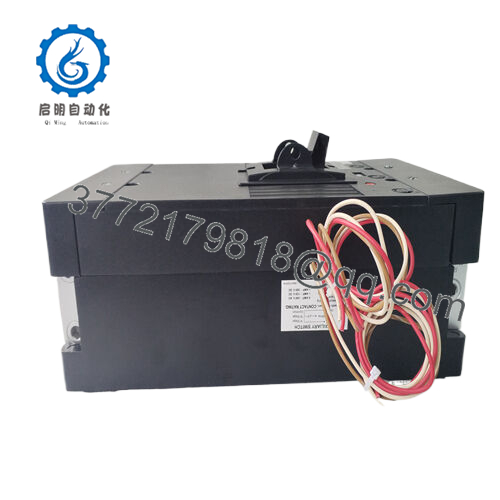
The GE TKM3F1200 functions as a three-pole molded case circuit breaker frame in GE Vernova’s distribution ecosystem, residing at the feeder or branch circuit layer of power automation stacks to monitor and interrupt three-phase currents via thermal-magnetic mechanisms. It mounts via bolt-on connections in enclosures, accepting interchangeable TKMA trip units that sense overloads through bimetallic strips (long-time delay) and electromagnetic coils (instantaneous short-circuit response), tripping the main contacts—rated for 1200 A continuous—to open the circuit within 50 ms for faults, while coordinating with upstream fuses or relays for selectivity. In a typical setup, it integrates with control power via auxiliary switches for status feedback to PLCs like the GE Series 90-70, supporting diagnostics like manual charging handles and trip indicators that flag mechanical issues without disassembly.

- TKM3F1200
This breaker aligns with panelboard architectures, pairing with neutral kits for unbalanced loads or ground fault modules for enhanced protection, and its solid-state options extend to electronic trip variants for adjustable curves in variable-load scenarios. The GE TKM3F1200 incorporates self-aligning contacts and arc chutes for reliable quenching, rated for 5,000 operations mechanically, suiting it for frequent switching in motor control centers. While protocol-agnostic, it interfaces via hardwired auxiliaries in hybrid systems with Modbus gateways for SCADA polling, thriving in NEMA 1/3R enclosures up to 5g vibration. By bridging line-side power to load-side safety, it streamlines fault management—from basic branch protection to zoned coordination—allowing engineers to layer redundancies without footprint sprawl, focusing on optimizing system selectivity over reactive fixes.
| Specification | Details |
|---|---|
| Model Number | TKM3F1200 |
| Brand | GE Vernova |
| Type | Molded Case Circuit Breaker Frame |
| Input Voltage | 600 V AC |
| Operating Temp Range | -40°C to +85°C |
| Mounting Style | Bolt-on |
| Dimensions | 10 x 6 x 8 in (approx.) |
| Weight | 25 kg |
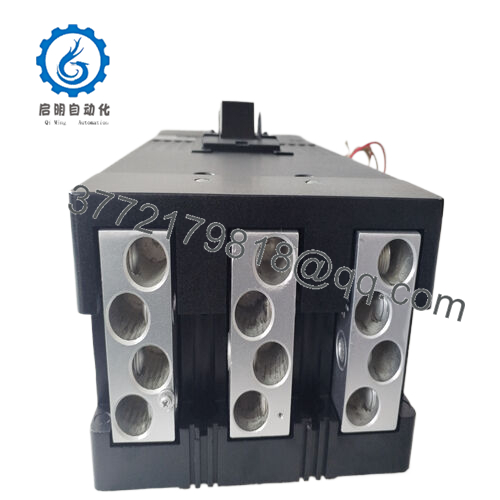
| Interface/Bus | Line lugs; auxiliary contacts |
| Compliance | UL 489, IEEE C37.13, CE |
| Supported Protocols | N/A (hardwired) |
| Typical Power Draw | N/A (passive) |
Opting for the GE TKM3F1200 instills a bedrock of interruptive assurance in distribution panels, where its high AIC rating quells faults before thermal escalation, ensuring long-term performance in humid or dusty bays and averting the repair cascade of welded contacts that idle feeders for weeks. Forged for the electromagnetic tumult of enclosures, it upholds contact alignment across cycles, so interruptions snap with precision, enabling smoother motor restarts that align with VFD sequencing and trim inrush penalties for energy-efficient grids.
The upkeep eases considerably, as visual trip flags and accessory telemetry expose overload histories in moments, curtailing bench diagnostics and redirecting crews to auguries like I²t trending. Deployment burdens featherlight, its bolt-on universality meshing with legacy boards to expedite swaps amid tight turnarounds, muting the sprawl of revalidation in phased overhauls. Operators glean fault vignettes from auxiliary logs, not exhaustive etymologies, while inherent arc resistance dials down flashover risks in routine audits.
At heart, the GE TKM3F1200 seeds a ethos of selective sanctuary—its trip sinews not only salve code rubrics but sanctify them, abetting orchestrated outages that spare healthy segments or harvest transient insights. By inscribing such exactitude at the power precipice, it blurs rifts ‘twixt surge and serenity, nurturing grids where circuits don’t merely abide; they advance, equilibrated and emboldened, amid the flux of electrified exigencies.
The GE TKM3F1200 anchors feeder protection in steel mill switchgear, where it severs short circuits from arc furnaces amid high inrush, shoring critical system uptime in process control forges flayed by inductive transients and melt cycles.
In data center PDUs, the GE TKM3F1206 oversees UPS tie-ins against server surges, defying cooling drafts to vouchsafe high reliability in continuous uptime quests, staunching imbalances that imperil rack clusters mid-compute.
Commercial high-rises enlist the GE TKM3F1200 for elevator motor branches, grappling with peak-hour loads and seismic sways to sustain fast data cycles, fortifying industrial automation where selectivity ensures lift continuity without collateral blacks.
TKM3F1000 – Lower-trip variant (1000 A) for feeders with moderate overload margins in branch circuits.
TKM3F800 – Compact 800 A frame for space-constrained panelboards in auxiliary panels.
TEY360 – Smaller thermal-magnetic breaker (60 A) for downstream sub-feeders in MCC tie-ins.
SEL-751 – Relay alternative with arc detection complementing TKM3F1200 for zoned fault hunting.
THKM3F1200 – High-fault edition (65 kA) for grids with elevated short-circuit duties.
TKMA3T1200 – Interchangeable trip unit for electronic adjustments on TKM3F1200 frames.
CR296 – Renewal starter module pairing with TKM3F1200 for motor overload coordination.
Q-Line TQL – Upstream feeder breaker for cascading selectivity with TKM3F1200.
Before inducting the GE TKM3F1200 into your enclosure, audit trip unit calibration against load FLA—deviations over 5% can hasten nuisance opens—so secondary-inject pre-mount; affirm bolt torque at 200 in-lbs for line lugs to defy vibes, and verify phase barriers align without gaps, rated for 600 V isolation to curb flashovers. Probe continuity with a hi-pot tester at 2 kV AC to spot insulation pinholes, and confirm panel depth clears the 8-inch profile, adding spacers if bus spacing narrows under 4 inches.
Nurturing the GE TKM3F1200 orbits semiannual contact resistance laps under 100 µΩ per pole, twinned with thermal imaging to flag hotspots exceeding 50°C rise, plus enclosure seals in corrosive airs to forestall creepage. Annually, rack manual trips 10 cycles to assay mechanical snap—under 50 ms is golden—and docket variances for erosion escalations. In jolt-jolted lairs, re-torque mounts quarterly, and eclipse energizes during accessory adds, hoarding baselines in triplicate for rebound rites. These cadences, etched into patrol sheets, recast the breaker as stoic sentinel, muting fault frenzies into measured mercy.