 WhatsApp: +86 16626708626
 Email:
  Phone: +86 16626708626
Description
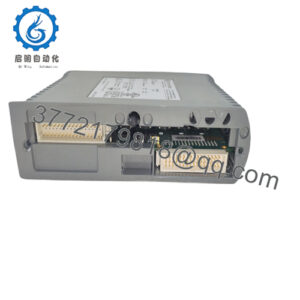
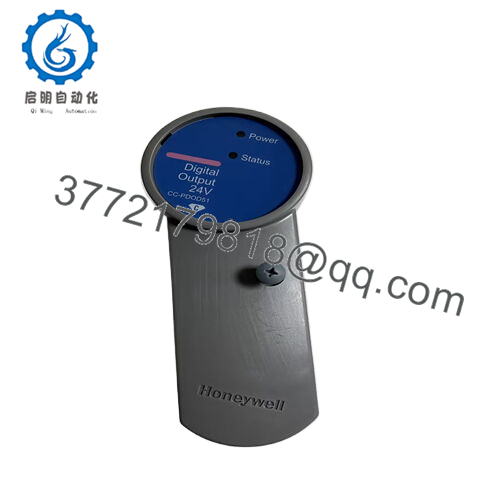
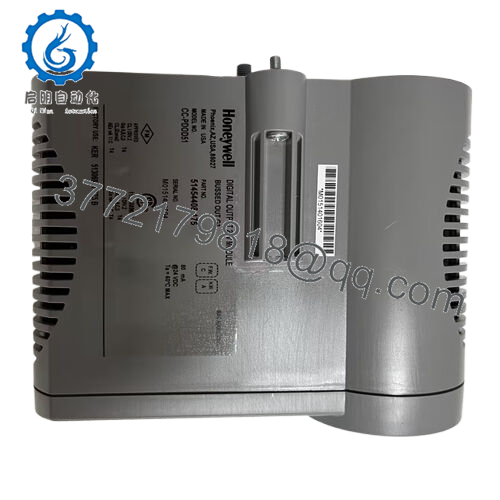
In process control setups where discrete actuators like solenoids or pilot valves must respond instantaneously to control commands without risking overloads or false energization in noisy environments, the Honeywell CC-PDOD51 delivers a dependable countermeasure for engineers wrestling with the hazards of unisolated digital outputs in dense I/O racks. Envision a hydraulic press in metal forming where erratic 24 V DC signals from bussed outputs trigger premature clamp releases, leading to material jams or safety halts, or a conveyor interlock in material handling where contact arcing under inductive loads corrupts downstream relays, amplifying downtime in synchronized lines—these mishaps typically arise from modules that skimp on field isolation or fail to buffer surges in shared backplanes amid EMI or ground shifts. This 32-channel digital output module resolves them by sinking up to 0.5 A per channel with galvanic isolation up to 1500 V, routing commands through open-drain architecture to ground loads safely while incorporating per-channel diagnostics for short-circuit detection and auto-shutdown, ensuring your effectors activate cleanly without propagating faults across the system in real-time operations.
It proves crucial in industrial automation environments like discrete manufacturing or energy distribution, where high reliability in digital output signaling underpins fault-tolerant control and minimizes unplanned interruptions for regulatory compliance. The Honeywell CC-PDOD51 integrates into Experion PKS Series-C I/O carriers, pairing with IOTAs like the CC-TDOD51 for non-redundant field wiring that supports inductive loads up to 10 mH, so you sidestep the vulnerabilities of source-type outputs in grounded cabinets. For teams scaling legacy TPS or TDC 3000 nodes, it overlays without extensive reconfiguration, easing migrations by matching existing rack footprints while enhancing signal integrity against 50 V common-mode noise. In modular process control infrastructures, its coated conformal finish withstands humid or dusty atmospheres from -40°C to +70°C, enabling dense deployments that handle rapid scan rates without thermal throttling. By prioritizing open-drain sinking and diagnostic granularity, the Honeywell CC-PDOD51 fortifies system stability, empowering precise sequencing and reduced latency that directly lifts throughput, all while curbing the engineering overhead of output protection in rigorous industrial automation landscapes.

- CC-PDOD51
When evaluating DO modules for actuator-heavy architectures, the Honeywell CC-PDOD51 merits consideration for its channel density and isolation depth, providing the output reliability that safeguards commands in EMI-challenged or load-variable settings without compromising on scalability.
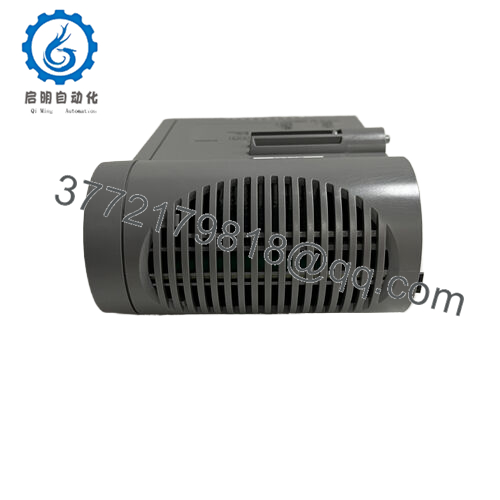
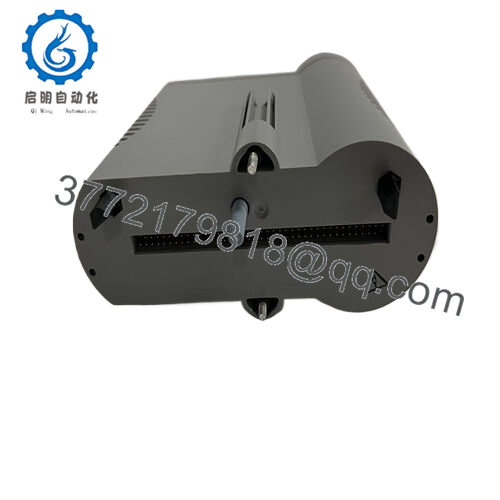
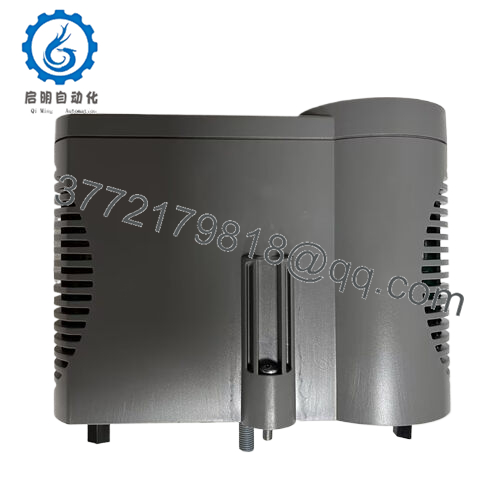
The Honeywell CC-PDOD51 operates as a high-density digital output module in the field I/O execution layer of Honeywell’s Experion PKS Series-C distributed control systems, converting control logic commands into isolated 24 V DC sinking signals for actuators or indicators. It slots into C300 I/O carriers, occupying one backplane position to drive 32 channels via open-drain (sink) architecture, where each output grounds loads up to 0.5 A continuous (1 A peak for 100 ms) through bussed power distribution, supporting inductive suppression via external diodes for solenoid or relay coils. This setup enables configurable debounce times (0-255 ms) to filter transients, with HART-like diagnostics for wire faults or overloads that relay status bits to upstream processors for proactive alarming, while per-channel isolation prevents fault propagation in shared cabinets.
In a typical stack, it draws 5 V DC from the carrier while interfacing with field terminations through screw blocks on IOTAs like CC-TDOD51, coordinating with input modules for closed-loop feedback, such as verifying valve positions post-energization, and supporting scan rates to 10 ms per channel in redundancy-enabled nodes. It meshes with universal I/O like CC-PUIO01 for hybrid signaling and complies with FOUNDATION Fieldbus for extensions, with built-in fusing at 0.5 A per group to safeguard against shorts. Positioned between the control engine and effectors, the Honeywell CC-PDOD51 streamlines output architecture by consolidating 32 sinks in a coated module for harsh environs, where compression terminals ease screened cabling in marshalling panels—fostering a responsive pathway that integrates with safety PLCs via Profisafe, upholding command fidelity across backplane topologies without introducing arcing or voltage sags.
| Specification | Details |
|---|---|
| Model Number | CC-PDOD51 |
| Brand | Honeywell |
| Type | 32-Channel Digital Output (Sink, 24 V DC) |
| Input Voltage | 5 V DC (from carrier) |
| Operating Temp Range | -40°C to +70°C |
| Mounting Style | Backplane Slot (C300 Carrier) |
| Dimensions | 35 x 140 x 120 mm (W x H x D) |
| Weight | 0.35 kg |
| Interface/Bus | Series-C Bus, Compression Terminals |
| Compliance | CE, IEC 61131-2, RoHS |
| Supported Protocols | Profisafe, FOUNDATION Fieldbus |
| Typical Power Draw | 10 W (full load) |
Deploying the Honeywell CC-PDOD51 equips your carrier with output resilience that sustains 0.5 A sinks across 32 channels amid inductive kicks up to 10 mH, quashing the arcing that fouls contacts and stalls sequences in actuator-dense runs, which in turn refines timing precision and reins in failures in variables like position or flow without supplemental suppressors. This fortitude shines in bussed configs, where shared power parses loads evenly to avert voltage droops, often doubling MTBF in solenoid-heavy loops versus unisolated peers.
Diagnostic relays hone upkeep too, with per-channel flags that localize shorts for swift isolations, confining downtime to seconds in monitored racks versus hours for lumped outputs. Its coated slot-in design trims scaling friction as well—mapping channels via Experion Studio skips physical reroutes, easing node densification and reallocating engineering from protection calcs to sequence logic. Engineered for enclosure grit, it buffers 1500 V isolation and 95% humidity, with debounce that tamps transients for long-term command purity, ensuring your PKS periphery adapts to effector surges or ambient shifts with graceful poise.
In metal stamping presses, the Honeywell CC-PDOD51 energizes hydraulic solenoids for die clamping, where its sink isolation endures oily, vibratory bays to enforce critical system uptime and cycle fidelity in continuous process control.
Gas metering skids harness it for valve pilot commands, handling fast data cycles amid transient-heavy zones to synchronize high-reliability flow isolation.
For pharmaceutical filling lines, this output module drives pneumatic gates, meeting hygienic constraints with coated channels that enable modular rack growth in expansive I/O marshalling.
CC-PDOB51 – Redundant variant for dual-path sinking in high-availability field actuators.
CC-PDOD01 – Non-coated base model for ambient-controlled cabinets with similar 32-channel output.
CC-PDIL51 – Complementary 32-channel digital input for balanced discrete I/O in C300 carriers.
CC-TDOD51 – Non-redundant IOTA for field termination of the CC-PDOD51 in standard setups.
CC-PUIO01 – Universal I/O alternative for mixed digital/analog outputs in hybrid nodes.
CC-PDOD52 – High-current edition at 1 A per channel for heavier inductive loads.
DC-TDOD51 – Termination assembly add-on for extended cabling in the CC-PDOD51.
Before slotting the Honeywell CC-PDOD51 into your C300 carrier, confirm firmware at version 10.x or later for debounce support, and verify IOTA jumpers for bussing—misconfiguration risks uneven loads. Torque terminals to 0.5 Nm to resist vibration loosening, and add external diodes for inductives over 5 mH to comply with suppression norms, especially in cabinets near welders.
Sustaining it involves semiannual terminal inspections for arcing residue in humid process areas, applying contact cleaner to gold points without bridging. Pull diagnostic dumps quarterly from the Experion console to log short flags, addressing clusters over 5% for fuse audits. Biannual full-load tests at 0.5 A across channels validate sink fidelity without droop, and tagging with run dates syncs with compliance checks. This structured oversight blends with your PM cadences, preempting faults that could snag output harmony.