 WhatsApp: +86 16626708626
 Email:
  Phone: +86 16626708626
Description
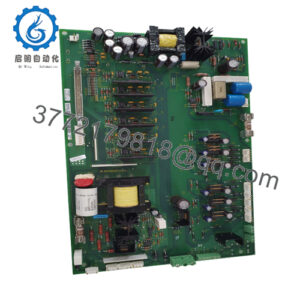
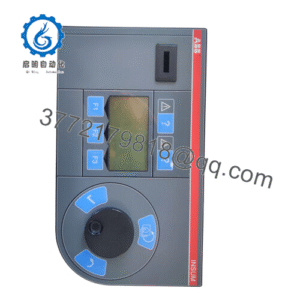
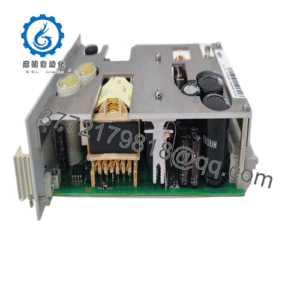
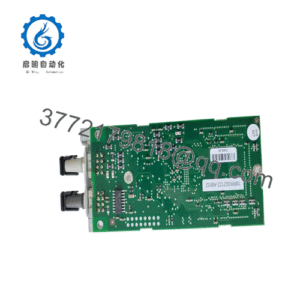
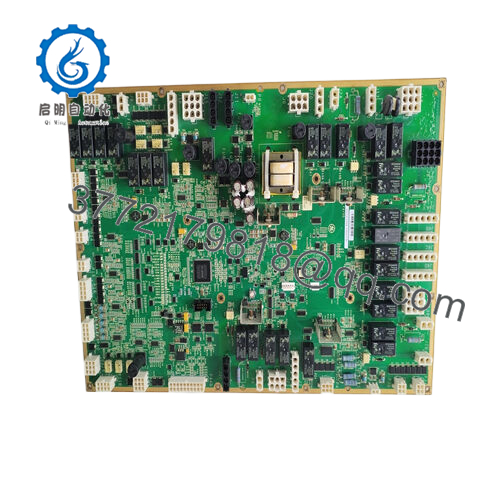
Product Model: IS230TNCIH4C
Product Brand: General Electric (GE)
Product Series: Mark VIe Speedtronic Turbine Control System
Product Features:
• Multi-protocol network interface for high-speed communication and data exchange in turbine control environments.
• Support for redundancy architectures (Simplex, Dual, TMR) to improve reliability and availability.
• Compatible with UDH and IONet communication protocols for flexible system integration.
• Designed for rugged industrial use with stable performance under extreme temperature and vibration conditions.
Technical Specifications
| Specification | Description |
|---|---|
| Product Model | IS230TNCIH4C |
| Manufacturer | General Electric (GE) |
| Series | Mark VIe Speedtronic Control System |
| Function | Communication & Interface Module |
| Rack Compatibility | 13-slot or 21-slot VME racks |
| Communication Protocols | Unit Data Highway (UDH), IONet |
| Redundancy Support | Simplex, Dual, Triple Modular Redundancy |
| Network Interfaces | UDH (Ethernet-based backplane) |
| Diagnostic Features | LEDs + communication status indicators |
| Protection Components | Metal oxide varistors (surge resistance) |
| Operating Temp. | Industrial range (wide-temp components) |
| Backplane Interface | Standard Mark VIe bus connectors |
| Mounting | Rack module with terminal and sub-D connectors |

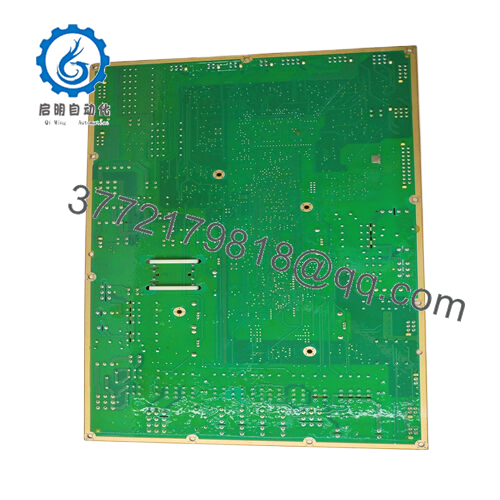
- IS230TNCIH4C
- IS230TNCIH4C
Product Role & System Fit
In large-scale industrial automation and critical rotating machinery control, seamless communication between sensors, actuators, controllers, and monitoring systems is non-negotiable. The IS230TNCIH4C by General Electric (GE) is engineered specifically for this task within the Mark VIe Speedtronic distributed control architecture, where real-time data exchange underpins turbine efficiency, safety, and operational responsiveness.
Functionally, the IS230TNCIH4C serves as a communication interface module, acting as the bridge between field elements — such as thermocouple sensors, discrete status signals, and analog input devices — and the Mark VIe control system’s core processors. This role places it at the heart of the control signal flow, where it consolidates incoming physical data and reliably delivers it to higher-level control logic.
Unlike standard PLC I/O boards, this automation module supports multiple communication standards, including GE’s proprietary Unit Data Highway (UDH) and IONet protocols, enabling both high-speed Ethernet-based data transmission and tight integration with GE’s real-time backplane networks. In practice, this means that equipment like gas and steam turbines, generator controls, and auxiliary systems can maintain synchronized datasets across redundant architectures — a critical requirement for performance consistency and safety compliance.
Another layer of its system fit is redundancy support: whether deployed in simplex, dual, or triple modular redundancy (TMR), the IS230TNCIH4C can be configured to meet different reliability and availability needs. TMR configurations, in particular, are used in safety-critical installations where uptime directly correlates with production revenue and risk mitigation — such as large power plants or offshore installations.
Field technicians often remark that this module’s plug-and-play integration into 13- or 21-slot VME racks simplifies project timelines. Whether retrofitting older Mark VI systems or expanding a Mark VIe installation, engineers benefit from predictable wiring paths, standardized backplane communication, and consistent diagnostic interfaces that reduce commissioning cycle time and maintenance costs.