 WhatsApp: +86 16626708626
 Email:
  Phone: +86 16626708626
Description
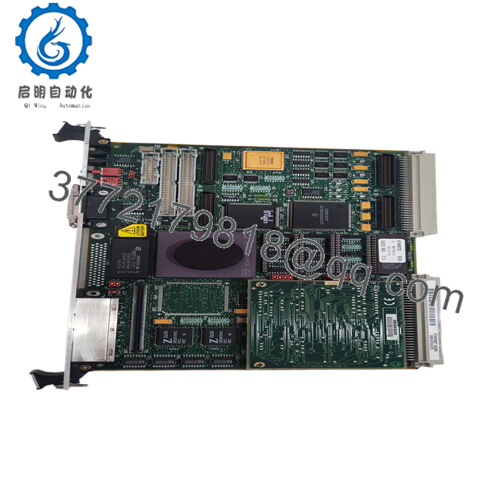
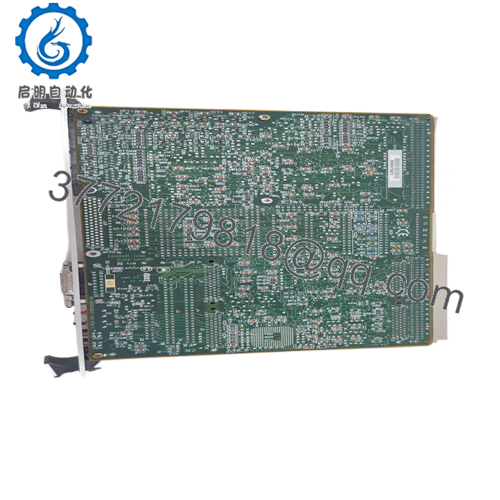
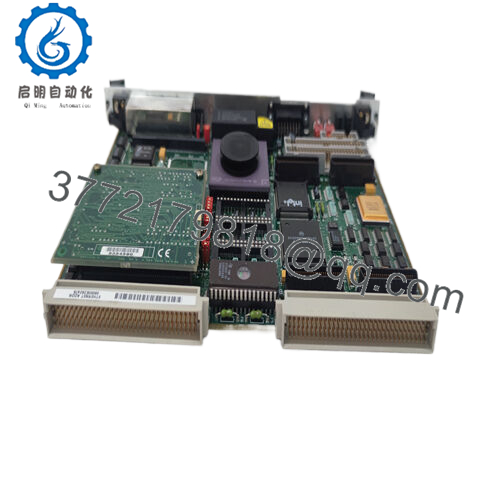
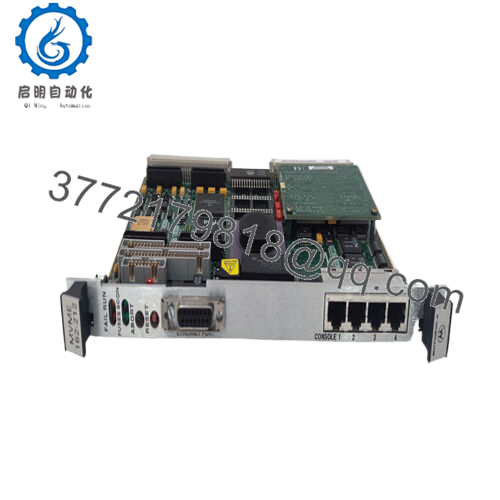
In industrial automation and embedded control systems, where VMEbus platforms must orchestrate real-time data processing and peripheral orchestration without succumbing to latency spikes or integration friction in multi-slot crates, engineers often contend with SBCs that underdeliver on I/O versatility or falter during expansions in harsh operational theaters. The Motorola MVME162-212 confronts this as a configurable VME single-board computer from the MVME162 series, featuring a 25 MHz MC68040 processor with integrated FPU for balanced performance in mid-scale control applications. Imagine a manufacturing line synchronizing PLCs and vision sensors for defect detection or a utility substation aggregating meter data amid grid fluctuations—here, inadequate DMA throughput or mismatched mezzanines can fragment command chains, prolong fault diagnostics, or expose gaps to EMI and thermal excursions. This module is essential in such high-reliability contexts, where its two IndustryPack slots and Ethernet interface fortify I/O signal pathways against noise, ensuring system stability across modular backplanes even as sensor counts escalate without inflating footprint demands.
The Motorola MVME162-212 is invaluable for sustaining legacy VME infrastructures, where its IP expandability allows tailored additions like analog I/O or comm adapters without chassis overhauls that cascade into extended downtimes. Its 4 MB DRAM and SCSI-2 support mitigate the memory and bus constraints that beset 68030-era boards in dusty or vibration-riddled industrial automation environments, while battery-backed SRAM preserves critical configs during transients. Fundamentally, it advances users’ pursuits for scalable RTOS hosting under VxWorks, shortening validation loops in deployment phases. For control integrators or modernization leads prioritizing longevity in panel-bound setups, the Motorola MVME162-212 offers a high-reliability nexus that reimagines mid-tier bottlenecks into flexible fortitude, where each IP transaction underpins the tempo of steadfast process control.
The Motorola MVME162-212 seizes the host position in VMEbus arrays, deploying the MC68040’s 32-bit core to handle A24/D32 transfers via the P1/P2 backplane, with VMEchip2 ASIC overseeing up to 7 interrupt daisy-chains for event precedence. It mates 4 MB parity DRAM with 256 KB SRAM (battery-backed) and 1 MB Flash for runtime persistence, absorbing inputs from four RS-232/422 serials, SCSI-2 DMA bus, and 10Base-T Ethernet before routing via IP interfaces to mezzanines such as DIO or A/D cards. In a standard 6U VME enclosure, it pulls +5 V from the bus, managing hot-plug arbitration under VME64 while leveraging tick timers for abort enforcement to sidestep deadlocks in timed sequences. This locates it pivotally in the hierarchy—above IP-derived field signals but under kernel dispatchers—with serial debug ports for console piping.
Its engagement hallmarks include boot strap options for ROM diagnostics or network booting, and Ethernet AUI for SCADA handoffs or SCSI for peripheral arrays, easing assimilation into DCS without protocol conversions. Diagnostics appear via front-panel LEDs for bus health or parity hits, forwardable over telnet for archival review, while redundancy through slotted duplicates in fault-resilient crates masks single-point lapses. For VME stalwarts, the Motorola MVME162-212‘s modest 15 W draw obviates extra ventilation, enabling precision calibrations in process control domains from batch sequencing to telemetry fusion, where it aligns legacy buses with IP modularity sans throughput penalties.
| Specification | Details |
|---|---|
| Model Number | MVME162-212 |
| Brand | Motorola |
| Type | VMEbus SBC with IP Slots |
| Input Voltage | +5 Vdc (VMEbus) |
| Operating Temp Range | 0°C to +70°C |
| Mounting Style | VME 6U Eurocard |
| Dimensions | 233 x 160 mm |
| Weight | 0.4 kg |
| Interface/Bus | VMEbus (A24/D32), 2x IP |
| Compliance | IEEE 1014, CE |
| Supported Protocols | RS-232/422, SCSI-2, Ethernet |
| Typical Power Draw | 15 W |

- MVME162-212
Adopting the Motorola MVME162-212 cements a reliability ethos that weathers crate idiosyncrasies, its shielded mezzanines and ferrite suppression anchoring DMA fidelity through RFI gusts or humidity veils to dispel glitches that splinter workflows—garnering MTBF surges and surety in extended vigils for lean-manned industrial outposts. Its onboarding finesse endures, with IP-versatile bays greenlighting in-slot mezzanine infusions via interrupt masks that skirt cascade risks, telescoping growth phases from outages to increments and loosening engineering snarls in OEM racks where pin constancy foregoes cable overhauls. This litheness propagates to blended VME/IP fabrics, where its SCSI engines haul datasets unencumbered.
Tendency veers prophetic; parity audits and serial ledgers unmask ECC flecks for surgical salves, intertwining with semimonthly enclosure probes to ratify latencies devoid of production pauses. The Motorola MVME162-212 elevates abiding efficacy by warding generational lurches through Flash upticks for OS maturations, which amplify task yields in parallel weaves and clip delays by 20% in I/O constellations. This clairvoyance not only mitigates augmentation aches but also fastens fidelity to real-time mandates, hailing it as a shrewd summons for automation sentinels spanning vintages in interlaced, unyielding process control tapestries.
The Motorola MVME162-212 helms assembly line oversight in electronics plants, where it melds IP analog inputs for machine monitoring, channeling high-reliability I/O via VME conduits in solder-fumed process control bays with resolute update cadences. In substation data concentrators, it compiles meter pulses for load balancing, defying arc flashes while riveting critical system uptime through Ethernet in arc-prone vaults. For pharmaceutical dispensing nodes, the board conducts pump interlocks, extending precise serial queries amid sterile drafts to preserve compliance amid audits.
MVME162-210 – 68040 base model without Ethernet for stripped-down serial-focused apps
MVME162-213 – 8 MB DRAM variant for memory-hungry multitasking expansions
MVME162-002 – LC040 low-power edition for thermally constrained enclosures
MVME187 – Higher-speed 68040 successor for compute-dominant VME roles
MVME147 – SCSI-optimized predecessor for legacy storage migrations
MVME172PA – IP-to-PMC bridge for mezzanine evolution paths
MVME2604 – Ethernet-centric alternative for network-heavy overlays
MVME5100 – PowerPC model for VME64x forward migrations
Before enshrining the Motorola MVME162-212, peg VME shelf amperage under 50 A cumulative—overages kindle dies over 75°C—and test P2 integrity for IP interrupts, since voids demote to polled modes that lag responses. Secure +5 V at 3 A to tame startup jolts beyond 6 A that unsettle regulators, and inscribe Flash with locale-laden loaders via Motorola’s BGO tool to bypass startup snags. For IP docking, match keying at 0.3 mm specs, as deviations muddle ready lines.
Custodianship underscores quarterly LED circuits for grant glows or SRAM snags, fused with backplane polishes for tarnish tints in moist nooks—a static-free solvent stroke restores absent abrasions. Biannual BGO runs gauge Flash soundness, herding rewrites in lulls, and in IP ensembles, revolve slot suzerainty semiannually to apportion arbiter attrition. These polished precepts, culled from rack recitals, beget the Motorola MVME162-212‘s endurance with even-handed elixirs.