 WhatsApp: +86 16626708626
 Email:
  Phone: +86 16626708626
Description
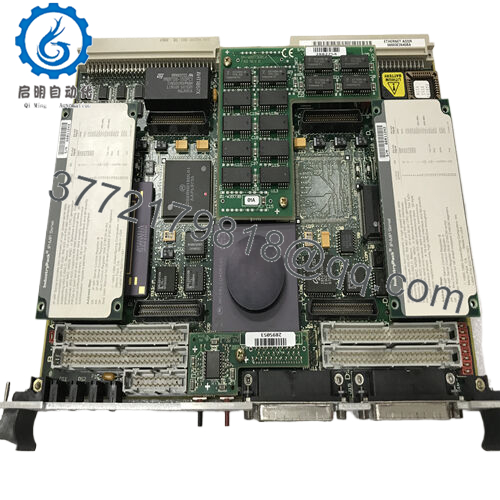
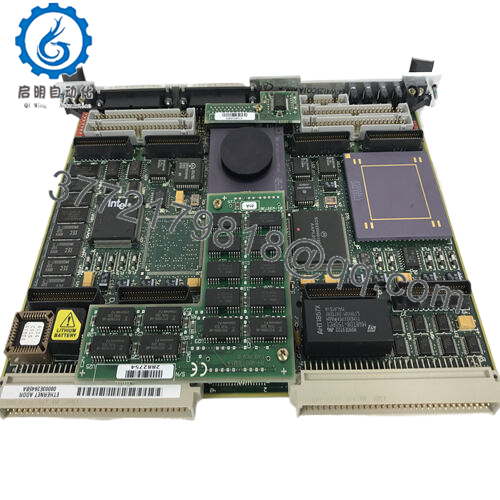
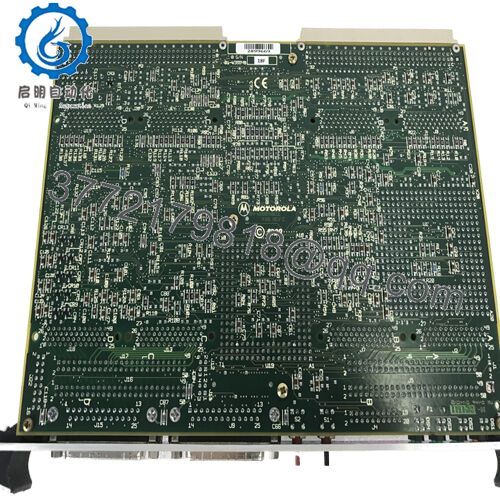
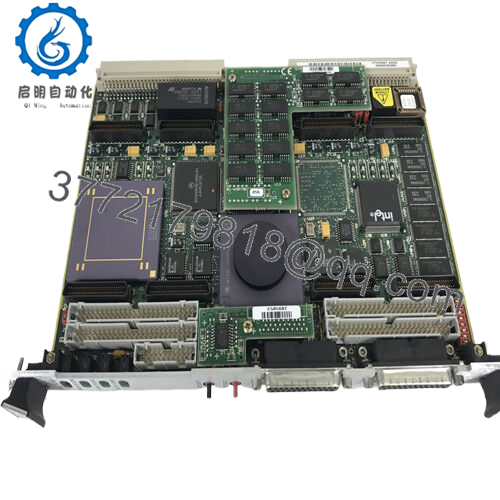
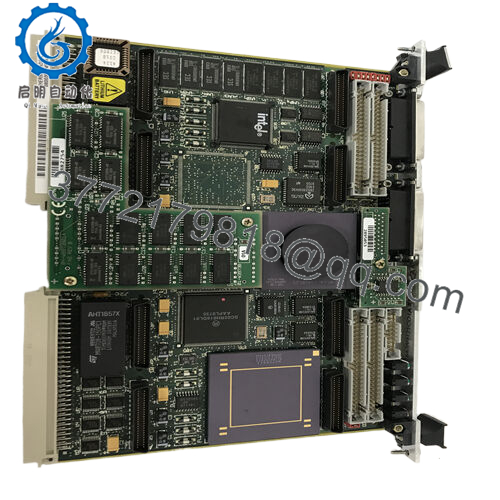
Product Model: Motorola MVME162-031
Product Brand: Motorola
Product Series: MVME Series (VMEbus Single-Board Computers)
Product Features:
- Motorola 68040-based single-board computer for embedded control
- Proven reliability in industrial and defense automation
- Rich I/O integration including Ethernet, SCSI, and serial ports
- Excellent choice for real-time control, data acquisition, and system management
Applications & Industry Context
For more than two decades, the Motorola MVME162-031 has been a cornerstone of industrial and embedded computing, quietly powering the control logic behind countless automation systems, test rigs, and communication platforms. It was engineered during a time when reliability, determinism, and hardware longevity took precedence over marketing hype — and that legacy still resonates with engineers maintaining mission-critical systems today.
You’ll find this board embedded in diverse applications: in manufacturing plants driving precision motion control; in defense systems processing radar signals; in energy facilities monitoring process loops; and even within transportation signaling infrastructure. It’s particularly valued in environments where long-term stability and certified reliability outweigh the appeal of newer but untested technology.
Aerospace and defense contractors have kept the MVME162-031 operational in simulation and data acquisition roles for decades. Its ability to withstand electrical noise, mechanical vibration, and temperature fluctuations has made it the preferred controller for rugged, always-on systems. In factory automation, its deterministic processing ensures that timing-critical operations, such as servo synchronization and interlock logic, execute precisely on schedule — cycle after cycle.
Because many of these systems are validated for safety and performance, replacing them isn’t trivial. That’s why the MVME162-031 continues to see demand today: not as a relic, but as a proven backbone in high-availability control networks.
Technical Features & Benefits
At the heart of the Motorola MVME162-031 lies the Motorola MC68040 processor, a 32-bit CPU known for its blend of performance and predictable timing. Operating at a typical clock speed of 25 MHz, it delivers more than enough computational bandwidth for real-time multitasking, yet consumes modest power compared to newer architectures.
The board’s design reflects Motorola’s experience in embedded computing. Memory options include DRAM for main operation and EPROM/Flash for boot firmware, enabling fast, autonomous startup sequences. Onboard diagnostics and configurable jumpers make field servicing straightforward.
Connectivity is another highlight. The MVME162-031 integrates serial ports (RS-232/422), Ethernet networking, and a SCSI interface for storage or peripheral expansion. This versatility allows system designers to connect to everything from data acquisition units to external control panels without additional hardware.
Its adherence to the VMEbus standard ensures robust communication across multi-board systems. The board can function as a bus master or participate as a slave, supporting distributed control topologies. For developers using real-time operating systems like VxWorks or LynxOS, it provides consistent interrupt handling and low-latency task switching — essential for synchronized control systems.
From a practical standpoint, it’s the combination of hardware resilience and flexible software support that has kept the MVME162-031 relevant long past its introduction. It’s common to see these boards still running in equipment that’s been operational for twenty years or more, performing flawlessly.
Product Role & System Fit
In a typical VME-based system, the MVME162-031 serves as the main system controller or CPU card. It coordinates communication across the backplane, interfaces with I/O boards, and executes real-time control algorithms that govern processes and equipment behavior.
The board’s architecture supports a range of peripheral modules through the local bus and standard VME connectors, giving integrators the freedom to scale system complexity. For example, a single MVME162-031 might manage several analog and digital I/O cards, motion controllers, and communication adapters — all synchronized under one deterministic operating system.
Compatibility has been a major reason for its enduring popularity. Because it shares the same platform heritage as other Motorola MVME boards, upgrading or replacing components is straightforward. It can also interoperate with later PowerPC-based MVME modules in mixed systems, which is invaluable for organizations transitioning gradually to newer architectures.
Whether installed in an industrial automation rack, an avionics test platform, or a naval control system, the MVME162-031 offers engineers something rare: the confidence that the system will continue to run day in, day out, with minimal maintenance.

- MVME162-031
Technical Specifications
| Specification | Details |
|---|---|
| Processor | Motorola MC68040 microprocessor |
| Clock Speed | 25 MHz (standard configuration) |
| Memory | Up to 32 MB DRAM; EPROM/Flash for firmware storage |
| Bus Interface | VMEbus, IEEE 1014 compliant |
| I/O Ports | Two serial ports (RS-232/422), Ethernet, SCSI, parallel I/O |
| Expansion Slots | Local bus and mezzanine connectors for peripheral cards |
| Operating Systems | VxWorks, LynxOS, UNIX variants, custom RTOS |
| Power Requirements | +5 V DC regulated supply |
| Cooling Method | Convection or forced-air depending on chassis design |
| Form Factor | 6U VME single-board computer |
| Operating Temperature | 0°C to 55°C (industrial-rated) |
| Compliance | CE, UL, and MIL-STD environmental compliance |
Installation & Maintenance Insights
Installing the Motorola MVME162-031 is relatively simple, but precision matters. Before inserting the board, always inspect the VME backplane connectors for debris or misalignment. Even a slight mechanical offset can lead to unreliable data transfer.
Once installed, secure the card evenly using the chassis retention screws to avoid warping the PCB. Verify that the power rails provide clean, regulated +5V; electrical noise or ripple can cause intermittent resets during operation. For systems operating continuously, ensure proper ventilation — although the MVME162-031 runs cool, accumulated dust can degrade airflow and increase operating temperature.
Maintenance routines are minimal but important. Periodically check for loose connectors, inspect capacitor health, and monitor system temperature. If firmware updates are needed, these can be performed through the onboard serial port or via network boot utilities.
Engineers who manage high-availability systems often maintain a pre-configured spare MVME162-031 to minimize downtime. Because system parameters are stored in non-volatile memory, replacing a failed board can take less than ten minutes — a critical advantage for continuous industrial operations.