 WhatsApp: +86 16626708626
 Email:
  Phone: +86 16626708626
Description
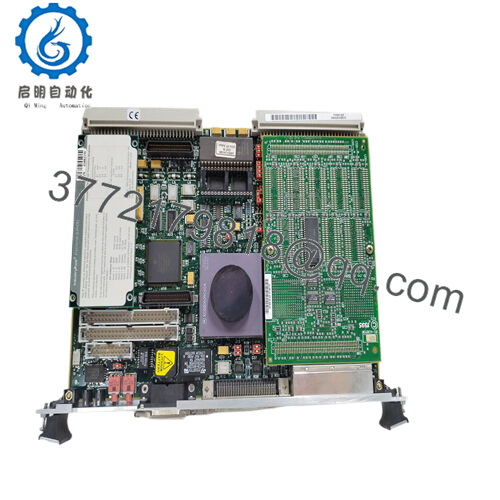
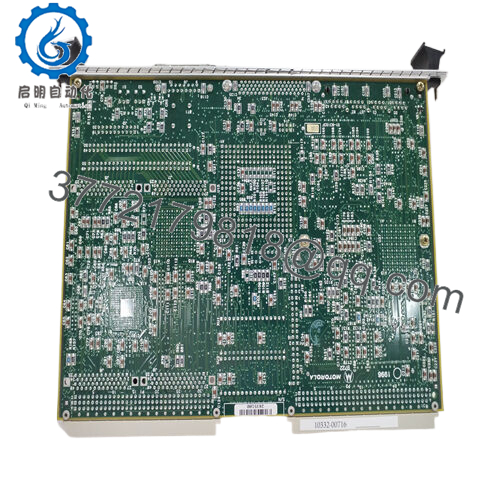
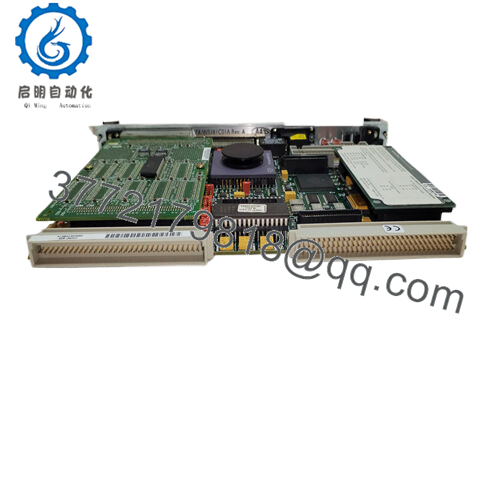
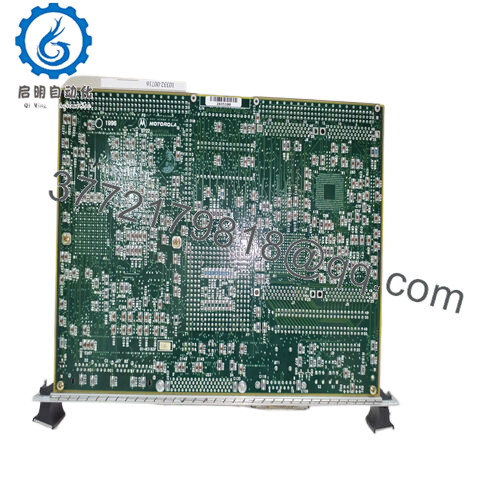
Product Model: Motorola MVME172-263260
Product Brand: Motorola
Product Series: MVME Series (VMEbus Single-Board Computers)
Product Features:
- Powerful 68060-based VMEbus single-board computer
- Exceptional reliability for industrial and military-grade environments
- Flexible I/O and peripheral expansion options
- Designed for embedded control, automation, and data acquisition

- MVME172-263260

Applications & Industry Context
In the world of industrial computing, where uptime and determinism are non-negotiable, the Motorola MVME172-263260 continues to hold its place as a trusted embedded control solution. Originally designed for demanding automation, defense, and communication systems, this single-board computer exemplifies the rugged reliability engineers associate with Motorola’s VMEbus architecture.
You’ll find the MVME172-263260 in applications where stability matters more than flashy specs — from legacy process control units in power generation plants to advanced communication routers in military systems. Many integrators also use this board in scientific instrumentation, radar control systems, and automated test setups. What makes it relevant even today is its blend of classic Motorola engineering and field-proven performance under extreme conditions.
Engineers working in aerospace test facilities or railway signaling environments often favor this model because of its deterministic operation and long lifecycle support. In many cases, replacing an existing MVME172-263260 isn’t a matter of finding something newer — it’s about finding something equally reliable. That’s why system maintainers continue to source and refurbish these units instead of redesigning entire control systems.
Product Role & System Fit
At its core, the MVME172-263260 is a high-performance VMEbus single-board computer designed to serve as the central processing unit within embedded systems. It acts as the “brain” of the VME chassis, managing communication across peripheral modules such as analog I/O, motion control cards, and network interfaces.
Equipped with a Motorola 68060 microprocessor, the module offers exceptional efficiency in handling multitasking real-time operations. It supports both standard and custom operating systems — from VxWorks and LynxOS to custom in-house RTOS implementations — making it a flexible choice for integrators with specialized software stacks.
The board’s design supports a wide range of I/O expansion through its VMEbus and local bus connectors. Whether you’re integrating motion controllers for robotic systems or data acquisition cards for test benches, the Motorola MVME172-263260 slots in seamlessly. It’s compatible with other MVME modules, allowing easy system upgrades or mixed configurations.
In industrial automation, this board often coordinates process control functions, executing real-time tasks such as PID loops, interlock sequences, and communication bridging between PLC networks and supervisory systems. In defense applications, it frequently handles control algorithms for radar or sensor fusion systems, valued for its deterministic latency and rugged tolerance.
Technical Features & Benefits
One of the defining strengths of the Motorola MVME172-263260 is its combination of processing performance, modularity, and durability. Built around the 68060 CPU architecture, it delivers efficient computational capability without excessive power consumption. The onboard memory configuration — typically featuring both DRAM and Flash — allows fast booting and stable runtime performance, essential in mission-critical applications.
Another hallmark feature is its robust VMEbus interface. This parallel bus standard has proven itself in military and industrial contexts for decades, offering deterministic data throughput and easy system expansion. The MVME172-263260 supports both master and slave operation modes, enabling flexible system hierarchies.
Connectivity and peripheral support are well thought out. Ethernet, serial ports, SCSI interfaces, and programmable timers are integrated directly onto the board, minimizing the need for additional modules. This reduces complexity and enhances overall reliability — a major benefit when systems are installed in remote or harsh environments.
Motorola also emphasized serviceability. Engineers can replace this board quickly within a VME chassis without extensive rewiring or configuration. Diagnostic LEDs, onboard test points, and straightforward firmware configuration simplify maintenance.
The practical result is a board that performs consistently even after decades of operation. Many aerospace and defense integrators have commented on the remarkable stability of the MVME172-263260, noting that it rarely requires intervention once installed.
Technical Specifications
| Specification | Details |
|---|---|
| Processor | Motorola 68060 microprocessor |
| Clock Speed | 60 MHz (typical configuration) |
| Memory | Up to 64 MB DRAM, Flash/EPROM storage for boot firmware |
| Bus Standard | VMEbus, IEEE 1014 compliant |
| I/O Interfaces | Serial ports (RS-232/422), Ethernet, SCSI |
| Expansion | Local bus and mezzanine connectors for peripherals |
| Operating Systems Supported | VxWorks, LynxOS, UNIX variants, custom RTOS |
| Power Supply Requirement | +5V DC nominal |
| Cooling | Forced-air or convection depending on chassis design |
| Form Factor | 6U VME single-board computer |
| Operating Temperature | 0°C to 55°C (industrial range) |
| Compliance | CE, UL, and MIL-STD environmental standards (varies by system) |
Installation & Maintenance Insights
Installing the Motorola MVME172-263260 requires careful attention to the mechanical fit and environmental conditions of the target chassis. Before insertion, always verify that the backplane and slot connectors are free of debris or oxidation — even a slight misalignment can cause communication instability across the VMEbus.
When securing the board, apply even pressure along the card guides to avoid flexing the PCB. Once seated, confirm power and signal continuity before powering up the system. Because these boards often run in systems with continuous operation, proper ventilation is crucial. Ensure consistent airflow within the enclosure; even though the MVME172 series runs relatively cool, dust accumulation can reduce efficiency over time.
Maintenance routines are straightforward. Periodic inspection for loose connections, capacitor condition, and temperature levels is typically sufficient. Motorola’s design philosophy emphasized serviceability, so the board’s diagnostic indicators help identify faults quickly. Firmware updates or configuration changes can be performed through the onboard serial interface or via network boot utilities.
Many engineers prefer to maintain a secondary MVME172-263260 unit as a hot spare, allowing minimal downtime during replacement. Because the configuration process is largely hardware-based, system swap-outs take only a few minutes — a huge advantage for continuous manufacturing or defense control systems.
Warranty & Support
Motorola’s industrial computing products, including the MVME172-263260, were originally shipped with multi-year warranties that covered manufacturing defects and performance assurance under rated conditions. While official OEM support has transitioned to successor entities and third-party service providers, ongoing technical assistance remains accessible through a strong global network of industrial automation specialists.
Refurbished and reconditioned units typically include a 1-year limited warranty offered by authorized resellers. Many of these vendors perform full diagnostic testing, component-level refurbishment, and extended burn-in before shipment.
Users can also rely on extensive documentation archives — hardware reference manuals, firmware configuration guides, and pinout diagrams — still available through industry forums and Motorola’s legacy documentation libraries. Whether you’re integrating a new system or maintaining an existing one, this level of documentation ensures the MVME172-263260 continues to deliver dependable service.
Related Models
- MVME162-512A – Earlier 68040-based board with similar VME integration
- MVME167-33B – Compact model offering slightly lower performance but high stability
- MVME177-005B – Enhanced CPU performance and expanded memory support
- MVME172LX-344 – Similar architecture with extended temperature range
- MVME2700 – Next-generation PowerPC-based VME controller board
- MVME5100 – Modernized VME processor card for high-bandwidth applications
- MVME712M – I/O transition module companion for MVME172 systems
Additional Insights on System Integration
Beyond its hardware specifications, the Motorola MVME172-263260 stands out for how seamlessly it integrates with legacy and hybrid automation systems. Engineers managing long-term infrastructure appreciate its interoperability — the board communicates reliably with both older serial-based devices and modern Ethernet-connected subsystems.
For control engineers modernizing existing test benches or SCADA nodes, the MVME172-263260 offers a way to maintain proven software frameworks without a full hardware redesign. This compatibility with older Motorola libraries and BSPs (Board Support Packages) simplifies life-cycle management dramatically.
Many integration teams use it as a bridge module — a controller that links legacy VME equipment with more current supervisory systems via custom middleware. It’s a practical solution in manufacturing plants, shipboard automation, or radar control systems where downtime for hardware migration is simply unacceptable.