
 WhatsApp: +86 16626708626
 Email:
  Phone: +86 16626708626
Description
3. Key Technical Specifications
| Parameter | Value |
|---|---|
| Function | Gyrocompass (true north reference) |
| Input Voltage | 24 V DC |
| System Type | Master Compass with static inverter |
| Application | Commercial marine navigation |
| Accuracy | High-stability heading (long-term drift minimized) |
| Construction | Metal housing |
| Dimensions | Approx. 35 × 25 × 35 cm |
| Weight | Approx. 19 kg |
| Manufacturer | Tokyo Keiki (OEM production partner) |
| Output | Heading signal to bridge systems |
| Integration | Radar, autopilot, ECDIS compatibility |
4. Product Introduction & Supply Chain Strategy
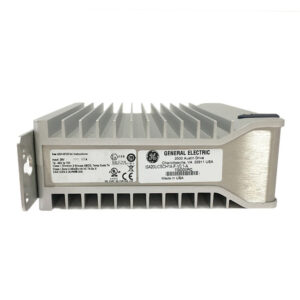
The Sperry Marine SR50 is a marine gyrocompass master unit that provides continuous true-north heading for vessel navigation systems, including radar, autopilot, and integrated bridge systems. It maintains stable heading data under vibration, temperature variation, and long-duration operation typical in commercial shipping environments.
From a supply-chain standpoint, this is a legacy platform component with clear EOL exposure. Securing New Surplus inventory eliminates the failure risk associated with degraded refurbished units while protecting against long lead times and OEM discontinuation. The Total Cost of Ownership (TCO) strongly favors verified new units over uncertain secondary-market alternatives.
5. Installation & Configuration Guide
Stage 1: Pre-Installation (Prep & Safety)
- Execute lock-out/tag-out on navigation power circuits
- Confirm 24 V DC supply stability (±5% tolerance)
- Wear ESD wrist strap
- Photograph all terminal wiring and compass interface connections
- Record system integration points (autopilot, radar feed)
Stage 2: Removal
- Power down fully before extraction
- Remove mounting bolts evenly to avoid chassis stress
- Carefully disengage connectors—do not twist or force
- Inspect backplane pins for corrosion or bending
Stage 3: Installation (Clone & Seat)
- Replicate all DIP/jumper settings exactly (heading output format, baud rate if applicable)
- Seat the unit evenly into mounting frame
- Reconnect wiring using documented photos—not memory
- Verify grounding continuity before energizing
Stage 4: Power-On & Testing
- Energize 24 V supply and monitor for abnormal current draw
- Check system indicators (RUN vs FAULT status)
- Validate heading output against reference compass
- Confirm data transmission to radar/ECDIS


- SR50
- SR50
6. Firmware/Software Versions & Upgrade Notes
- Recommended approach: Maintain existing firmware alignment with vessel system
- Compatibility risk: Newer firmware revisions may not align with legacy bridge integration protocols
- No blind upgrades—gyrocompass firmware mismatches can cause heading offset or signal dropout
- Always document:
- Firmware version
- Output protocol configuration
- Downgrade risk: Some later hardware revisions may block rollback
7. Frequently Asked Questions (FAQ)
Q1: Are these units truly new or just surplus stock?
These are New Surplus units—unused, no field operation, original OEM manufacturing. Not pulled from vessels, not repaired.
Q2: Why is pricing higher than used units but lower than OEM?
You avoid hidden failure risk. A refurbished gyro may fail due to aging internal components, leading to navigation faults and downtime exposure.
Q3: Is the SR50 considered obsolete?
Yes. This is a legacy system. OEM support is limited, making last-time-buy strategy critical for fleet continuity.
Q4: Can this unit be hot-swapped onboard?
No. Gyrocompass systems require controlled shutdown. Hot swapping risks data corruption and navigation instability.
Q5: Does the unit retain calibration or configuration?
Core calibration is internal, but system integration settings must be revalidated during installation.
Q6: What warranty is typical for New Surplus?
Standard coverage is 12 months, significantly longer than the 30–90 days typical for secondary-market units.
Q7: What is the recommended stocking strategy?
- Critical spare: Maintain 1–2 units per fleet as buffer stock
- Lead time variability: High (EOL market sourcing)
- Strategy: Execute last-time-buy and consider cross-site sharing across vessels