 WhatsApp: +86 16626708626
 Email:
  Phone: +86 16626708626
Description
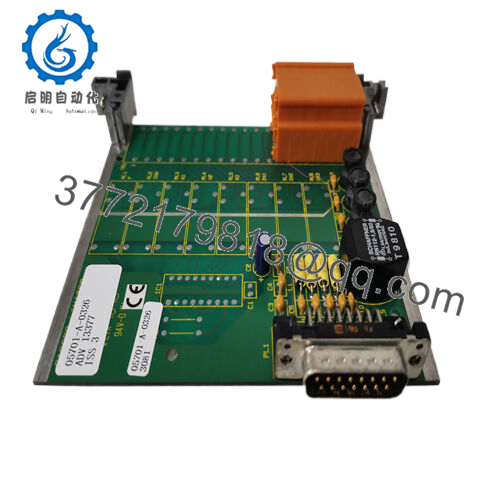
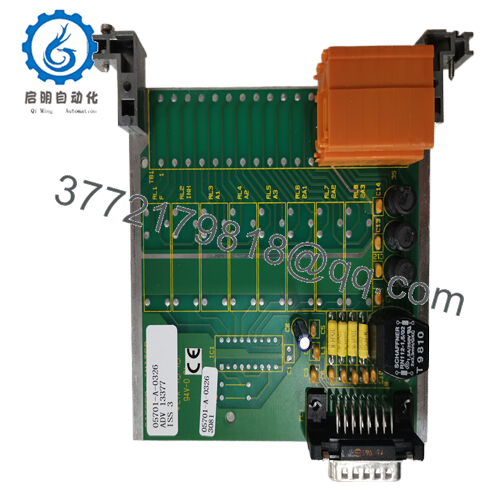
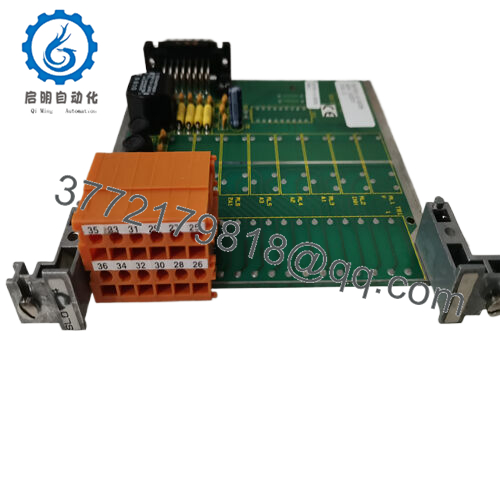
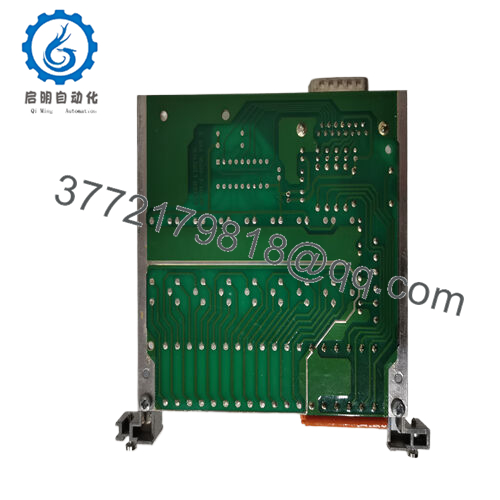
Product Model: 05701-A-0326
Product Brand: Honeywell (Zellweger / Analytics / System 57)
Product Series: System 57 / 5701 Relay / Field Interface Line
Key Features (based on spare catalog listing):
- Functions as a relay / field interface card for System 57 (SYS57) systems, handling field circuit connections and relay switching.
- Provides electrical isolation and interface between internal logic modules and external field devices
- Designed as a modular plug-in card compatible with System 57 relay or I/O racks
- Serves as part of the field interface layer in honeywell’s 5701 / SYS57 product ecosystem

- 05701-A-0326
Applications & Industry Context
In process plants and industrial monitoring systems, the System 57 (SYS57 / 5701) architecture from Honeywell is often used in gas detection, process alarm, and safety systems. Within that architecture, there is a separation between logic/control cards and field-level circuits (e.g. actuators, relays, sensors). The 05701-A-0326 card is intended to sit at that interface layer—acting as a relay/field interface board that bridges the internal system modules to external wiring, enforcing isolation, switching, and signal conditioning.
In usage, you might see 05701-A-0326 used to drive external relays (alarms, shut-off circuits), switch field devices (valves, fans), or isolate detection circuits in hazardous or hostile environments. Because it’s a “field interface” card, it provides a hardened buffer between the delicate internal electronics and uncertain external conditions.
Many plants still use legacy 5701 / System 57 gas detection or safety panels. If your system needs repair, extension, or spare parts, a 05701-A-0326 is a candidate for replacement or stock. Moreover, in retrofit scenarios, matching the card’s electrical characteristics—relay rating, contact configuration, isolation levels—is crucial to maintain system integrity.
Technical Features & Benefits
Here’s a breakdown of what you’d reasonably expect from a relay/field interface card like 05701-A-0326, combining best engineering inference and known system standards.
Relay / Switching Capability
As a “relay field interface” card, 05701-A-0326 likely contains one or more relay contacts (SPCO / SPDT, or multiple relays) to switch external circuits. These relays would allow internal logic to energize/de-energize external circuits (alarms, shutdowns) safely. The card must be capable of handling typical field voltages (e.g. 24 V DC, 48 V, 120 V AC, etc.), depending on system design.
Because it’s used in SYS57 / 5701 systems, the relay contacts might be “single pole, changeover” (SPCO) or other common relay types used in Honeywell’s relay modules. The listing in 05701-A-0327 is “Double SPCO Relay Card” for SYS57. It’s reasonable that 0326 is a variant (perhaps single SPCO or field interface variant) preceding or complementing 0327.
Isolation & Interface
The relay card also functions to isolate the internal electronics from field wiring and faults. It likely implements galvanic isolation between internal logic circuits and switching contacts. This protects the internal system from surges, ground loops, or transient phenomena on external wiring.
Additionally, it probably includes resistor networks, transient suppression (e.g. RC snubbers or MOVs), and protection elements (diodes, surge arrestors) to absorb voltage spikes from inductive loads.
Connectivity & Modularity
Like other System 57 cards, 05701-A-0326 would plug into a standard backplane or rack slot, with contact edge connectors or card connectors. The module must be compatible in footprint, slot spacing, and electrical bus interface. It must integrate with system diagnostics and channel addressing.
Because it’s a field interface card, terminals for external wiring are likely brought out via screw terminals or terminal blocks on the front or side of the card.
Diagnostic / Status Indicators
To aid maintenance, the card probably includes LEDs or status indicators to show relay state (energized/de-energized), fault or trip, and possibly input/excitation presence. It may support local test or bypass functions so that field circuits can be tested without triggering full system actions.
Durability & Environmental Ratings
Given its field interface role, the card should tolerate industrial environmental stresses: temperature cycles, vibration, humidity, dust, and possibly corrosive atmospheres. The card construction likely includes conformal coatings, rugged connectors, and isolation materials chosen to survive over decades of service.
Because relay contacts can wear over time, the card may be designed with replaceable relays or modular contact inserts. Also, the switching load spec must be chosen conservatively (e.g. not exceeding contact ratings, derating for inductive loads).
Technical Specifications Table (Inferred / Estimated)
Because I did not find full official specification sheets for 05701-A-0326, the following table is partially speculative, based on typical System 57 relay card practices and bits of catalog listings.
| Parameter | Estimated / Assumed Value | Notes / Basis |
|---|---|---|
| Model | 05701-A-0326 | — |
| Card Type | Relay Field Interface / Interface Card (SYS57) | Catalog listing “SYS57 RELAY CARD FIELD INTERFACE” |
| Relay Configuration | Likely single SPCO or SPDT relays | Variant of 0327 is “Double SPCO Relay Card” |
| Relay Contact Rating | ~ 5 A @ 230 V AC / 30 V DC (typical relay class) | Inferred from typical industrial relay cards; must verify |
| Isolation Voltage | ~1,000 V or more between relay contacts and internal circuits | Standard safety practice in relay cards |
| Interface / Connector | Card slot + screw terminal for field wires | Common in System 57 rack modules |
| Status Indication | LED(s) for relay state, fault | Likely included for diagnostics |
| Power Supply | Draws internal power from system bus (likely 18–32 V DC backbone) | System 57 modules often use 18–32 V DC supply |
| Operating Temperature | ~ –5 °C to +55 °C | Many System 57 relay cards cite –5 to +55 °C as ambient |
| Weight / Dimensions | 150–200 g; module card dimensions | Estimated from similar System 57 relay cards |
| Durability Features | Conformal coating, surge protection, replaceable contacts | Based on typical field interface card design |
Use this table as a planning tool; confirm actual values from your hardware or Honeywell service docs.
Installation & Maintenance Insights
Installing a relay field interface card like 05701-A-0326 demands careful attention to wiring, clearance, and maintenance practices.
Insertion & Mounting
- Shut down or isolate power before inserting or removing the card to prevent backplane stress or hazards.
- Align insertion carefully to avoid bending pins or contacts.
- Secure the card firmly to avoid vibration-induced movement.
Wiring & Load Considerations
- Wire external loads (e.g. coils, alarms) consistent with the relay’s contact capacity. Inductive loads often require snubbers or flyback diodes to protect relay contacts.
- Use shielded wiring and separate routing for signal and power circuits to avoid cross-talk or noise.
- Maintain grounding and lightning protection strategies to protect the relays and interface circuitry.
Testing & Diagnostics
- Use status LEDs to verify relay actuation; test the card by commanding a relay action and monitoring output.
- For safety or alarm trips, check that the relay switches as commanded and returns to rest under no command input.
- Periodically operate the relays (exercising) to prevent contact oxidation or sticking, especially in rarely switched circuits.
Replacement & Spare Strategy
- Because field interface relay cards are critical to system behavior, maintain at least one spare 05701-A-0326 (or an equivalent variant).
- Label cards by revision, version, and installation date to track replacement.
- If contacts are replaceable, stock spare contact modules for field servicing.
Environmental Protection
- Monitor the card enclosure for humidity, dust ingress, or corrosive atmospheres. If the rack environment is harsh, consider using sealed cabinets or filtration.
- Inspect for signs of contact wear, discoloration, insulation breakdown, or degraded relay performance over time.
Related / Sibling Modules
Here are some known related modules in the System 57 / 5701 family:
- 05701-A-0327 – Double SPCO Relay Card (SYS57)
- 05701-A-0309 – Master Alarm Update Module Kit for Sensepoint / gas detector systems
- 05701-A-0351 – SYS57 Control Card, single channel unconfigured (often used for analog / control tasks)
These modules share mechanical form factors, backplane compatibility, and system context in Honeywell’s 5701 / System 57 product line.