 WhatsApp: +86 16626708626
 Email:
  Phone: +86 16626708626
Description
2. Product Core Brief
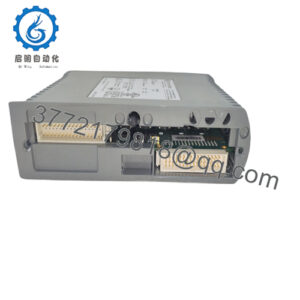
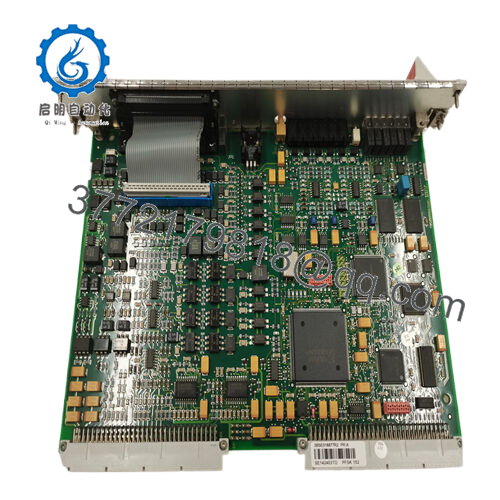
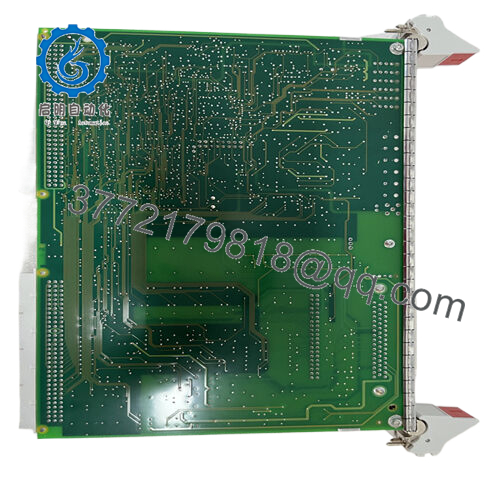
- Model: PFSK130 (3BSE002616R1)
- Brand: ABB
- Series: ABB Tension Electronics / Industrial Signal Conditioning
- Core Function: Signal conditioning for tension load cells
- Product Type: Signal Conditioning / Channel Control Module
- Key Specs: 24 V DC supply, 0–10 V or 4–20 mA output, dual load-cell channels
- Condition: New Original / New Surplus
3. Key Technical Specifications
| Parameter | Value |
|---|---|
| Model | PFSK130 |
| ABB Part Number | 3BSE002616R1 |
| Product Type | Signal Conditioning / Channel Control Unit |
| Input Type | Pressductor / load cell sensor signals |
| Input Channels | 1–2 load cell channels |
| Output Signals | 0–10 V DC or 4–20 mA |
| Power Supply | 24 V DC (±10%) |
| Accuracy | Approx. 0.5% full scale |
| Mounting | Sub-rack or cabinet installation |
| Operating Temperature | 0 °C to +55 °C |
| Weight | Approx. 0.6 kg |
| Industrial Role | Signal normalization for tension control systems |
The module captures low-level signals from load cells and converts them into stable control signals usable by PLC or DCS controllers.

- PFSK130
4. Product Introduction
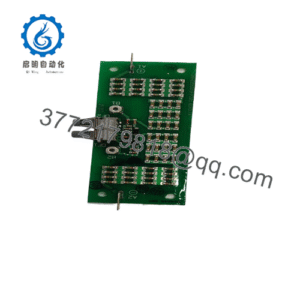
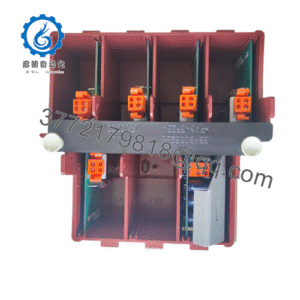
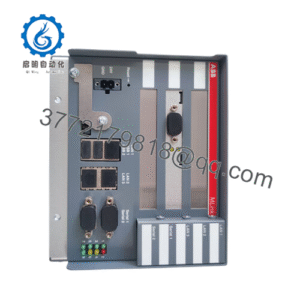
The ABB PFSK130 (3BSE002616R1) is a signal conditioning unit used in industrial tension measurement systems. It interfaces directly with ABB Pressductor or strain-gauge load cells and converts raw sensor signals into standardized analog outputs for process control systems.
In production lines such as paper mills, foil processing, and steel strip handling, the module provides stable tension feedback to the main controller. Plants deploy the PFSK130 when accurate signal conditioning is required between field sensors and the automation system controlling web tension or force measurements.
5. Troubleshooting Quick Reference
| Symptom | Possible Cause | Relevance to this Part | Quick Check Method | Recommendation |
|---|---|---|---|---|
| No analog output signal | 24 V supply missing | ❌ Low | Measure 24 V DC at power terminals | Check power supply and cabinet fuse |
| Tension reading stuck at minimum | Load cell cable broken | ❌ Low | Measure millivolt signal at load cell | Inspect sensor wiring and connectors |
| Output signal unstable | Shielding or grounding issue | ❌ Low | Inspect cable shielding and grounding point | Correct grounding configuration |
| Output saturated at maximum | Calibration mismatch | ⚠️ Medium | Inject test signal from calibrator | Recalibrate tension controller |
| Both channels non-responsive | Internal amplifier failure | ✅ High | Verify supply voltage and LED indicators | Replace module if confirmed |
Field reality: In most tension systems the sensor cable fails before the electronics. Always test the load cell output before ordering a replacement module.
If the problem remains unclear, send wiring photos and controller diagnostics for review.
6. Frequently Asked Questions (FAQ)
Q1: What role does the PFSK130 play in a tension control system?
It sits between the load cell sensors and the control system. The module amplifies and normalizes very small sensor signals so the PLC, DCS, or drive controller can read stable tension values.
Q2: Can I replace this unit without recalibrating the tension system?
Technically yes, but you should recalibrate. Even identical modules can have slight offset differences. Most technicians run a quick zero and span calibration after installation.
Q3: Is the PFSK130 hot-swappable?
No. Removing the unit while energized risks damaging the rack electronics or sensor interface circuits. Shut down cabinet power before replacing it.
Q4: What systems typically use this module?
You’ll usually find it in:
- Web handling lines (paper, plastic film, foil)
- Steel strip processing lines
- Winding and unwinding machines
- Industrial converting equipment
Anywhere tension feedback is required.
Q5: Is this module still produced by ABB?
Many installations still run it, but supply typically comes from surplus inventory or specialized automation suppliers rather than new factory production.
Q6: Why are surplus modules often cheaper than factory replacements?
They come from unused project stock or plant spare parts inventory. The hardware was never installed but may have been stored in a warehouse. Functional testing and inspection verify that the unit operates correctly before shipment.
Q7: What usually damages these modules?
Three common causes:
- Incorrect wiring during maintenance
- Ground loops or poor shielding on load cell cables
- Static discharge when technicians handle the board without ESD protection
Follow basic cabinet grounding and ESD procedures and these modules typically run for years.