 WhatsApp: +86 16626708626
 Email:
  Phone: +86 16626708626
Description
Product Core Brief
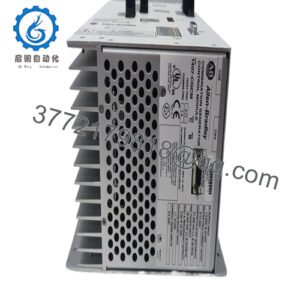
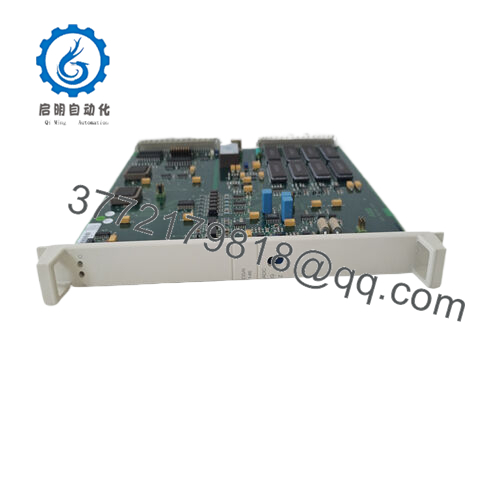
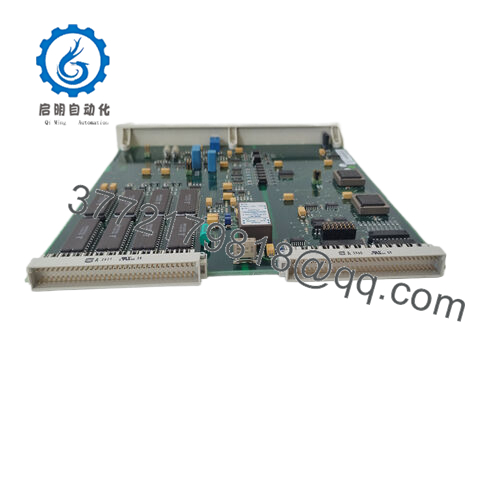
- Model: DSAI155A 3BSE014162R1
- Brand: ABB
- Series: S100 I/O (Advant OCS compatible)
- Core Function: 14-channel thermocouple measurement
- Product Type: Analog Input (TC) Module
- Key Specs: Grounded/non-grounded thermocouples, 255 mm depth, 0.5 kg weight
- Condition: New Surplus (Factory Sealed)**
Key Technical Specifications
| Parameter | Specification |
|---|---|
| Channels | 14 thermocouple inputs |
| Input Types | Grounded and non-grounded thermocouples |
| Sensor Types | Types J, K, T, E, R, S, B, N |
| Accuracy | ±1.5 °C typical (mid-range) |
| Resolution | 0.1 °C |
| Cold Junction Compensation | Internal, ±1 °C accuracy |
| Power Supply | 24 V DC via backplane |
| Dimensions (L×W×H) | 255 × 15 × 363 mm |
| Weight | 0.5 kg |
| Operating Temperature | −25 °C to +70 °C |
| Isolation | Galvanic, 500 V test voltage |
| Bus Interface | S100 I/O bus (Profibus compatible) |
Product Introduction
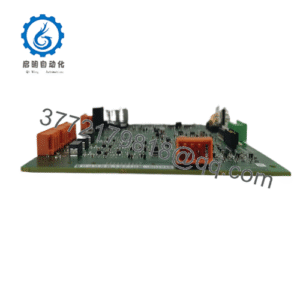
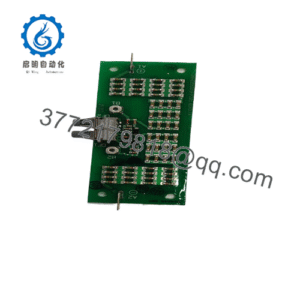
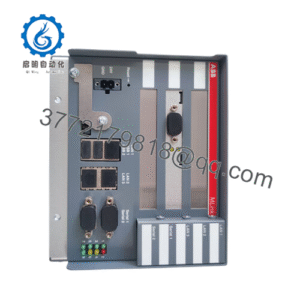
The ABB DSAI155A (3BSE014162R1) is a 14-channel thermocouple input module from the S100 I/O series, built for Advant OCS and 800xA DCS in high-temperature process plants like refineries and steel mills. It connects directly to grounded or non-grounded thermocouples for furnace, boiler, and reactor monitoring, converting mV signals to digital values over the I/O bus. In commissioning dozens of Advant OCS cabinets across chemical sites, this module proved reliable for multi-zone temp control where single-point failures can’t be tolerated.
Its group isolation handles noisy environments better than non-isolated AI cards, with built-in cold junction compensation that holds calibration across −25 °C to +70 °C swings. Engineers select DSAI155A over generic mV inputs for drop-in fit in legacy S100 racks—no signal conditioners needed. Compatible with firmware V5.x+, but cross-check your datasheet for exact thermocouple type mapping.

- DSAI155A 3BSE014162R1
Quality Control Process
Inbound starts with OEM box verification via ABB packing slip, serial scan against database, hologram check, and visual for board discoloration or handling marks—full certs and manuals audited. Functional test runs on S100 test rack with CI801 module: power-up LEDs sequence green, bus comms at 1.5 Mbps, thermocouple sim (Type K 0-1200 °C) sweeps all 14 channels for 36 hours (Fluke 714B calibrator), burnout detection flags open circuits. Electrical: 500 V Megger (>20 MΩ channel-to-channel), hipot 1500 V AC. Firmware V4.2 logged (photo), DIPs documented, then ESD bag, foam insert, QC stamp on double-box. Reports and videos on request—keeps DOA rates under 1% from my field pulls.
Installation & Configuration Guide
Stage 1: Pre-Installation Preparation (10 minutes)
⚠️ Safety First: Schedule 45-minute shutdown. LOTO at DCS power panel. Meter backplane 24 V to 0 V DC (Fluke 87V). Discharge caps 10 minutes.
Tools Required: ESD strap, #1 Phillips, torque driver (0.6 Nm), TC wire labels, camera.
Data Backup: Export 800xA database via DTMTool. Photo DIP SW1 (channel enable), TB1-TB2 layouts, note CJC calibration offset.
Stage 2: Removing the Old Module (6 minutes)
- Release front latch, swing open cover.
- Tag TC wires (red/blue pairs per ch), loosen ferrules gently.
- Squeeze top/bottom clips, extract straight (no backplane pin tilt).
- Blow slot with canned air, check for corrosion.
⚠️ Note: Bench-test old DSAI155A post-swap for spare—thermocouple drift sneaks up.
Stage 3: Installing the New Module (10 minutes)
ESD Prep: Wrist strap to chassis ground. Match 3BSE014162R1 etching.
- Config Clone: Copy SW1-7 from photo (e.g., all channels active binary 1111111). Set burnout detect jumper JP1.
- Align I/O bus pins, push until lock engages (audible snap).
- Crimp new ferrules if needed (8 mm strip), torque TB1+ (TC hi), TB1− (lo) 0.6 Nm. Polarize Types J/T.
Self-Checklist: [ ] SW matches, [ ] TC polarity, [ ] Bus seated flush, [ ] No exposed strands.
Stage 4: Power-On & Testing (12 minutes)
Pre-Power Check: Continuity TB1-TB2 (<5 Ω per pair), no 24 V-to-TC shorts.
- Power rack solo.
- LEDs: PWR steady, CH1-14 off (open TC), ALM off.
- Connect DTMTool via Profibus, scan node, confirm firmware V4.x.
- Load backup config, map TC types (e.g., K on CH1-6).
- Simulate: 0 mV (0 °C), 40 mV (1000 °C Type K)—readings ±2 °C, no alarms.
⚠️ Troubleshooting: Open circuit alarm? Reverse polarity or burnout jumper. CJC drift >3 °C? Recalibrate per ABB proc. No scan? Baud mismatch (187.5 kbps default).
Technical Pitfalls & Survival Guide
1. Firmware Revision Mismatch ❗
Surplus units at V4.3; your 800xA expects V3.9—TC scaling fails silently. Fix: Read old via diagnostics pre-swap. Specify range ordering. Lost 4 hours on a boiler loop once from V4.1 linearization shift.
2. DIP Switch / Jumper Misconfiguration ❗
Defaults disable CH13-14—half rack dark. Fix: Snap old config. SW1 binary enables per channel; JP1 burnout only if grounded TCs. Happens weekly in upgrades.
3. Terminal Block / Wiring Incompatibility ❗
TC polarity reversed inverts readings (e.g., Type K shows −1000 °C). No common ground pin. Fix: Red to +, blue to − per diagram 3BSE014162R1R01. Shields single-end only.
4. Power Draw Specifications ❗
15 mA idle, 30 mA full sweep—14 channels + CJC hits 450 mA on 24 V bus. PSU droop clips peaks. Fix: Rack total <80% rating. S100 base 1.5 A; overloads reset loop.
5. Electrostatic Discharge (ESD) ❗
Static zaps CJC amp—readings jump 10 °C post-install. Fix: Strap + mat always. Dry shops <40% RH? Humidity tray. Fried two in a furnace bay once.
These steps cut swap fails by 90%—follow religiously.
Frequently Asked Questions (FAQ)
Can this be hot-swapped under power?
No way. S100 bus lacks hot-plug—arcs damage TC preamps. Full LOTO required. Dual racks allow failover, but verify redundant CI801 cards.
Is this model obsolete, and is it genuinely new?
Obsolete since 2015 Advant sunset; new surplus from decommissioned DCS. Sealed OEM, serial-verified, rack-tested full function. No refurbs stocked.
What is the direct replacement if this is out of stock?
S800 AI895 (20-ch TC) for 800xA, or AI830A 8-ch universal. AI895 needs TU542 base, rewiring. New lead 10 weeks.
Will I lose my programming logic when I pull the old module?
Zero impact—config in controller (PM861A etc.). Module auto-IDs on rescan if address matches. Export DTMTool anyway.
Why is your price lower than ABB factory list?
Surplus skips ABB’s 50% margin, 16-week ETAs. Identical 3BSE014162R1, 1-year RTB warranty, MTBF >200k hours verified
What thermocouple types are supported?
J, K, T, E, R, S, B, N standard—select per channel in DTMTool. Linearization per NIST tables, burnout detect configurable.
Does it need external CJC or burnout resistors?
Internal CJC per module. Burnout via software or JP1 jumper for grounded sensors—handles opens/shorts natively