 WhatsApp: +86 16626708626
 Email:
  Phone: +86 16626708626
Description
3. Key Technical Specifications
| Parameter | Value |
|---|---|
| Processor | Motorola MC68340 |
| Clock Speed | 25 MHz |
| Function Role | Central processing unit (CPU) |
| Communication | Profibus DP |
| Max Profibus Nodes | 32 (expandable to 125 with repeaters) |
| I/O Data Capacity | 1400 bytes input / 1400 bytes output |
| Supply Voltage | 24 V DC ±10% |
| Power Consumption | ≤ 15 W |
| Operating Temperature | −25 to +70 °C |
| Protection Rating | IP20 |
| Dimensions (W×H×D) | 238.5 × 38.7 × 310.5 mm |
| Weight | ~1.445 kg |

- PM633 3BSE008062R1
4. Product Introduction & Supply Chain Strategy
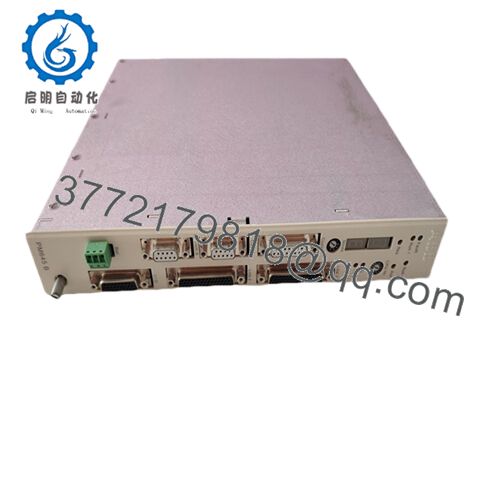
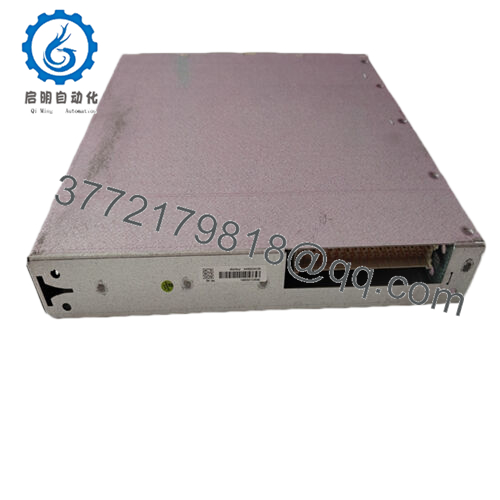
The ABB PM633 3BSE008062R1 is a central processor module used in Advant Controller and Advant OCS systems. It executes real-time control logic, manages I/O communication, and coordinates fieldbus networks such as Profibus and Ethernet within distributed control systems (DCS).
From an inventory strategy standpoint, this module is a single point of failure in legacy control architectures. Lead time variability is increasing due to platform aging. Securing New Surplus units minimizes unplanned downtime risk and avoids the failure uncertainty of secondary-market parts. Buffer stock (1–2 units per plant) is justified by high downtime cost exposure and long replacement lead cycles.
5. Installation & Configuration Guide
Stage 1: Pre-Installation (Prep & Safety)
- Apply lock-out/tag-out (LOTO) procedures.
- Use ESD protection (grounded wrist strap mandatory).
- Record firmware version and take photos of all wiring and DIP settings.
- Verify backup battery status (data retention function).
Stage 2: Removal
- Power down the rack completely.
- Release module locking mechanism.
- Extract vertically—avoid torque on the backplane connector.
Stage 3: Installation (Clone & Seat)
- Install backup battery if required (model 4943013-3).
- Mirror all configuration settings exactly.
- Insert module firmly into rack until fully seated.
Stage 4: Power-On & Testing
- Power up and observe CPU status LEDs.
- Confirm system boots without fault codes.
- Validate communication with I/O and HMI/SCADA layers.
- Run functional test of control logic execution.
6. Firmware/Software Versions & Upgrade Notes
- Recommended Practice: Maintain identical firmware version to the replaced module.
- Compatibility Risk: Firmware mismatch can disrupt communication with legacy Advant nodes and fieldbus devices.
- Critical Warning:
- Upgrading firmware during replacement can break backward compatibility with older I/O modules.
- Downgrading may disable newer communication drivers.
- Always extract and document firmware before swap to avoid system reconfiguration delays.
7. Frequently Asked Questions (FAQ)
Q1: Is this truly a new unit or surplus stock?
This product is a Brand New Surplus unit. It is not used, not refurbished, and not pulled from a shutdown system. It retains original OEM build integrity with zero connector wear.
Q2: Why is this priced above secondary-market units?
Refurbished CPUs carry hidden failure risk—aging capacitors and processor instability. A CPU failure can shut down an entire DCS node. The cost of downtime far exceeds the initial savings.
Q3: Is PM633 obsolete?
Yes, it is part of a legacy ABB platform. Availability is tightening globally. A last-time-buy strategy should be considered for plants with long operational horizons.
Q4: How many units should we stock?
For critical systems, maintain minimum 1–2 units onsite as buffer stock. For multi-site operations, implement cross-site sharing to reduce capital lockup.
Q5: Does the module retain program memory?
Program execution depends on system architecture. Some configurations rely on external storage or battery-backed memory—verify battery condition before replacement.
Q6: Can I hot-swap this CPU module?
No. Full shutdown is required. Hot-swapping risks data corruption and system faults.
Q7: What is the warranty and lifecycle expectation?
Typical warranty is 12 months. Expected service life for New Surplus units is 10+ years under normal industrial conditions, significantly outperforming refurbished alternatives.