 WhatsApp: +86 16626708626
 Email:
  Phone: +86 16626708626
Description
Key Technical Specifications
- Article Number: 3BSE088382R1 (PM863K02)
- Redundancy: Yes (pair with identical unit; switchover ≤10 ms)
- High Integrity: Yes (TÜV-certified SIL3 per IEC 61508; requires Safety Manual config)
- Clock Frequency: 96 MHz
- Performance: 0.17 ms for 1000 boolean operations
- RAM: 32 MB total; 22.184 MB available for application
- Flash Memory for Storage: No
- Firmware Storage: 18 MB Flash PROM
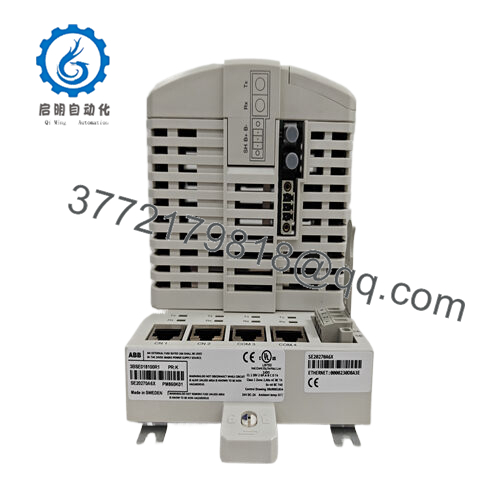
- Ethernet Ports: 2 × RJ45 (CN1, CN2) for Control Network (10/100 Mbit/s, MMS/IAC)
- Serial Ports: 2 × RS-232C (one general, one service; non-red. features limited in red. mode)
- CEX Bus Modules: Up to 12
- ModuleBus I/O: Max 96 single or 84 redundant (electrical/optical clusters)
- Power Supply: 24 V DC (19.2–30 V DC)
- Power Consumption: Typ 210 mA / Max 360 mA (+24 V)
- Power Dissipation: 5.1 W typ / 8.6 W max
- Dimensions (W × H × D): 119 mm × 186 mm × 135 mm
- Weight (including base): Approximately 2700 g (5.95 lb)
- Operating Temperature: -10 to +55 °C (verify enclosure rating)

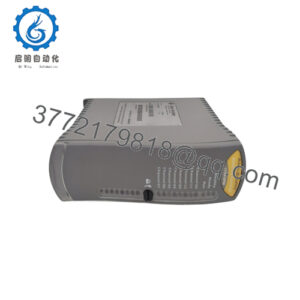
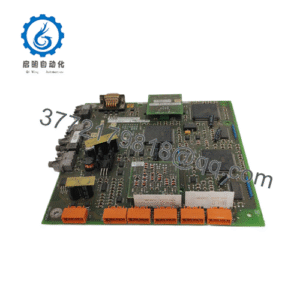
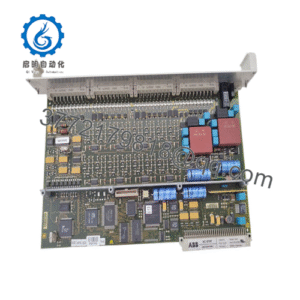
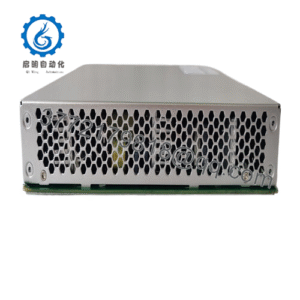
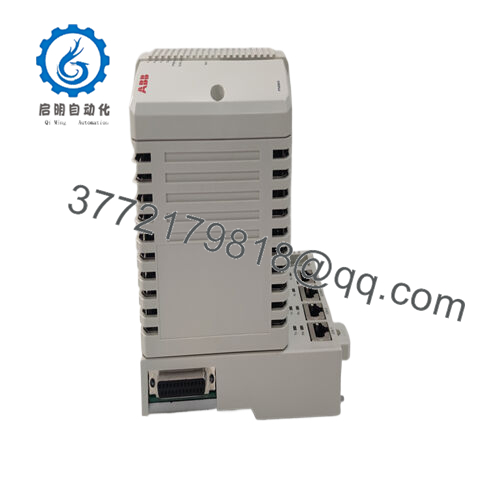
- PM863K02 3BSE088382R1
Product Introduction
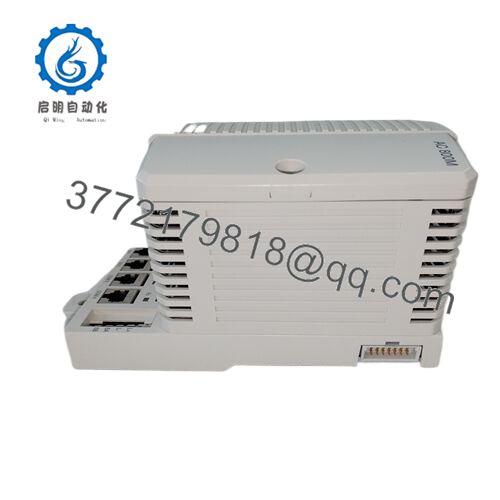
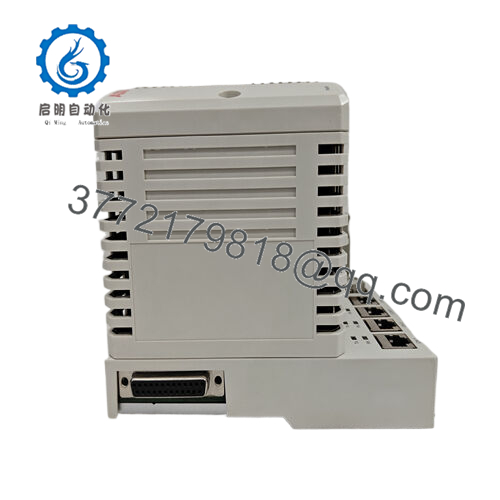
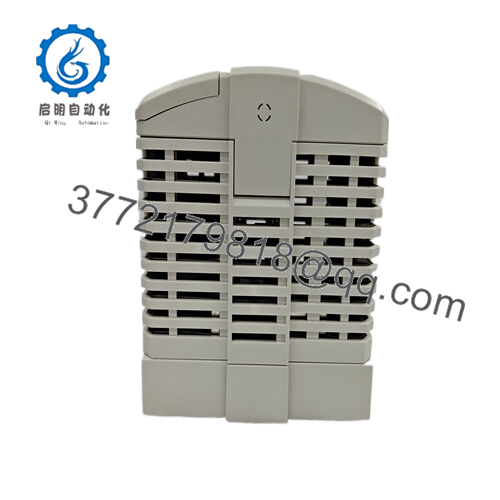
The ABB PM863K02 (3BSE088382R1) is a redundant high-integrity processor unit in the AC 800M family for System 800xA. It combines control processing with SIL3-certified safety execution in a single controller, targeting critical processes in oil & gas, chemicals, power, and utilities where both availability and functional safety are mandatory.
This K02 variant supports full CPU redundancy and high-integrity mode (with appropriate SM81x supervisory modules if needed), delivering faster execution (0.17 ms/1000 booleans) and more application memory than lower models. Plants choose it to meet safety loops without separate safety PLCs, reducing wiring and engineering while leveraging native 800xA integration for HMI, historian, and asset management.
Installation & Configuration Guide
Stage 1: Pre-Installation Preparation (15–20 minutes) ⚠️ Safety First: Coordinate with operations for controlled downtime. Place system in safe state. Lock out/tag out 24 V supplies. Wait 5 minutes for discharge. Tools Required: ESD wrist strap, PH1 screwdriver, multimeter, wire labels, smartphone for photos. Data Backup: Export full project via Control Builder M Professional (applications, hardware config, SIL allocations). Document IP addresses, redundancy links (RCU), and safety parameters. Photograph baseplate connections, LEDs, and battery.
Stage 2: Removing the Old Module (10 minutes)
- Power down rack (both CPUs in redundant pair if applicable).
- Remove front bezel.
- Label/disconnect Ethernet (CN1/CN2), RCU-link cables (TB851/TB852), power, and any serial.
- Release baseplate locks; pull unit straight—protect CEX bus pins.
- Inspect TP830 baseplate for dust/corrosion; clean gently. ⚠️ Note: Retain old unit on ESD mat until new pair runs fault-free, especially in redundant setups.
Stage 3: Installing the New Module (20–30 minutes per CPU in pair)
- Ground with ESD strap. Verify exact match to PM863K02 (3BSE088382R1).
- Configuration Clone (Crucial): No hardware DIPs; insert battery (lithium 3.6 V). For redundancy, install identical pair with RCU-link cables (TB851/TB852/TB855).
- Seat firmly in rack; connect RCU links first if redundant (listen for click).
- Reconnect Ethernet/power; torque terminals 0.5–0.6 Nm. Self-Checklist: [ ] Models identical, [ ] Battery connected, [ ] RCU cables secure/polarity correct, [ ] Locks engaged.
Stage 4: Power-On & Testing (30–45 minutes) Pre-Power Check: Multimeter—no shorts on 24 V or ground. Power-On Steps:
- Power rack (start with one CPU if testing single).
- Observe LEDs: Power green, RUN green (steady after boot), no ERR; redundancy sync (check status in Control Builder).
- Connect via Control Builder; verify detection, firmware match, SIL3 config compliance.
- Download project; validate redundancy switchover (manual trigger; <10 ms).
- Test SIL loops, I/O scan, and comms in dry-run. ⚠️ Troubleshooting Note: No sync or ERR? Check RCU cables, battery (>3 V), firmware/project mismatch. Redundancy fault often ties to link polarity or config—reverify Safety Manual settings.
Frequently Asked Questions (FAQ)
Is the PM863K02 hot-swappable? Yes in redundant configuration—swap one CPU while the other runs (System 800xA supports bumpless transfer). Never hot-swap in single mode; power down to avoid bus faults.
Is this model obsolete, and is the stock genuinely new? Active in ABB’s 800xA lineup as of 2026 (no obsolescence for PM863K02). Stock is new surplus from OEM excess—traceable, anti-counterfeit verified, and tested 24+ hours on AC 800M racks with load simulation. Reports/photos available.
What is the direct replacement if this is out of stock? PM863K02 stays current; for upgrades, check PM867K02 (higher perf) or PM858K02. Verify SIL3 and redundancy compatibility—don’t mix without ABB validation.
Will I lose my control logic or SIL configuration when swapping? No—application and safety data reside in battery-backed RAM/flash. Redundant pair auto-syncs; download if single. Export project first; battery issues during swap are the primary risk.
Why is the price lower than ABB direct? New surplus from spares/overstock—no production overhead. Full QC: visual/Megger (>10 MΩ), power-up, memory test, redundancy simulation. Same specs/performance with 1-year warranty.
Does this support high-integrity and redundancy simultaneously? Yes—designed for it. Use in redundant pair with SIL3 config per Safety Manual (TÜV-certified). Requires qualified personnel and proper supervisory modules (e.g., SM812) for full HI.