 WhatsApp: +86 16626708626
 Email:
  Phone: +86 16626708626
Description
- Key Technical Specifications
| Parameter | Value |
|———–|——-|
| Power supply | Triple redundant 24 V DC ±15% (18–28 V DC) |
| Communication | Ethernet/IP, supports Modbus TCP |
| Processor | ARM multi-core for real-time control |
| Operating temperature | −20 to +60 °C |
| Dimensions | 120 × 80 × 50 mm |
| Weight | 0.75 kg |
| Enclosure | 19-inch 2U rack-mount, IP20 |
| Redundancy | 1:1 hot standby, <100 ms switchover |
| Interfaces | 2 × Ethernet RJ45, digital I/O for fault signals |
| Excitation control | Voltage/reactive power regulation for 10–30 MW generators |
| Standards | IEC 61131-2, IEC 61000-6-2 EMC Class 3 |
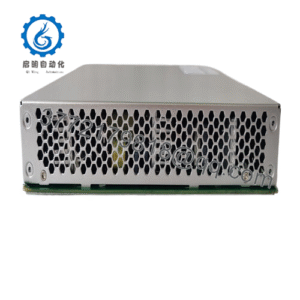
| Cooling | Forced air via front vents |

- PPD517A3011 3BHE041576R3011
- Product Introduction
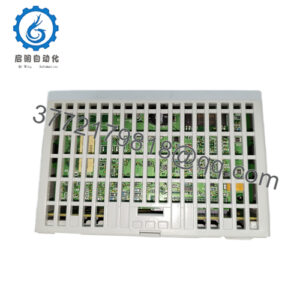
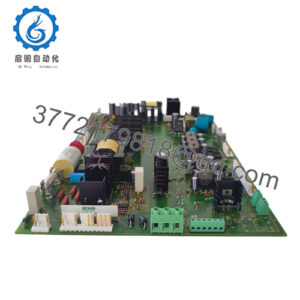
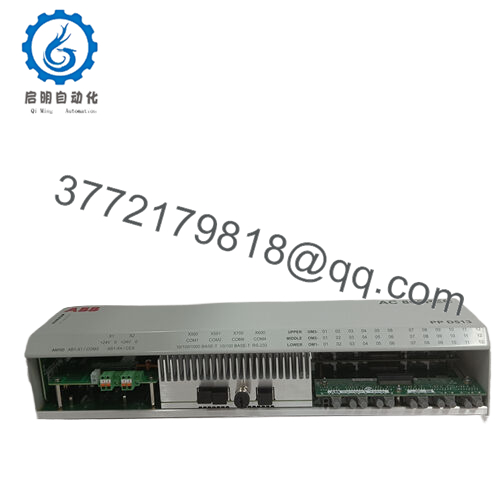
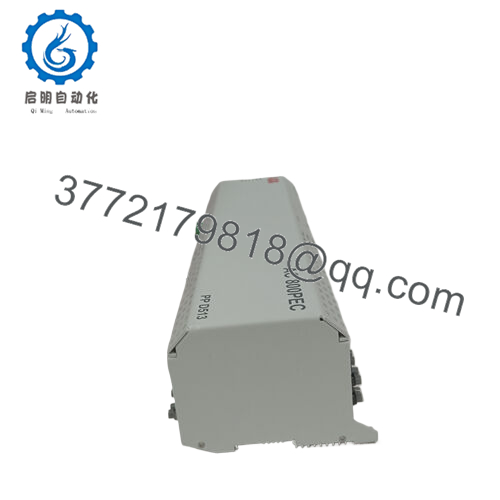
The ABB PPD517A3011 (3BHE041576R3011) is an excitation control board for ABB UNITROL and AC800PEC systems in power generation plants. It regulates generator excitation current to maintain voltage and reactive power stability on synchronous machines from 10 MW up. Field engineers install it in excitation cabinets tied to PCS6000 or ACS6000 drives.
This board handles PID loops for AVR control, fault detection on overcurrent/insulation, and redundancy switchover under load changes. Power plants select it over basic regulators when they run mega-watt hydro, gas turbine, or grid-tied generators needing tight transient response without voltage collapse. Ties directly to ABB PPC controllers via Ethernet.
- Troubleshooting Quick Reference
| Symptom | Possible Cause | Relevance to this Part | Quick Check Method | Recommendation |
|---|---|---|---|---|
| No power LEDs | 24 V DC fault on any leg of triple supply | ✅ High | Measure 18–28 V DC across all three power inputs with Fluke 87 | Balance loads across supplies; swap PSU if one leg drops out |
| Fault LED solid red | Overcurrent, overvoltage, or insulation trip | ✅ High | Read LCD codes or connect to Ethernet diagnostics for event log | Clear faults via reset; check generator field wiring before swapping board |
| Excitation output zero | PID setpoint lost or comms timeout to PPC | ✅ High | Ping board IP from engineering station; verify Ethernet link LEDs | Confirm Modbus registers match; reload config if setpoint not updating |
| Redundancy no sync | Cable break on inter-board link or firmware mismatch | ✅ Medium | Check sync cable continuity; match firmware versions on both units | Update secondary to primary firmware; test manual switchover offline |
| Intermittent regulation | Harmonic distortion or EMI on field lines | ✅ Medium | Scope excitation output for ripple >5%; verify shielding | Add line reactors if ripple high; ground shield one end only |
| Overheat alarm | Cabinet >60 °C or fan failure | ✅ Low | Measure intake air temp; spin test fans | Improve airflow; verify 50 mm rack clearance front/rear |
| Clock drift post outage | Battery backup fail | ✅ Low | Check time sync via NTP after power loss | Set NTP server; replace internal battery during planned stop |
| Ethernet no connect | Wrong IP/subnet or port damage | ✅ Medium | Verify link lights; try static IP matching network | Swap ports/cables; reset to factory DHCP if static fails |
Snap photos of LCD display, all LED states, power measurements, and Ethernet config screens. Forward to ABB support with generator AVR logs before pulling the board.
- Frequently Asked Questions (FAQ)
Q: Does PPD517A3011 3BHE041576R3011 work in non-ABB excitation setups?
It integrates via Ethernet/IP or Modbus TCP with third-party PLCs, but full redundancy and PID tuning need ABB’s Control Builder or 800xA tools. Test field scaling in a bench setup first—do not assume generic PID blocks match ABB’s excitation loops.
Q: What makes this board triple redundant?
Three isolated 24 V DC inputs let you hot-swap one PSU without tripping protection. The board itself supports 1:1 CPU redundancy with another identical unit via dedicated sync link, switching in under 100 ms on primary fail. Pull the input that fails, not the board.
Q: Can I field-upgrade firmware on a live generator?
No—firmware flashes require offline mode with generator tripped. Match versions exactly between primary/secondary, back up existing config, and verify AVR response post-flash. Mismatch kills sync and dumps reactive power.
Q: Why New Surplus pricing below ABB list?
Units pull from excess integrator stock or decommissioned plants (e.g., 20 MW wind farms), fully tested on ABB excitation racks with 24-hour burn-in, field sim loops, and Ethernet handshake proofs. Same function, no fresh factory markup.
Q: Hot-swappable PSUs—how does that work exactly?
Each 24 V leg powers independent circuits; losing one drops to 2/3 capacity but keeps regulation alive unless total draw exceeds. Plug in replacement live—board senses and balances without restart. Leave 20% headroom on total amp draw.
Q: Common failure mode in hydro plants?
EMI from unshielded field cables fries the analog inputs over years. Always single-end ground shields, add MOVs across exciter output, and spec ferrite clamps on Ethernet runs. Most “dead” boards revive after clean wiring.