 WhatsApp: +86 16626708626
 Email:
  Phone: +86 16626708626
Description
Key Technical Specifications
- Auxiliary Voltage (Uaux): 24-60 V DC (low range) or 48-250 V DC / 100-240 V AC (wide range variants)
- Voltage Inputs: 3-phase + residual (3U + Uo, rated 100/110/115/120 V AC phase-to-phase/neutral)
- Current Inputs (optional): 4I (1/5 A nominal, including sensitive Io 1/5 A)
- Binary Inputs: Up to 14 (thresholds 18/80/155/176 V DC variants)
- Output Relays: Up to 13 (mix of signal, power, and supervised trip outputs)
- RTD/mA Option: Optional module with 6 RTD inputs (Pt100 etc.) + 2 mA outputs for tap position or temp extension
- Communication: IEC 61850-8-1 (with optional 9-2LE), Modbus RTU/ASCII/TCP, DNP3, IEC 60870-5-103; Ethernet (RJ45/LC), serial (RS-485/RS-232/ST fiber); redundant HSR/PRP/RSTP
- Protection Functions: 3U< (27), 3U> (59), Uo> (59G), U1< (47U+), U2> (47O-), f>/f< df/dt (81), 3I> stages (50/51P), thermal overload (49T), arc (50L/50NL optional)
- Control Functions: OLTC AVR (COLTC 90V), master/follower/NRP/MCC modes, CB control (CBXCBR), synchrocheck (25), tap position (TPOSM 84M)
- Operating Temperature: -25…+55°C (extended -40…+70°C in some variants)
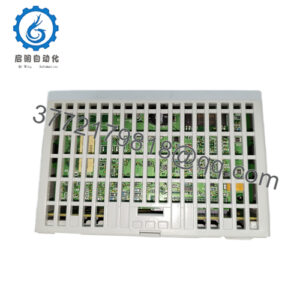
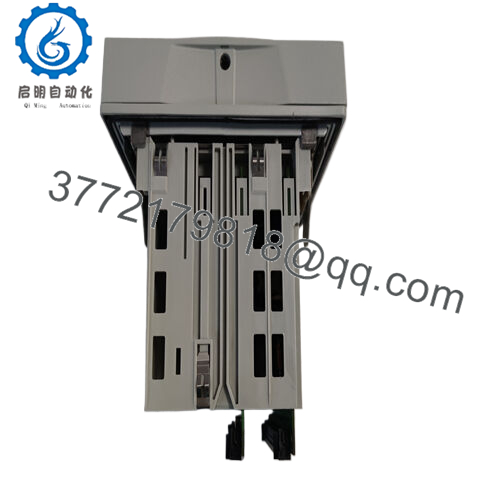
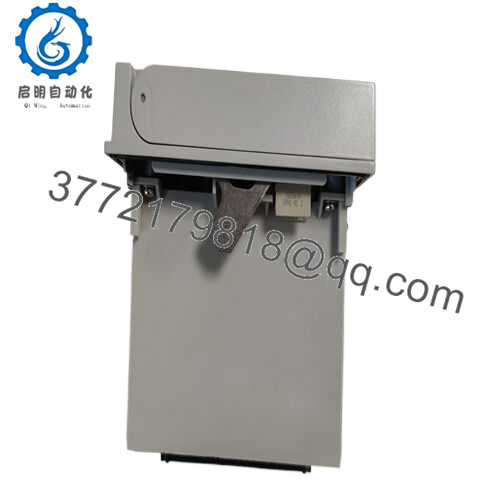
- Enclosure: 1/2 19″ rack or panel mount, IP54 front, withdrawable unit
- Weight: Approx. 4.1 kg complete (2.1 kg plug-in unit)
- Power Consumption: <12 W quiescent / <18-21 W max (DC/AC)

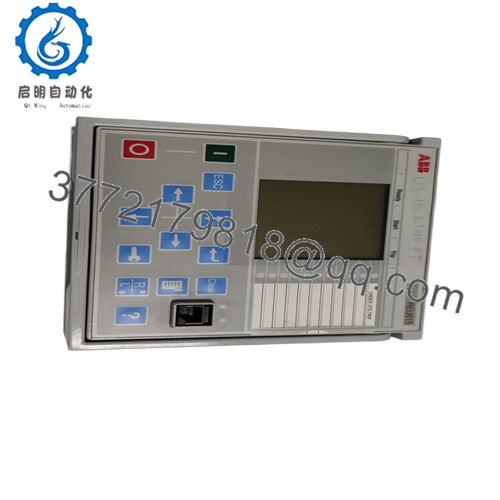
- REU615B
Product Introduction
The ABB REU615B is the configuration B variant of the REU615 relay in ABB’s Relion 615 series, engineered specifically for automatic voltage regulation of power transformers with motor-driven on-load tap changers in medium-voltage networks. It handles parallel transformer control schemes while integrating voltage/frequency protection, overcurrent elements, thermal monitoring, and breaker/disconnector supervision.
Its main advantages include preconfigured AVR logic that reduces engineering time, support for multiple regulation principles to minimize circulating currents, and flexible I/O/comms options for seamless integration into IEC 61850 substations. Field teams choose it for reliable tap changer operation in utility and industrial setups because it combines regulation accuracy (±0.5-1% typical) with built-in protection, cutting panel space and wiring compared to discrete devices.
Installation & Configuration Guide
Stage 1: Pre-Installation Preparation (15-25 min) ⚠️ Safety First: Schedule downtime with operations. Isolate transformer HV/LV sides, confirm zero energy state. Lock out/tag out aux and control power. Discharge capacitors—wait minimum 5 min. Tools Required: ESD wrist strap, PH1/PH2 screwdriver set, Fluke multimeter, torque screwdriver (0.5-1 Nm), wire labels, camera for photos. Data Backup: Use PCM600 (with REU615 connectivity package) to read/export full configuration, parameter settings, and application logic. Photograph rear terminal wiring, binary input assignments, comms settings (IP, station address), and any DIP switches on optional modules.
Stage 2: Removing the Old Module (10-15 min)
- Open front cover/HMI bezel.
- Label all terminals/wires precisely—phase voltages, aux, binary I/O, comms ports.
- Disconnect wiring carefully (no excessive force on terminals).
- Release withdrawal handles/levers and pull plug-in unit straight out to prevent backplane pin damage.
- Inspect case backplane for dust, corrosion, or bent pins—clean with approved solvent if required. ⚠️ Note: Keep the old unit intact as backup reference until full commissioning and testing of the replacement.
Stage 3: Installing the New Module (15-25 min)
- Apply ESD precautions. Verify replacement order code matches exactly (e.g., REU615B… variant, same Uaux range, I/O count, optional RTD card).
- Configuration Clone (Crucial): Replicate binary input thresholds, comms parameters, and any hardware jumpers from photos/old unit. AVR settings (bandwidth, delay, parallel mode) must align—mismatches cause hunting or failed regulation.
- Insert plug-in unit aligned—push firmly until seated (audible click, handles lock).
- Reconnect wiring per labels; torque terminals to spec (typically 0.5-1 Nm). Self-Checklist: [ ] Order code & hardware match, [ ] Wiring polarity/sequence correct, [ ] Unit fully seated/locked.
Stage 4: Power-On & Testing (30-60 min) Pre-Power Check: Multimeter verify no shorts on aux supply, correct polarity/voltage. Power-On Steps:
- Apply aux power only (keep field/OLTC isolated initially).
- Observe HMI/LEDs: PWR green, no IRF (internal fault) persistent, READY indicator.
- Connect PCM600 via front USB/Ethernet; confirm firmware version (e.g., 5.0 FP1) matches site—update if required.
- Download/upload backup config; verify AVR parameters (setpoint, deadband, tap limits).
- Energize step-by-step: test measurements (voltages accurate), simulate tap commands, check regulation response in manual then auto mode, verify protection pickup (e.g., overvoltage trip). ⚠️ Troubleshooting Note: Persistent IRF/ERR? Check firmware mismatch or hardware fault. No AVR response? Confirm tap position input (resistance/mA) calibrated and parallel mode set correctly. Comms failure? Verify IP/subnet, protocol mapping.
Frequently Asked Questions (FAQ)
Is the REU615B hot-swappable? No. Remove power before withdrawing/inserting the plug-in unit. Live insertion risks backplane arcing or module damage—the design includes shorting contacts only for CT circuits in current-input variants.
Is this model obsolete? No, REU615 (including config B) is still active in ABB’s lineup with support and firmware releases. New units are available; surplus stock may exist from upgrades.
What is the direct replacement if out of stock? No exact plug-and-play successor yet—migration stays within 615 series or to newer Relion 615/620 variants. For AVR focus, check REF615/REG615 family, but expect config rework and possible I/O/wiring changes.
Will swapping erase my programmed settings or AVR logic? No, if you export the full IED config via PCM600 before removal and import to the new unit (same firmware). Always backup—skipping this has caused days of parameter re-entry on parallel transformers.
Why is surplus pricing lower than OEM new? Surplus comes from decommissioned projects or excess distributor inventory. Units undergo full functional/load testing, insulation checks, and firmware verification with reports available—our 1-year warranty applies, but lacks factory certification.
Can it integrate with modern IEC 61850 GOOSE? Yes, native support for IEC 61850-8-1, including GOOSE messaging for inter-relay signals (e.g., parallel AVR coordination). Optional process bus (9-2LE) available in some orders.
Photograph everything before disassembly and verify config match—you’ll cut most swap issues by half.