 WhatsApp: +86 16626708626
 Email:
  Phone: +86 16626708626
Description
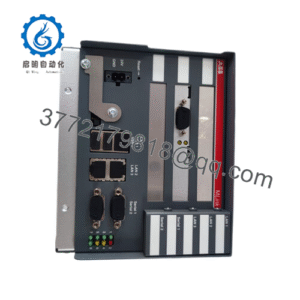
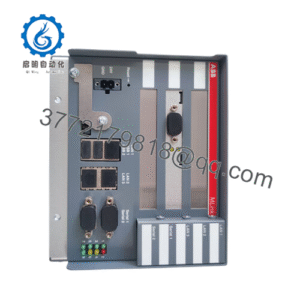
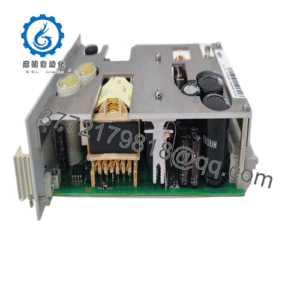
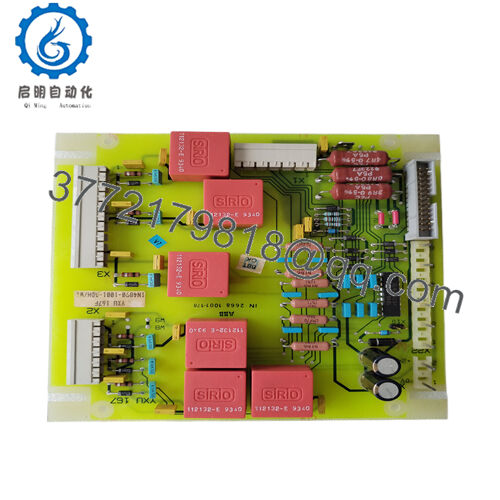
- Model: SPBRC300
- Brand: ABB
- Series: Symphony Plus (Harmony / Infi 90 evolution)
- Core Function: High-capacity bridge/process controller & I/O gateway
- Product Type: Bridge Controller Module
- Key Specs: Supports HR/S800 I/O | High block capacity | Serial/RS interfaces
- Condition: New Surplus
- Inventory Status: Legacy / Limited lifecycle part for Symphony Plus – strategic last-time-buy or stocking essential for installed bases
Key Technical Specifications
- Part Designation: SPBRC300 / BRC300 / PHCBRC30000000
- Controller Type: Harmony Bridge Controller (high-performance)
- I/O Compatibility: Harmony rack I/O (HR Series), S800 I/O, legacy Infi 90
- Communication: Serial (RS-232/RS-485 typical), supports Modbus RTU, plant network bridging
- Processing: Executes function blocks, control logic, data exchange gateway
- Power Supply: Typically 24 V DC (system-dependent; rack-powered)
- Mounting: Rack-mounted in Harmony Evolution chassis or compatible
- Dimensions: Approx. 269.24 mm width × 358.14 mm height × 73.66 mm depth
- Weight: Approx. 0.31 kg (net, module only)
- Environmental: Industrial hardened; wide temp range per Symphony Plus racks
- Battery: 1 × lithium button cell (for memory backup)
The ABB SPBRC300 bridge controller serves as the high-capacity processing core in Symphony Plus Harmony rack configurations. It interfaces directly with I/O modules, runs user-defined control logic via function blocks, and bridges communications between subsystems—enabling seamless data flow in distributed process control for continuous operations in utilities, heavy industry, and batch processes.
Opting for New Surplus on this legacy module delivers clear TCO benefits in plants retaining Symphony Plus or Infi 90 infrastructure. As these controllers reach limited lifecycle status, genuine New Surplus stock mitigates 12+ month lead times or forced migrations. It sidesteps refurbished risks—such as aged electronics causing intermittent faults, logic corruption, or I/O failures that trigger process trips and high downtime costs. With full traceability and QC, expect reliable 10+ year service life matching OEM performance.

- SPBRC300
Installation & Configuration Guide
Stage 1: Pre-Installation (Prep & Safety) Implement full LOTO on the rack power and field I/O. Confirm zero energy with multimeter. Prepare ESD wrist strap (mandatory), torque tools, camera for documentation. Photograph existing module: capture all cabling (communication ports, power, I/O links), DIP/jumper settings if any, LED status, and labeling/serial numbers.
Stage 2: Removal Power down the rack fully per Symphony Plus manual. Disconnect communication cables (fiber/serial—handle ends only), power feeds, and any bus terminators. Release rack securing mechanisms (clips/screws). Slide or lift the module straight out carefully to avoid stressing backplane pins or connectors—use support if heavy.
Stage 3: Installation (Clone & Seat) Replicate configurations exactly: match any jumpers, address settings, or firmware notes from photos. Align the new SPBRC300 with rack guides and backplane. Seat firmly until locked—verify full engagement (click or visual). Reconnect all cables precisely (torque terminals), restore terminators, and double-check for loose connections or bent pins.
Stage 4: Power-On & Testing Power up rack stepwise: apply power, monitor LEDs for normal RUN/boot sequence (no ERR/fault). Check system diagnostics via Composer or engineering tool for module recognition, no alarms. Validate I/O communication, block execution, and network links. Run functional tests under load to confirm stability and no timeouts.
Firmware/Software Versions & Upgrade Notes Recommended: Match existing Symphony Plus firmware revision (e.g., L_9 or later for BRC300 equivalents; consult site Composer project). No onboard firmware in basic sense—logic resides in function blocks configured via Composer.
Compatibility: Drop-in for BRC300 in Harmony racks; supports legacy and S800 I/O without changes.
Risk warning: Firmware mismatch between controller and tools can prevent upload/download or cause block errors. Avoid upgrading during swap—back up full configuration first. Downgrading risks incompatibility with newer I/O or protocols; always validate in offline sim before live deployment.
Frequently Asked Questions (FAQ)
Is this really New Surplus and not refurbished? Yes—genuine New Surplus from verified surplus sources. Original packaging (opened for QC only), no runtime use, no repairs or part substitutions. We exclude all used/refurbished inventory.
Why is pricing higher than refurbished but below full OEM new? New Surplus reflects costs of sourcing authentic legacy stock globally—20–30% above refurb but significantly under ABB new list. It ensures verified components and avoids hidden degradation that leads to failures.
Is the SPBRC300 obsolete or limited? Yes—Symphony Plus Harmony series (BRC300 family) is in limited lifecycle. Many systems remain active; stock New Surplus now to hedge against extended delays or discontinuation.
Can the bridge controller be hot-swapped? No—requires rack power-down, LOTO, and grounding. Hot insertion risks backplane damage, arcing, or controller faults. Always de-energize per ABB procedures.
Does swapping require reloading logic or reprogramming? The module holds no user logic—function blocks and configs stay in the system database. Use Composer to verify/refresh post-install; photo documentation ensures quick setup without full reload in most cases.
What warranty do you provide? 1–2 years on New Surplus, defect coverage. Comes with QC test report (power-on, comm check), serial verification, and packing slips for traceability.
How is authenticity and condition verified? Inbound: OEM serial/traceability check. Functional: Rack test for boot, LED status, basic I/O sim. Electrical: Continuity/insulation verified. Final: ESD re-bagged, signed off, crated securely.