 WhatsApp: +86 16626708626
 Email:
  Phone: +86 16626708626
Description
Product Core Brief
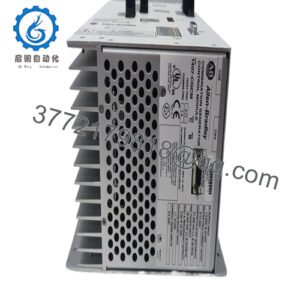
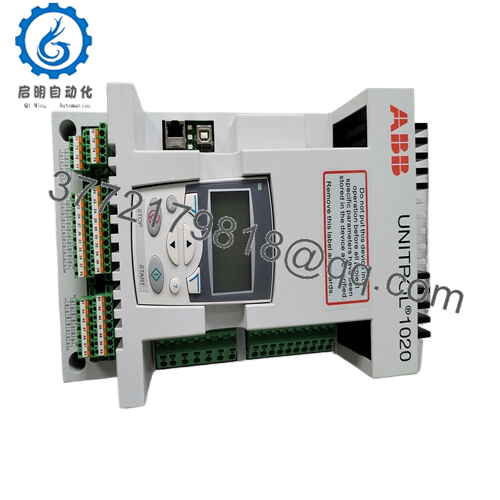
- Model: 3BHE030579R0003 (UNITROL 1020 -0003 BASIC / UNS0119A-Z V1)
- Brand: ABB
- Series: UNITROL 1020 (part of UNITROL 1000 family)
- Core Function: Digital automatic voltage regulation for synchronous generators
- Product Type: Automatic Voltage Regulator (AVR) controller
- Key Specs: Up to 20 A continuous excitation current (38 A peak), 3-phase sensing, dual-channel support, Ethernet/USB/RS-485 interfaces
- Condition: New Original / New Surplus
Key Technical Specifications
| Parameter | Value |
|---|---|
| Ordering number | 3BHE030579R0003 |
| Type designation | UNITROL 1020 -0003 BASIC / UNS0119A-Z V1 |
| Supply voltage (aux) | 24 V DC ±20% or 110/220 V AC |
| Power electronics supply | 0–300 V AC 3-phase or 0–300 V DC |
| Excitation current | 20 A continuous, 38 A peak (at 55 °C) |
| Output voltage | Positive average (IGBT PWM) |
| Regulation modes | AVR, VAR, PF, field current |
| Sensing inputs | 3-phase machine voltage (up to 250 V), single-phase current |
| Communication | Ethernet, USB, RS-485, CAN |
| Ambient temperature | -25 to +70 °C (operating, verify exact) |
| Degree of protection | IP20 |
| Dimensions (approx.) | 302 x 170 x 280 mm (including heat sink) |
| Weight | Approx. 5–8 kg |
| Application range | Synchronous generators/motors up to 80 MVA |

- UNITROL 1020
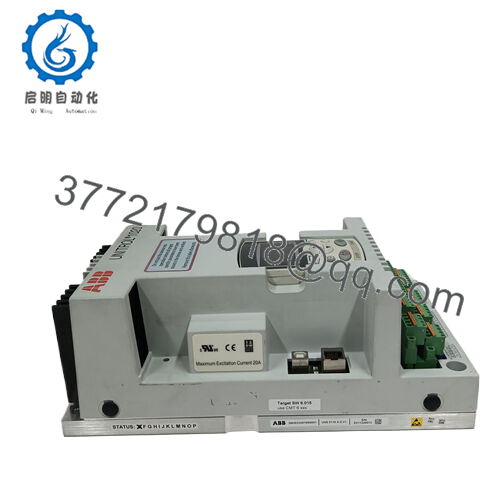
Product Introduction The ABB 3BHE030579R0003 is the core controller in the UNITROL 1020 series, a compact digital automatic voltage regulator (AVR) for brushless excitation of synchronous generators and motors up to 80 MVA. It integrates microprocessor-based control with IGBT power electronics for precise voltage, reactive power, or power factor regulation in power plants, industrial drives, and marine applications.
In dozens of UNITROL 1020 installations I’ve handled—from small hydro units to medium diesel gensets—this model excels with its built-in dual channels for redundancy, fast response via PWM output, and user-friendly commissioning through CMT1000 software or onboard panel. It offers reliable performance in harsh environments, with advanced limiters and protections that reduce tuning effort compared to legacy analog systems.
Installation & Configuration Guide
Stage 1: Pre-Installation Preparation (30-45 minutes) ⚠️ Safety First: Isolate all excitation and generator supplies. Lock out/tag out power feeds to the AVR cabinet. Verify zero voltage on terminals (machine voltage, field, aux power) with multimeter; discharge capacitors (wait 10+ minutes). Coordinate generator shutdown with operations. Tools Required: Grounded ESD wrist strap, PH2/PH3 screwdrivers, digital multimeter, torque screwdriver (0.5–1.5 Nm), wire labels, camera, laptop with CMT1000 software and USB cable. Data Backup: Photograph all terminal connections, wiring layout, and panel LEDs. Connect via USB/Ethernet and export full parameter set (setpoints, limiters, PSS if used), event logs, and configuration files using CMT1000.
Stage 2: Removing the Old Module (20-30 minutes)
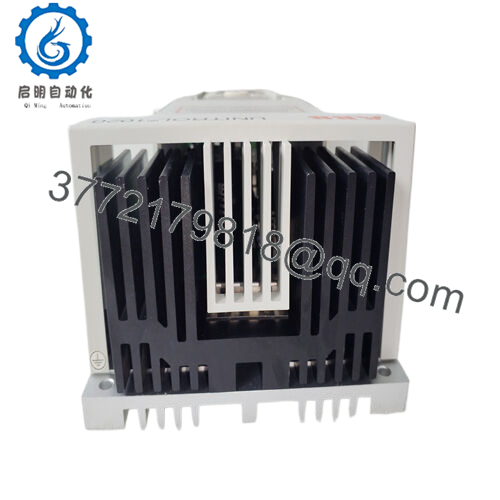
- Open the cabinet and locate the UNITROL 1020 unit (compact with heat sink on top).
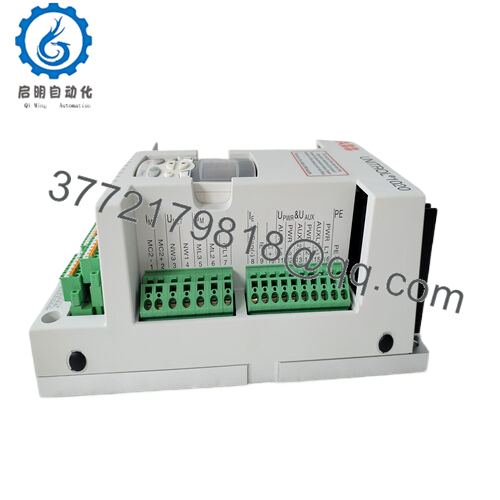
- Label every terminal: aux power (AUX L1/L2/L3), power electronics (PWR L1/L2/L3), machine voltage (ML1/ML2/ML3), current (MC2+/MC2-), field output (IE+/IE-), digital/analog I/O, and comms ports. Take multi-angle photos.
- Disconnect wiring carefully—note polarity on field and sensing; avoid straining cables.
- Remove mounting screws/clips and lift the unit out straight to protect connectors.
- Inspect mounting surface and heat sink area for dust buildup or damage. ⚠️ Note: Retain the old unit (ESD-bagged and labeled) until the replacement runs fault-free under full load for 48+ hours.
Stage 3: Installing the New Module (30-45 minutes)
- Apply ESD protection. Confirm replacement is exact 3BHE030579R0003.
- Configuration Clone (Critical): No extensive hardware jumpers—settings are software. After mounting, connect CMT1000 and upload backed-up parameters immediately.
- Mount the unit securely; ensure good heat sink airflow and tighten screws evenly.
- Reconnect all wiring per photos/labels, applying specified torque. Verify field polarity (reverse can damage IGBTs) and grounding of PT/CT neutrals if required. Self-Checklist: [ ] Wiring polarity and torque correct, [ ] Module mounted with airflow clear, [ ] Comms cables connected, [ ] External capacitor (if used) polarity checked.
Stage 4: Power-On & Testing (60-120 minutes) Pre-Power Check: Confirm no shorts on supply/field circuits; check external capacitor (if fitted) for correct polarity and rating (>450 V, low ESR). Power-On Steps:
- Apply aux power only (no main power electronics initially).
- Observe panel LEDs and display: power OK, no critical faults.
- Connect CMT1000; verify unit recognition, firmware version, and load parameters.
- Perform open-circuit excitation test: enable field slowly, monitor voltage buildup and stability.
- Synchronize to grid/load bank; test under incremental load, verify limiters (OEL/UEL) and droop/PSS if configured. ⚠️ Troubleshooting Note: No field output? Check supply voltage (PWR terminals), IGBT fuse (if internal), and polarity. “Excitation Fault” alarm? Recheck parameter upload or sensing inputs (reversed PT wires cause instability). Comms issues? Confirm USB cable is the special red ABB type; default Ethernet settings may need adjustment.
Frequently Asked Questions (FAQ)
Can the UNITROL 1020 be hot-swapped? No. The 3BHE030579R0003 involves live power electronics and field circuits. Hot insertion risks severe damage to IGBTs or backplane. Isolate all supplies before removal/installation.
Is the 3BHE030579R0003 obsolete, and is your stock new? As of 2026, UNITROL 1020 remains in ABB’s portfolio for legacy and medium applications, though newer platforms expand capabilities. Supplied units are new original surplus from OEM channels—traceable, with inbound verification, 24-hour load testing (simulated excitation), and insulation checks. Test photos/reports available.
What is the direct replacement if this is unavailable? Exact match is 3BHE030579R0003 (or minor revision suffixes if compatible). For future-proofing, ABB directs to UNITROL 1020 successors or 6000 series—may require parameter migration and hardware adapters. Avoid mixing with UNITROL 1000 older variants without verification.
Will replacing the unit erase my settings? No—parameters store in non-volatile memory. Use CMT1000 to backup/restore fully before swap. Hardware connections must match exactly; I’ve seen hunting from mismatched droop settings if not reloaded properly.
Why is the price lower than ABB direct? Sourced as new surplus/excess inventory from verified suppliers, reducing markup. Units pass full QC: anti-counterfeit checks, powered burn-in with current simulation, and functional verification. No refurbished parts—price reflects supply efficiency.
How many excitation current does it support natively? 20 A continuous, 38 A for short peaks (at 55 °C ambient). Pair with external UNITROL 1000-PM40 power module for higher currents in larger machines. In field, stay within ratings or add cooling for sustained high loads.
Common pitfalls during commissioning? Sensing polarity errors cause voltage instability or limiter trips—double-check PT/CT wiring. Overheating from poor ventilation is frequent in dusty panels—clean filters regularly. Parameter mismatches post-swap lead to oscillations—always reload backup and autotune if needed.