
 WhatsApp: +86 16626708626
 Email:
  Phone: +86 16626708626
Description
- Product Core Brief
- Model: UNS4681V511 3BHE004074R0511
- Brand: ABB
- Series: UNSxxxxV5xx auxiliary / power / protection modules (ABB OEM family)
- Core Function: Power / overvoltage module for ABB control or excitation systems (verify per panel drawing)
- Product Type: Power / surge / auxiliary supply module (panel-mounted)
- Key Specs: High isolation DC power-module concept; overvoltage / overload type use; part of ABB generator / control assemblies
- Condition: New Original / New Surplus (field market positioning)
- Key Technical Specifications
(Currently available public descriptions for UNS4681V511 3BHE004074R0511 are high-level and partially inconsistent; you must confirm exact electrical ratings and usage against your ABB project documentation and nameplate.)
- OEM model: UNS4681V511
- Part number: 3BHE004074R0511
- General type: Power / overvoltage / overload module used in ABB systems
- Typical role in system: Auxiliary power handling or overvoltage/overload protection within an ABB excitation or control panel (project-specific)
- Isolation concept: Described as a power-module class device with distinct isolation voltage levels (examples for ABB DC–DC modules: 1,000 V, 1,500 V, 3,000 V, 6,000 V) for galvanic separation between circuits; exact value for this code must be checked on the ABB datasheet or nameplate
- Contact / interface style: Some sources generically describe UNS4681V511-type products as auxiliary contact / power modules that may include SPDT-style contacts for signaling; do not rely on this without your exact wiring diagram
- Application area: Listed in spare parts lists for ABB generator / drive / excitation or process control assemblies as a module-level component
- Mounting: Panel or rack-mounted module inside an ABB cabinet, wiring via front / side terminal blocks or backplane, depending on assembly
- Environmental rating: Not clearly published per this exact code; treat as cabinet-installed electronics (use your project spec or ABB manual for temperature and pollution degree)
Because available third-party listings do not publish a complete, consistent electrical spec for UNS4681V511 3BHE004074R0511, treat every value above as indicative only and always verify against your ABB wiring diagram, I/O list, and official module datasheet before sizing fuses, insulation distances, or replacement candidates.
- Product Introduction
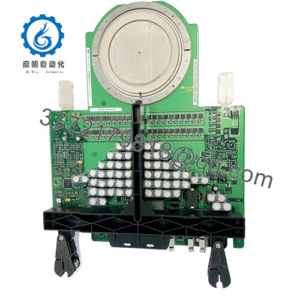
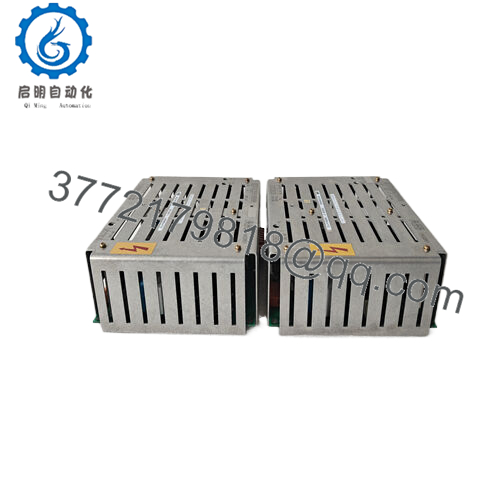
The ABB UNS4681V511 3BHE004074R0511 is an ABB module-level power / overvoltage or auxiliary supply component used inside larger ABB control, excitation, or drive panels, typically as part of a matched assembly rather than as a stand-alone catalog power supply. It integrates supply handling and high isolation between circuits so the upstream system has a defined, protected DC or signaling interface
In real plants you usually encounter this unit as a line item on an ABB panel BOM rather than as a separately engineered component, and it is replaced one-for-one based on model and part number when troubleshooting an excitation or control issue. Because different vendors describe UNS4681V511 as a power module, auxiliary contact/power module, or overvoltage/overload module, you should take your exact behavior cues from the ABB panel schematic and module label, not generic online specs.

- UNS4681V511 3BHE004074R0511
- Troubleshooting Quick Reference
(Use this as a field-minded guide. Exact terminals and values must come from your cabinet drawings and ABB manual.)
| Symptom | Possible Cause | Relevance to this Part | Quick Check Method | Recommendation |
|---|---|---|---|---|
| Upstream ABB panel section loses its DC auxiliary power unexpectedly | Failure of UNS4681V511 power / DC-DC module or its input feed | ✅ High | Measure DC input to the UNS4681V511 and its DC output under load; compare with expected panel voltages | If input is present but output is low/absent and wiring is correct, treat UNS4681V511 as suspect and schedule a replacement; if both input and output are down, fix upstream supply first |
| Overvoltage / overload alarm tied to this module’s circuit | Internal fault or genuine overvoltage/overload condition on the circuit it protects | ✅ Medium | Check alarm source in DCS or relay logic, then meter the protected circuit’s voltage/current against nameplate; inspect module for discoloration | If system voltage/current is within spec but alarms persist and swapping the module clears it, retire the old UNS4681V511; otherwise treat the alarm as real and find the root-cause in the power system |
| Module runs noticeably hotter than similar modules nearby | Excessive load on its output or poor cabinet ventilation | ✅ Medium | Use an IR thermometer to compare surface temperature with neighboring modules, and check actual load current vs design value on that output | Reduce load, correct wiring or parallel paths, and improve airflow; if temperature remains high under correct load, consider proactive replacement to avoid nuisance trips |
| Downstream relays/contacts driven from this module chatter or drop out | Output voltage from UNS4681V511 sagging under load or intermittent connection | ✅ Medium | Meter the output while switching the expected load on/off; wiggle wiring gently and watch for dips or dropouts | Tighten terminations; if voltage sags significantly below design while still within current rating, the module’s output stage may be degraded and should be replaced |
| No obvious impact when module is de-energized during maintenance | Module is in a redundant or monitoring-only role in that specific panel | ❌ Low | With system safely offline, trace the module’s input and output circuits against the schematic to understand what it actually feeds | Do not assume the module is unused; it may only act in fault conditions—verify function in documents before deciding to leave it failed or remove it |
| Insulation test between module circuits fails or shows low megohms | Breakdown of isolation in internal power stage | ✅ High | With the module fully disconnected, perform insulation resistance checks according to ABB limits for the specific system | If readings are below ABB’s specified minimum, do not return the module to service; replace it and re-test the system before energizing |
If you cannot clearly link the symptom to UNS4681V511, take high-resolution photos of the module, its terminals, and the surrounding wiring, pull the exact schematic sheet referencing UNS4681V511 3BHE004074R0511, and review everything as a set before you order a replacement.
- Frequently Asked Questions (FAQ)
Q1: What does ABB UNS4681V511 3BHE004074R0511 actually do in my panel?
Based on current public data, UNS4681V511 is used as a power / overvoltage or auxiliary module feeding or protecting part of an ABB control or excitation system, not as a CPU or I/O card. The exact role—DC-DC supply, surge/overvoltage module, or auxiliary contact power—depends on your specific cabinet design, so you need to check the wiring diagram to see which loads or logic rails it serves.
Q2: Is UNS4681V511 a generic auxiliary contact block or a power module?
Some third-party descriptions call UNS4681V511 an auxiliary contact/power module with SPDT arrangements, while others categorize it purely as a power/overvoltage module. In practice, you should ignore the generic labels and follow the ABB drawing: if it sits in the power chain and has clear DC input/output rails, treat it as a power module; if it only feeds signaling contacts, treat it as auxiliary supply/relay hardware
Q3: Can I use another ABB DC-DC power module with the same voltage to replace it?
I would not recommend that without checking ABB engineering or the official parts cross-reference. Even if voltage and current match, isolation ratings, fault behavior, and diagnostic wiring can differ between ABB module families, and a “close enough” replacement may fail insulation or coordination requirements. Pull the exact type code and part number from your old unit and match them when sourcing a spare.
Q4: Is this module typically hot-swappable?
Treat it as non-hot-swappable unless your documentation clearly says otherwise. It handles power or protection functions, so yanking it live can drop rails that feed CPUs, I/O, or excitation circuits. Lock out, verify absence of voltage, and only then remove or insert UNS4681V511; it is not worth risking a full panel trip to save a few minutes.
Q5: Why is there almost no detailed spec for UNS4681V511 online?
This part is usually sold as a component inside a larger ABB solution, not as a stand-alone catalog product with a long public datasheet. Most of the information lives inside ABB system manuals, spare-parts lists, and project documentation, so third-party sellers only list high-level marketing text (“power module,” “overload module”) instead of giving full electrical curves.
Q6: How should I specify a replacement when ordering?
Use the full marking from your existing unit: “UNS4681V511 3BHE004074R0511” plus any revision suffix printed on the label, and ideally attach a clear photo of the nameplate to your RFQ. Match on both type code and part number and include the host system (e.g., “mounted in UNITROL / drive / DCS panel X”) so the seller knows exactly what assembly it belongs to.
Q7: Any practical tips before I pull or replace this module?
Yes: first print or open the schematic that shows UNS4681V511, mark which rails and devices it feeds, and measure present voltages and currents under normal operation. Take photos of all wiring, label each conductor, and wear an ESD strap when handling the module if it has sensitive electronics. When you install the replacement, recheck torque on terminals and verify all affected voltages with a meter before you bring the rest of the system back online.