 WhatsApp: +86 16626708626
 Email:
  Phone: +86 16626708626
Description
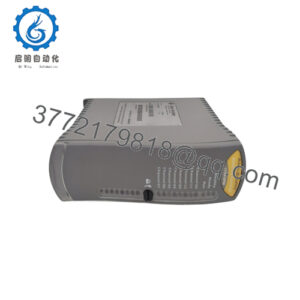
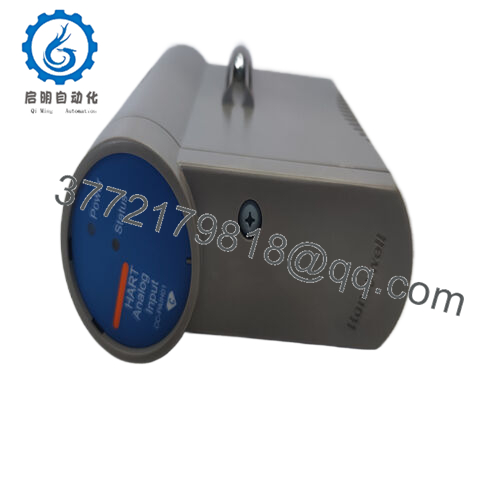
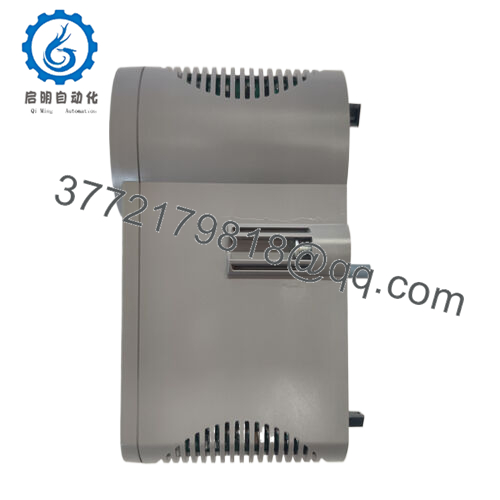
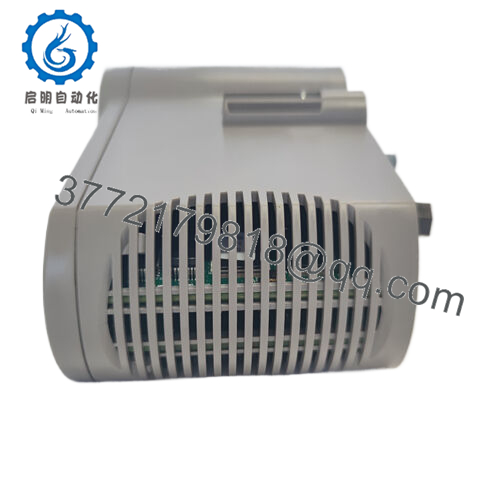
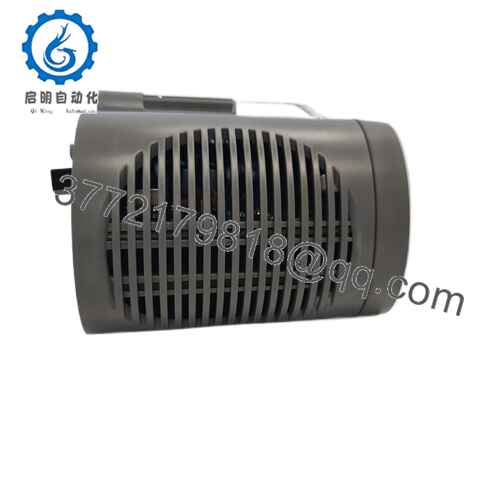
Product Model: CC-PAIH01
Product Brand: Honeywell
Product Series: Experion / Series-C High-Level Analog Input Modules
Key Features:
- 16-channel high-level analog input module with HART support (12 single-ended + 4 differential)
- Accepts voltage or current (4-20 mA, 0.4-2 V, 0–5 V, etc.) inputs with built-in sensor drive support via IOTA modules
- Extensive self-diagnostics, open-wire detection, non-incendive field power, fast loop scan capability
- Designed for the Experion or C300 DCS / control systems, supporting voltage inputs on specific channels, and flexibility via IOTA jumpers
Main Article
Below is a structured but flowing narrative about CC-PAIH01, its role, features, specs, installation tips, comparisons, and support considerations.
Product Role & System Fit
In Honeywell’s Experion / Series-C / C300 control architecture, an analog input module like CC-PAIH01 is used to capture process signals from field sensors—converted into electrical signals—into the control system. As a “high-level” module, CC-PAIH01 expects preconditioned signals (voltage or current) rather than raw millivolt signals, making it well suited to receive outputs from transmitters or signal conditioners.
The “HART” capability enables digital communication overlaid on the analog signal, meaning smart field devices (transmitters) can deliver diagnostic or secondary variable data without a separate channel. That is especially valuable in process industries. The CC-PAIH01 integrates that capability, acting as a smart analog input module.
Within a DCS / control rack, the CC-PAIH01 plugs into a standard module slot along with IOTA interface modules (which handle field power or line conversions). The control system (Experion, C300) expects CC-PAIH01 modules to supply analog loop data (PV), diagnostics, and HART variables to controllers or higher layers. Because it supports both voltage and current signals (with some jumper configuration), it’s flexible for mixed-signal environments.
One nuance: not all channels support voltage signals. The published spec states that only channels 13–16 of CC-PAIH01 support voltage inputs via jumpers on the IOTA (you must cut the jumper to enable that) The rest are typically set up for current-mode signals unless configured otherwise.
Thus CC-PAIH01 is a hybrid, flexible analog input module with integrated HART, suitable for process control, alarming, diagnostics, and multi-variable monitoring in industrial automation.

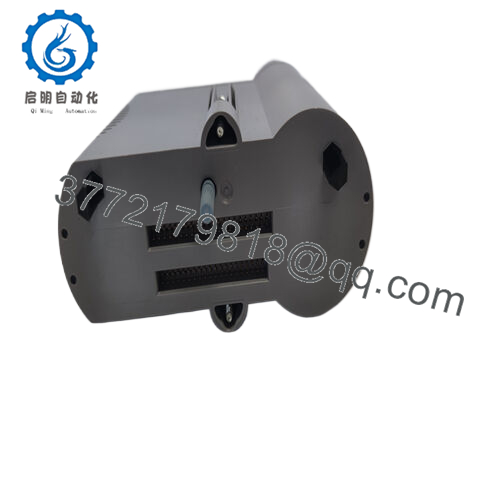
- CC-PAIH01
Technical Features & Benefits
Below are the standout features of the module, and engineering insights on how to leverage them:
Input Types & Channels
- The module supports 16 channels total: 12 single-ended and 4 differential
- Input types are flexible: 4–20 mA (through a 250 Ω load), 0–5 V, 1–5 V, and 0.4–2 V. These ranges make it compatible with many transmitter outputs.
- Voltage input support is limited and must be enabled by cutting jumpers on IOTA modules for channels 13–16
- Input impedance for voltage mode is greater than 10 MΩ when powered, minimizing loading on source circuits
This flexibility allows a mix of loop and voltage sensors to be read through one module, though engineers must carefully configure jumpers and ensure wiring matches the intended mode.
Accuracy, Resolution & Filtering
- The module’s ADC is 16-bit resolution, giving good granularity for precise measurements.
- Its hardware accuracy is ±0.075 % of full scale at 23.5 °C ±2 °C, and ±0.15 % over the 0–60 °C range
- Noise rejection: common-mode rejection (DC–60 Hz) of 70 dB (with 500 Ω source imbalance)
- Normal mode rejection at 60 Hz: 19 dB
- The module uses a single-pole RC filter with –3 dB corner around 6.5 Hz for normal mode signals. This helps attenuate noise above that frequency.
- Crosstalk between channels is minimized: around –60 dB (dc to 60 Hz)
These performance characteristics make CC-PAIH01 suitable for stable process measurement, even in electrically noisy environments.
Self-Diagnostics & Protection
- The module implements extensive self-diagnostics, monitoring for open-wire, short circuits, signal consistency, and internal module health.
- It supports open-wire detection and “bad PV” detection (if a wire breaks or connection fails)
- The module supplies non-incendive field power to supporting transmitters (for class 1, division 2 hazardous areas) so that field loops can be driven safely without external power supplies.
- “PV protection through open wire detection diagnostic” is explicitly based on the module spec.
- The module supports redundant configurations (optional redundancy) to improve system availability.
This suite of diagnostics helps ensure reliability, early fault detection, and safe operation in critical systems.
Scan Rate & Loop Performance
- Typical module input scan or update rate: 50 ms (i.e. full loop every 50 ms)
- Fast loop scanning is supported, enabling tighter control loops or faster response in process control applications.
The scan rate is acceptable for many process measurement tasks, though not ultra-high-speed control.
—
Technical Specifications Table
Here’s a consolidated spec table drawn from the Honeywell manual and related sources:
| Parameter | Value / Range | |
|---|---|---|
| Model | CC-PAIH01 | |
| Module Type | High-Level Analog Input with HART | |
| Input Channels | 16 (12 single-ended + 4 differential) | |
| Supported Input Types | 4–20 mA, 0–5 V, 1–5 V, 0.4–2 V | |
| Voltage Input Support | Channels 13–16 only (IOTA jumpers) | |
| Input Impedance (voltage mode) | > 10 MΩ (powered) | |
| ADC Resolution | 16 bits | |
| Accuracy | ±0.075 % FS at 23.5 °C; ±0.15 % FS over 0–60 °C | |
| Common-Mode Rejection | 70 dB (500 Ω imbalance) | |
| Normal-Mode Rejection | 19 dB at 60 Hz | |
| Crosstalk | –60 dB (dc to 60 Hz) | |
| Filter (Normal Mode) | Single-pole RC, –3 dB @ 6.5 Hz | |
| Max Normal-Mode Input | ±30 V (no damage) | |
| Module Scan Rate | 50 ms | |
| Power / Field Supply | Non-incendive field power; supports 4–20 mA loops | |
| Diagnostics | Self-tests, open-wire detection, redundancy support |
Note: The Honeywell manual explicitly supports voltage input only on channels 13–16 via jumper-modified IOTA.
Installation & Maintenance Insights
Here are field-proven tips for working with CC-PAIH01 modules:
Module & IOTA Jumper Configuration
- For voltage inputs on channels 13–16, the IOTA module has a 250 Ω load resistor jumper connected by default. To use voltage mode, that jumper must be cut (disable the resistor) to avoid forcing current-mode loading.
- Be certain you know whether your channel is wired for current or voltage. Wrong jumper setting can saturate the module or lead to measurement error.
- The module’s version (firmware, revision) should match the control rack’s expectations. Mismatched versions may yield parameter or communication failures.
Wiring & Signal Quality
- Use shielded twisted-pair wiring for loops, with shielding drained at one end to avoid ground loops.
- Maintain wire lengths and loop resistances within allowable margins; long wires + small signals demand careful layout, especially for voltage signals where source impedance matters.
- Grounding should be consistent, and common-mode voltages should remain within –6 V to +5 V (dc–60 Hz) specification.
Commissioning & Diagnostics
- After installation, run self-tests and check for open-wire alarms.
- Validate span/zero on each channel and compare field instrument outputs vs. module reading.
- Monitor for flicker or faults: use diagnostic tools in Experion / system to read module status registers and errors.
Fault Handling & Replacement
- In case of channel error or module failure, swapping a spare CC-PAIH01 requires restoring IOTA jumper settings and configuration backups (channel scaling, alarm settings).
- When working in redundant or spoil mode, verify module redundancy or failover behavior.
- Use only modules of matching revision or documented compatibility when replacing.
—
Related Models
Here are some sibling or alternative modules in the Experion / Series-C analog input / HART family:
- CC-PAIH02 – Differential HART analog input module supporting full 1–16 channels and differential operation.
- CC-PAIH51 – High-level HART analog input supporting all single-ended channels.
- Other Series-C I/O modules – analog output, digital I/O, temperature input modules, etc. (for example, CC-PAON01 is an analog output module)
When selecting a module, check whether your signals require voltage support or differential inputs; CC-PAIH02 or PAH51 may offer that flexibility more broadly.