 WhatsApp: +86 16626708626
 Email:
  Phone: +86 16626708626
Description
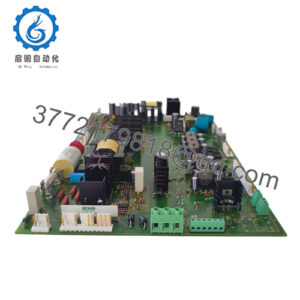
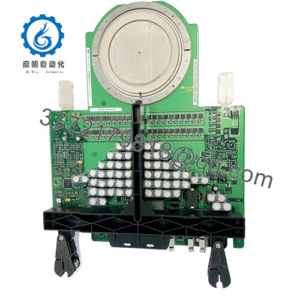
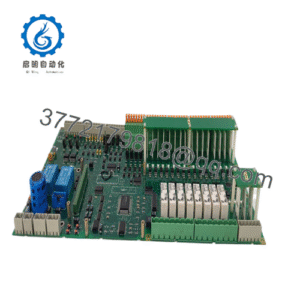
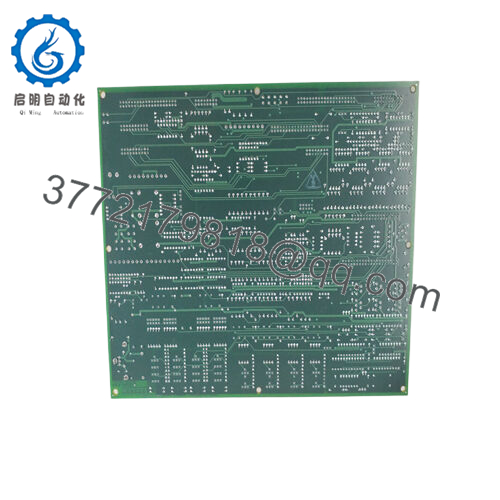
The GE DS200TCQAG1A (with suffixes like -ADE, -AEC, or others denoting revisions) is an RST Analog I/O Board in GE’s Mark V turbine control systems from the Speedtronic series. In industrial automation and process control—especially for gas and steam turbines in power plants or industrial drives—precise, noise-free handling of multiple analog signals is vital for monitoring parameters like pressures, temperatures, flows, positions, and vibration levels that feed into protective, control, and sequencing logic. Long field wiring, electromagnetic interference from generators/exciters, and the need for triple modular redundancy (TMR) in safety-critical applications demand robust conditioning and isolation to prevent signal corruption, drift, or faults that could trigger unwarranted trips or miss real threats.
GE DS200TCQAG1A solves this by scaling, conditioning, and buffering analog signals from terminal boards (such as TBQA or similar) before passing them to the control processors in each R, S, T section. It becomes essential in Mark V racks where you require redundant analog processing for high-availability systems, during initial commissioning, when replacing failed boards in aging installations, or expanding signal capacity without major rewiring. Without a dependable analog I/O board like GE DS200TCQAG1A, operators face degraded measurement accuracy leading to inefficient combustion, thermal excursions, excessive wear, or protective bypasses—issues that jeopardize critical system uptime, turbine reliability, and compliance in industrial automation environments.
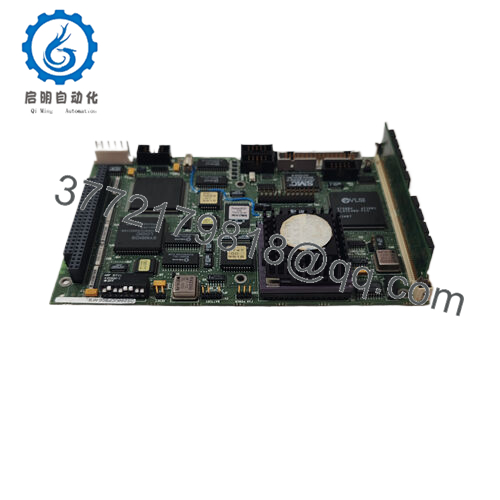
GE DS200TCQAG1A mounts in the Mark V control cabinet (typically one per R/S/T section in TMR setups) and interfaces with upstream terminal boards via multi-pin connectors (four 34-pin and two 40-pin) to receive raw analog signals. It applies gain/offset scaling, filtering, and isolation to condition inputs (e.g., 4-20 mA, ±10 V, or millivolt ranges from sensors/transmitters), while also providing analog output buffering if configured. Conditioned signals route to the control processors over the backplane for use in algorithms like speed governing, temperature control, or overspeed protection.
In the Mark V TMR architecture, GE DS200TCQAG1A operates in parallel across RST sections—each board processes its set of signals independently, with voting logic in the processors to mask faults and maintain operation on 2-out-of-3 agreement. It includes jumpers for configuration (e.g., gain settings, filter cutoffs, or channel selection), six LEDs for status (power, faults, activity per group), and diagnostic feedback to the controller for identifying open circuits, out-of-range values, or board health. No direct fieldbus support; it’s tightly integrated into the Mark V backplane for deterministic, low-latency analog data flow in real-time turbine control loops.
| Specification | Details |
|---|---|
| Model Number | DS200TCQAG1A |
| Brand | GE (General Electric) |
| Type | RST Analog I/O Board |
| Input Voltage | Powered from Mark V backplane (typically +5 V, ±15 V rails) |
| Operating Temp Range | 0 to +60 °C (typical Mark V environment) |
| Mounting Style | Mark V control rack (dedicated slot per R/S/T) |
| Dimensions | Standard Mark V board footprint (approx. 19-inch rack compatible) |
| Weight | Approx. 1–1.5 kg |
| Interface/Bus | Mark V backplane; multi-pin connectors (4x 34-pin, 2x 40-pin) |
| Compliance | Typical turbine/industrial standards (CE/UL equivalents per system) |
| Supported Protocols | Native Mark V internal; no external fieldbus |
| Typical Power Draw | Low to moderate (backplane-derived; varies with signal conditioning load) |

- DS200TCQAG1A
Choosing GE DS200TCQAG1A ensures accurate, redundant analog data that directly supports turbine safety and efficiency. Engineered for the electrically hostile turbine environment, it provides strong isolation and noise rejection to maintain signal fidelity across long runs, enabling tighter control loops and better early detection of anomalies like bearing wear or combustion instability. The TMR-compatible design allows continued operation despite single-channel or board faults, with clear LED diagnostics and controller alarming to guide rapid response.
Maintenance is simplified: visual status checks via LEDs catch issues early, jumper configurations allow field adjustments without spares variety, and modular replacement minimizes downtime in redundant setups. Overall, GE DS200TCQAG1A reduces engineering rework in legacy Mark V systems, lowers risk of process deviations, and extends asset life while providing a stable foundation for gradual upgrades.
GE DS200TCQAG1A is a staple in gas turbine combined-cycle and simple-cycle power plants, conditioning signals for exhaust temperature spread, compressor discharge pressure, fuel flow, or vibration monitoring to optimize combustion tuning and protect hot gas path components. It also supports steam turbine applications in utility or cogeneration facilities, handling level, pressure, and valve position feedback for precise speed/load control. In industrial settings like petrochemical plants with GE turbine-driven equipment, GE DS200TCQAG1A aggregates analog data reliably under vibration, heat, and EMI-heavy conditions, safeguarding critical system uptime in continuous-duty operations.
Compatible or alternative products include:
DS200TCQAG1 – Base family designation (revisions like ADE/AEC offer minor updates in components or firmware compatibility).
DS200TCQAG1B – Later variant with potential enhancements in scaling or noise handling.
DS200TCQBG1A – Extended analog I/O board for additional channels or overflow signals.
DS200TCQCG1A – Analog I/O expander board for increased capacity in complex setups.
DS200TBQAG1A – Associated thermocouple termination board that feeds into TCQA for temperature inputs.
DS200TCPSG1A – Power supply board that provides rails to the TCQA in the rack.
DS200TCEAG1 – Core excitation/analog board in related Mark V subsystems.
Before installing GE DS200TCQAG1A, verify the slot designation in your Mark V rack (one per R/S/T in TMR) and match revision compatibility with existing boards to avoid configuration mismatches. Check jumper settings against application needs (e.g., gain, filters) before insertion, ensure secure multi-pin connector mating without bent pins, and confirm backplane power rails are stable. Power up incrementally, monitor LEDs for normal operation, and use Mark V tools to validate signal scaling and diagnostics post-installation.
Ongoing maintenance focuses on LED inspections during rounds—power and group LEDs should indicate healthy status; faults trigger checks of upstream wiring, terminal boards, or sensor health. Inspect connectors annually for corrosion or looseness in turbine hall conditions, and review controller logs for masked channels or calibration drift. During outages, test a subset of conditioned signals against known inputs using diagnostic menus. The board’s solid-state conditioning and isolation design supports extended service with emphasis on environmental protection and proactive fault monitoring.