 WhatsApp: +86 16626708626
 Email:
  Phone: +86 16626708626
Description
Key Technical Specifications
- Manufacturer: GE
- Model: DS200TCQAG1BGE
- Series: Mark V Speedtronic
- Board Type: RST Analog I/O Board
- Connectors: Two pairs of 34-pin connectors, one pair of 40-pin connector
- Jumpers: 6 onboard jumpers
- Function: Analog input/output
- Application: Gas, steam, and wind turbine control systems
- Condition: Commonly sold as brand new or surplus through industrial spare-part
Product Introduction
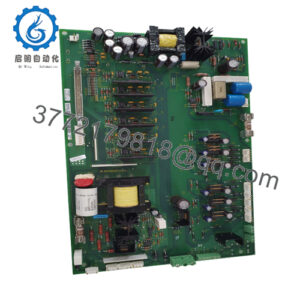
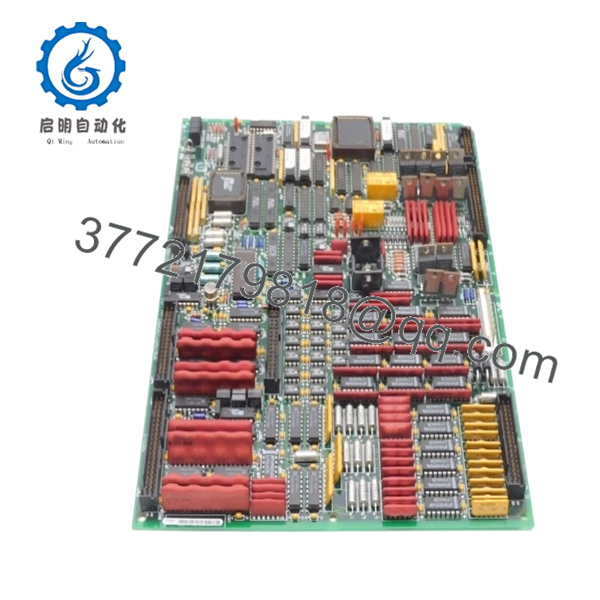
GE DS200TCQAG1BGE is a Mark V RST analog I/O board used in turbine control systems. Supplier listings identify it as an analog input/output board or analog termination board for the GE Mark V family.
For replacement work, the suffix matters. The board uses multiple connector groups and jumper settings, so a visual match and configuration check are worth doing before you power the cabinet back up.
Troubleshooting Quick Reference
| Symptom | Possible Cause | Relevance to This Part | Quick Check Method | Recommendation |
|---|---|---|---|---|
| Analog signals read wrong | Board fault or input wiring issue | ✅ High | Measure input values at the terminal block and compare with the controller reading | Verify field wiring before replacing the board |
| No response on several channels | Connector issue or jumper mismatch | ✅ High | Inspect the 34-pin and 40-pin connectors, then compare jumper positions to the old board | Reseat and mirror the original jumper setup |
| Intermittent noise or drift | Grounding or shielding problem | ✅ High | Check shield terminations and measure continuity to ground | Fix grounding first; this is often not a board failure |
| Board appears dead | Backplane power or seating issue | ✅ Medium | Measure rack voltage and confirm the board is fully seated | Confirm power and seating before replacing the card |
| One channel fails, others work | Local input path or external sensor issue | ✅ High | Swap the signal to a known-good channel and measure at the cabinet | Isolate the field device before condemning the board |
| Fault after replacement | Revision or board-family mismatch | ✅ High | Compare the old part label, suffix, and physical layout before installation | Use only an exact match or a verified equivalent |
If the issue stays unclear, send photos of the board, jumper positions, cabinet label, and fault log to technical support.

- DS200TCQAG1BGE
Frequently Asked Questions
Q: Is DS200TCQAG1BGE a direct replacement for my existing board?
A: Usually yes, but only if the suffix, connector pattern, and jumper setup match your original unit. In Mark V cabinets, “close enough” is how you buy downtime.
Q: What does this board do?
A: It handles analog input and output interfacing in the GE Mark V turbine control system. Supplier descriptions also call it the RST analog I/O board or analog termination board.
Q: How many connectors and jumpers are on it?
A: Supplier documentation shows two pairs of 34-pin connectors, one pair of 40-pin connectors, and six jumpers. That is the kind of detail you should copy from the old board before installation.
Q: Is this part new or refurbished?
A: Listings for this part vary between brand new, new surplus, and used stock. Ask for the exact condition and a real test record instead of trusting the headline alone.
Q: Can I hot-swap it?
A: No, I would not. Power down the cabinet first, because pulling a Mark V analog board live is asking for connector damage or a bigger fault.
Q: Why is this cheaper than factory stock?
A: Because it is usually sold through surplus or third-party industrial channels, not active OEM production. Lower price is fine, but only if the seller can prove identification and functional testing.
Q: What should I check before buying?
A: Confirm the exact model number, suffix, jumper layout, and connector orientation. If your old board is still available, photograph it before removal and compare every detail.