 WhatsApp: +86 16626708626
 Email:
  Phone: +86 16626708626
Description
3. Key Technical Specifications
| Parameter | Value |
|---|---|
| Model | DS3800DGRB1C |
| Brand | GE (General Electric) |
| Series | Mark IV Speedtronic |
| Board Type | Digital I/O Processor / Communication Coprocessor |
| Power Supply | +5V DC from backplane (via NPSR or PSSA) |
| Current Draw | 2.5A typical on +5V rail |
| Processor | Custom GE gate array / 16-bit microcontroller |
| Memory | 128KB RAM, 256KB EPROM (firmware) |
| Digital I/O | 32 configurable channels (optically isolated) |
| Communication | RS-232 (2 ports), RS-485 (1 port) |
| Protocol | GE proprietary Mark IV I/O bus |
| Backplane Interface | VME-style 96-pin DIN (P1, P2) |
| Status Indicators | 8 x LEDs (Run, Fault, Comms, I/O status per bank) |
| DIP Switches | 8-position for node address and configuration |
| Operating Temp | 0 to +50°C (32 to 122°F) |
| Storage Temp | -40 to +85°C (-40 to 185°F) |
| Humidity | 5% to 95% non-condensing |
| Dimensions | 9.5 x 6.5 x 1.0 inches (approx) |
| GE Part Family | DS3800 (Mark IV) |
| Firmware Version | Marked on EPROM label (verify compatibility) |
4. Product Introduction
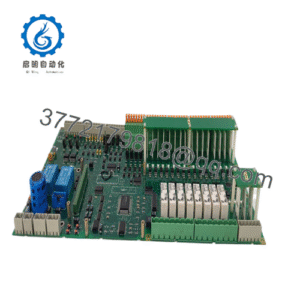
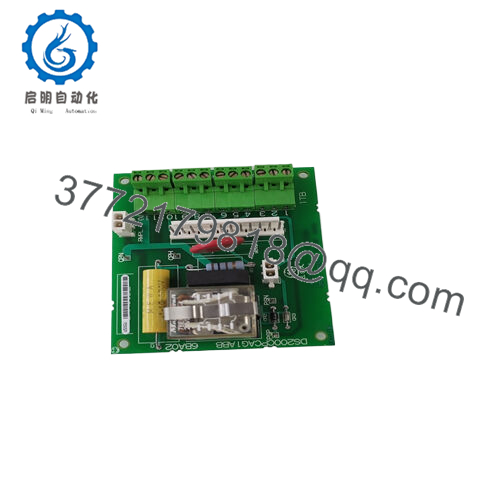
The GE DS3800DGRB1C is the DGRB digital I/O processor board for the Mark IV Speedtronic turbine control system. This board handles real-time I/O scanning, data concentration, and serial communication between field I/O and the main processor (e.g., CPC or PPC). You’ll find it in gas and steam turbine applications from the late 1980s through the 1990s.
The DGRB board offloads I/O processing from the main CPU. It scans up to 32 digital channels, filters noise, and reports changes to the processor over the backplane. The board also provides RS-232 and RS-485 ports for external devices like operator panels, printers, or remote I/O racks. Without a functional DGRB, the main processor loses visibility of field digital inputs and cannot drive digital outputs. This board is mission-critical.
5. Troubleshooting Quick Reference
| Symptom | Possible Cause | Relevance to this Part | Quick Check Method | Recommendation |
|---|---|---|---|---|
| No LEDs lit on DGRB | Backplane power missing or board not seated | ❌ Low (backplane issue) | Measure +5V on backplane pins (edge connector). Reseat board firmly. | Check rack power supply (NPSR). Replace DGRB only if +5V present but board dead. |
| Run LED off, Fault LED on steady | Firmware checksum failure or hardware fault | ✅ High | Read Mark IV diagnostic display (or maintenance terminal). Look for DGRB fault codes. | Cycle rack power. If fault persists, replace board. EPROM may need reprogramming. |
| Fault LED flashing (1 Hz) | Communication loss with main processor | ✅ High | Check backplane connections. Verify main processor (CPC/PPC) is running. | Reseat DGRB and main processor. Replace if communication fails to recover. |
| Digital inputs not updating in logic | Input channel failure or field wiring issue | ✅ Medium | Toggle a field input (jumper 24V to input terminal). Watch LED on DGRB. LED should change state. | If LED changes but logic doesn’t see it, processor or software issue. If LED doesn’t change, replace DGRB. |
| Digital outputs not energizing | Output channel failure or blown driver | ✅ High | Force output from maintenance terminal (if available). Listen for relay click or measure output voltage. | Replace DGRB. Output drivers are not field-repairable. |
| RS-232 port not communicating | Bad driver chip or configuration mismatch | ✅ Medium | Loopback test: jumper TX to RX on the port. Send data from terminal — should echo. | If loopback fails, replace DGRB. Driver chips (1488/1489 or similar) fail frequently. |
| Intermittent I/O, turbine trips randomly | Backplane noise or failing board | ✅ High | Monitor +5V with oscilloscope during event. Look for drops or spikes. | Replace DGRB preemptively. Also check rack power supply ripple. |
| Board works but runs hot | Failing capacitor or regulator | ✅ High | Measure board temperature with IR gun. Above 60°C (140°F) at idle is abnormal. | Replace board. Heat accelerates failure. Do not wait. |
Tech Note: The DGRB uses EPROM firmware that can degrade over 20+ years. Bit rot is real. If you have unexplained faults, the firmware may be corrupted. We can verify EPROM checksum before shipping.
- DS3800DGRB1C
6. Frequently Asked Questions (FAQ)
Q: Is the DS3800DGRB1C a direct replacement for DGRB1A or DGRB1B?
A: Yes, with a firmware check. The “1C” revision includes hardware updates (faster opto-isolators, better transient protection) and typically ships with newer firmware. It is backward compatible with DGRB1A and DGRB1B in any Mark IV rack. However, if your system has custom application code that talks directly to DGRB registers, verify firmware compatibility. We can read the EPROM version from our stock and compare to your existing board’s label.
Q: Can I hot-swap the DGRB while the Mark IV rack is powered?
A: Absolutely not. The Mark IV backplane has live 5V and communication signals. Hot-swapping can damage the backplane transceivers on both the DGRB and the main processor. Procedure: Power down the entire rack (both AC and DC inputs to the NPSR). Wait 30 seconds. Then swap. Then power up.
Q: How do I configure the DGRB for my rack slot and I/O addressing?
A: The DGRB has an 8-position DIP switch (S1). Typical configuration:
- Switches 1-4: Node address (binary, 0-15)
- Switch 5: I/O update rate (ON = 10ms, OFF = 50ms)
- Switch 6: Watchdog enable (ON = enabled)
- Switches 7-8: Reserved (set OFF)
Your Mark IV configuration drawing shows the correct settings. Take a photo of your old board’s DIP switches before removing it. Mirror exactly on the replacement. Wrong settings will cause communication faults.
Q: Why is my DGRB showing a fault but my turbine still runs?
A: The DGRB may be in a degraded mode. Some I/O channels may still work while others have failed. The main processor may ignore the fault if the failing channels are unused in your application. But this is risky — a second failure could trip the turbine. Replace the board at the next scheduled outage. We can provide a replacement with identical DIP switch presets.
Q: What’s the difference between DGRB and other Mark IV I/O boards like DGMB or DGFB?
A: Quick reference:
- DGRB (DS3800DGRB): Digital I/O processor with serial ports. Handles I/O scanning and external comms.
- DGMB (DS3800DGMB): Digital I/O only (no processor). Relies on DGRB or main CPU for scanning.
- DGFB (DS3800DGFB): Fast digital I/O for high-speed applications (e.g., overspeed protection).
The DGRB is the “smart” I/O board. If your rack has a DGRB, it’s the master for digital I/O. Other boards are slaves.
Q: Can I use the RS-232 ports to connect a modern PC?
A: Yes, but you’ll need a USB-to-RS232 adapter and correct cabling. The DGRB uses standard RS-232 (not TTL). Pinout is typical DTE (Data Terminal Equipment):
- DB9 male (on board): Pin 2 = TX, Pin 3 = RX, Pin 5 = GND
Baud rate is configurable via DIP switches or software (typically 9600 or 19200). Use a null modem cable if connecting to a PC (swap TX/RX). We can provide the pinout diagram.
Q: What’s your testing process for this board?
A: We test every DS3800DGRB1C on a live Mark IV test rack with a known-good main processor and I/O simulator. Test sequence:
- Visual inspection for corrosion, rework, or damage
- EPROM verification (checksum against known good)
- Power-on test (+5V draw, LED sequence)
- Backplane communication test (processor sees DGRB)
- Digital I/O loopback (all 32 channels — input read, output drive)
- RS-232 port test (echo loopback at 9600 and 19200 baud)
- 24-hour burn-in with thermal imaging (watch for hot spots)
Test report and video available upon request.
Q: My plant has a Mark IV with multiple DGRB boards in one rack. Can I replace only one?
A: Yes. DGRB boards operate independently. Each has its own node address. Replace only the failed board. But verify that the replacement has the same firmware version as the others if they communicate with each other. Mismatched firmware can cause protocol timing issues. We can match firmware versions from our inventory — just provide the EPROM label text from your existing board.
Q: What’s the warranty on this obsolete board?
A: 1-year replacement warranty. Covers failure under normal operating conditions (0–50°C, correct backplane voltage). Does not cover damage from ESD, incorrect DIP switch settings, reverse polarity on field wiring, or physical damage. We cross-ship replacements within 24 hours for confirmed defects. We also offer a 30-day compatibility guarantee — if the board doesn’t work in your specific rack due to firmware mismatch, return it for full credit.