 WhatsApp: +86 16626708626
 Email:
  Phone: +86 16626708626
Description
🏭 Real-World Use & Application Scenarios (Open Strong)
The GE IC200MDL741E is a staple component in industrial control systems where a controller must monitor a high count of $120 \text{ VAC}$ field devices in a compact, space-saving arrangement. It is extensively used in applications such as conveyor systems in warehousing, packaging machinery in food and beverage, and automated material handling across various sectors. Its primary function is to act as a signal interpreter, securely converting the high-voltage, binary (ON/OFF) status signals from AC field devices—like the auxiliary contacts on motor starters, the status of float switches, or the position of $120 \text{ VAC}$ limit switches—into the clean, low-voltage digital logic understood by the VersaMax CPU or Network Interface Unit (NIU).
Engineers choose the GE IC200MDL741E specifically for its 32-point density. This allows the monitoring of numerous devices with a minimal footprint in the control cabinet, optimizing panel layout and reducing overall system cost. It is crucial in control cabinets where space is limited but many status checks are required, such as on a high-throughput assembly line where every station is monitored for position, status, and fault conditions. The module’s robust internal filtering circuitry ensures that the noisy $120 \text{ VAC}$ signals common in factory environments are accurately and reliably translated into the control system, guaranteeing the stability and dependability of the automation process.
🔬 Product Introduction & Positioning
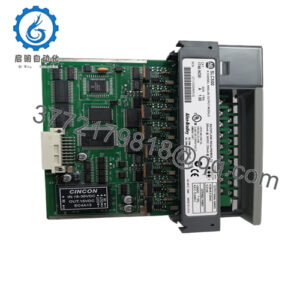
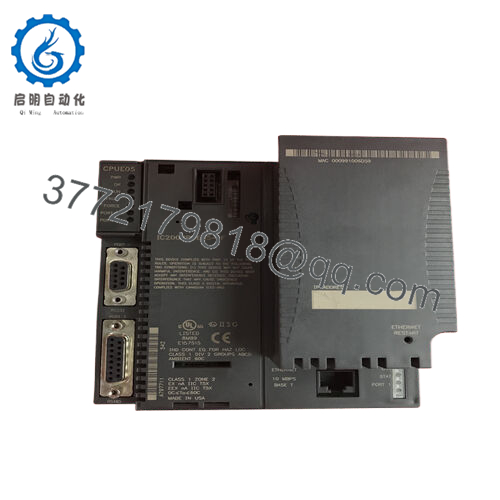
The GE IC200MDL741E is a 32-point Discrete Input I/O Module designed for the GE VersaMax I/O system. It is a high-density AC input module that occupies a single slot on the VersaMax I/O carrier.
Its role in the system architecture is high-volume data acquisition. The module continuously monitors $32$ separate $120 \text{ VAC}$ circuits. It connects to the CPU or NIU via the VersaMax backplane, reporting the status of all $32$ points. The module’s core value lies in its optical isolation, which provides a crucial electrical barrier between the potentially volatile $120 \text{ VAC}$ field circuits and the sensitive, low-voltage internal logic of the control system. The high point density of the IC200MDL741E is enabled by the use of high-density carriers and often requires specialized pre-wired cable assemblies for easy connection to the field terminal blocks, simplifying high-volume wiring compared to using individual terminal screw carriers.

- IC200MDL741E
- IC200MDL741E
🚀 Key Technical Features & Functional Benefits
The functional performance of the GE IC200MDL741E is marked by its wide compatibility and resistance to electrical noise. It features a nominal $120 \text{ VAC}$ input, with a typical operating range of $85 \text{ VAC}$ to $132 \text{ VAC}$, providing ample tolerance for common industrial line voltage fluctuations. The module is engineered for a low input current, minimizing the load on the control power source. Its response time is efficient, typically achieving an ‘ON’ delay of less than $20 \text{ ms}$ and an ‘OFF’ delay of less than $30 \text{ ms}$, which is adequate for monitoring the state of most mechanical switches and contactors.
In terms of hardware design, the $32$-point module is built for the compact VersaMax form factor. This density is achieved via a $40$-pin or similar high-density connector on the front face. The module features LED status indicators for each of the $32$ points on the front, providing immediate, local visual confirmation of the input state—an essential feature for efficient commissioning and diagnosis of field wiring faults. Crucially, the GE IC200MDL741E provides group isolation of $1500 \text{ VAC}$ for one minute between the input points and the backplane logic, ensuring that high-voltage electrical disturbances in the field are contained and do not damage the rest of the control system.
📋 Detailed Technical Specifications
| Parameter | Value |
| Model | IC200MDL741E |
| Brand | GE Fanuc / Emerson |
| Type | Discrete Input I/O Module |
| Number of Points | 32 |
| Nominal Input Voltage | $120 \text{ VAC}$ |
| Operating Voltage Range | $85 \text{ to } 132 \text{ VAC}$ |
| Isolation | $1500 \text{ VAC}$ for 1 minute (Input to Logic) |
| On-State Voltage | $85 \text{ to } 132 \text{ VAC}$ |
| Off-State Voltage | $0 \text{ to } 20 \text{ VAC}$ |
| Input Current (Nominal) | $\sim 10 \text{ mA}$ at $120 \text{ VAC}$ |
| On/Off Delay Time | $\sim 20 \text{ ms}$ / $\sim 30 \text{ ms}$ (Max) |
| Carriers | Requires High-Density Terminal Style Carrier |
🧩 Related Modules or Compatible Units
IC200MDL730 – The corresponding $16$-point $120 \text{ VAC}$ Discrete Input Module, used when fewer points or lower density is required in the VersaMax rack.
IC200MDL740 – A similar 32-point $120 \text{ VAC}$ input module, possibly an older revision of the GE IC200MDL741E.
IC200MDL750 – A $32$-point $120 \text{ VAC}$ Discrete Output Module, often used in the same rack as the input module for controlling $120 \text{ VAC}$ loads.
IC200CHS022 – A required high-density terminal-style carrier that the GE IC200MDL741E plugs into to facilitate the $40$-pin connection to the field wiring.
IC200CPU001 – A typical VersaMax CPU that processes the input data acquired by the IC200MDL741E.
IC200PWR102 – The AC Power Supply Module that powers the VersaMax rack.
🛠️ Installation Notes & Maintenance Best Practices
When installing the GE IC200MDL741E, it must be securely inserted into the correct high-density I/O carrier (e.g., a $40$-pin carrier). Due to the high number of points, it is highly recommended to use a pre-assembled cable and terminal block assembly to minimize wiring errors and simplify connection. The $120 \text{ VAC}$ field wiring should be shielded and run separately from low-voltage DC and communication wiring to prevent noise injection.
Maintenance primarily involves using the module’s diagnostic features. The $32$ front-face LEDs should be monitored during commissioning and troubleshooting to confirm that the input signal is reaching the module. If a fault is suspected, the module’s health and point status can be checked using the VersaMax programming software. Given the dense nature of the wiring, the integrity of the $40$-pin cable connector is a key maintenance concern; periodic inspection to ensure it is seated firmly and free of strain is a good practice to prevent intermittent input signals.