 WhatsApp: +86 16626708626
 Email:
  Phone: +86 16626708626
Description
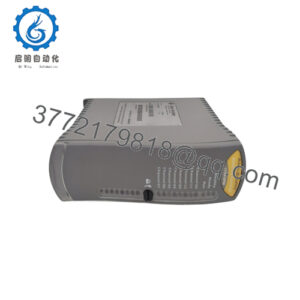
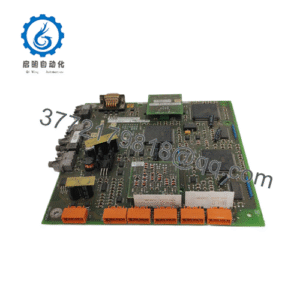
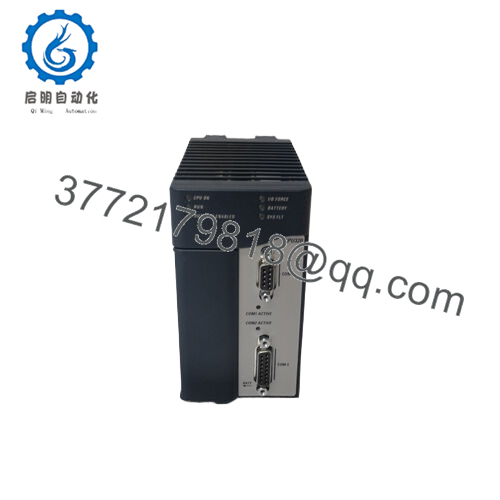
The GE IC3600AVIB1L1B (a specific revision of the IC3600AVIB1 series, often denoted with suffixes like L1B for hardware/firmware variants or manufacturing updates) addresses a core requirement in legacy gas turbine control: providing safe, accurate isolation of voltage signals to prevent ground loops, noise coupling, or electrical faults from propagating through sensitive analog circuits. In industrial automation environments — particularly older Speedtronic Mark I and Mark II turbine control panels — raw sensor inputs (such as speed pickups, position feedback, or process variables) can introduce common-mode voltages or transients that degrade measurement accuracy, trigger false alarms, or even damage downstream logic. GE IC3600AVIB1L1B becomes essential when engineers need galvanic or optical isolation to maintain signal integrity in high-noise, high-vibration settings typical of power generation facilities. It ensures high reliability by decoupling input and output circuits, preserving clean I/O signals for precise control loops while supporting the deterministic performance required for turbine startup, synchronization, and load control. For sites still operating Mark I/II systems, this board is critical to sustaining critical system uptime without widespread retrofits.
GE IC3600AVIB1L1B operates as a voltage isolator printed circuit board within the Speedtronic Mark I or Mark II turbine control system, typically mounted in the core analog I/O or signal conditioning section of the control cabinet. It receives analog voltage signals from field devices (e.g., transducers or transmitters) on one side, applies isolation — often via transformer, optocoupler, or similar barrier techniques — and outputs a conditioned, isolated voltage signal to downstream processing circuits or turbine control logic. This prevents ground potential differences or induced noise from affecting the control processor or other boards. Positioned early in the signal chain (front-end conditioning before A/D conversion or direct to control algorithms), it integrates via the standard IC3600 backplane connectors, drawing power from the system supply and providing isolated channels for multiple signals. While not a full vibration monitor itself (despite “AVIB” suggesting vibration-related use in some contexts), it commonly conditions signals from vibration sensors or related analog inputs in turbine applications. The board supports simplex or TMR (Triple Modular Redundant) configurations, with diagnostics limited to basic status (e.g., power/fault LEDs if equipped) and no advanced fieldbus — relying on the Mark I/II architecture for overall system integration and fault handling.
| Specification | Details |
|---|---|
| Model Number | IC3600AVIB1L1B |
| Brand | GE (General Electric, now Emerson legacy support) |
| Type | Voltage Isolator Printed Circuit Board (Speedtronic Mark I/II) |
| Input Voltage | System-dependent (typically ±15 VDC or 24 VDC rails for analog circuits) |
| Operating Temp Range | 0°C to 70°C (typical for Mark I/II boards) |
| Mounting Style | Plug-in card in Mark I/II control rack/backplane |
| Dimensions | Standard IC3600 form factor (approx. 150–200 mm H x 100–150 mm W x 30–50 mm D) |
| Weight | Approx. 0.5–1.0 kg |
| Interface/Bus | IC3600-series edge connectors to backplane |
| Compliance | Typical industrial (CE precursors, UL/CSA equivalents for era) |
| Supported Protocols | None (analog signal isolation; no digital comms) |
| Typical Power Draw | Low, <5–10 W (board-dependent) |
Selecting GE IC3600AVIB1L1B delivers proven isolation that safeguards turbine reliability in aging Mark I/II installations. Engineered for the harsh electrical environment of gas turbines, it minimizes signal distortion and common-mode rejection issues, ensuring accurate feedback to speed governors, fuel controls, or protective functions — which directly supports stable operation and prevents nuisance trips. The board’s design reduces troubleshooting complexity by localizing isolation failures (visible via component checks or system diagnostics) and allows targeted replacement without affecting redundant paths in TMR setups. Maintenance crews benefit from its straightforward plug-in nature and compatibility with existing documentation, cutting repair times and sparing needs. Long-term, GE IC3600AVIB1L1B extends the service life of Mark I/II systems cost-effectively, deferring full Mark VIe retrofits while maintaining critical system uptime in power plants where downtime costs run into thousands per hour.
GE IC3600AVIB1L1B sees primary deployment in gas turbine control for utility-scale power generation, where it conditions analog signals from proximity probes, accelerometers, or process transmitters in Mark I/II panels to support vibration monitoring, bearing protection, or shaft position feedback. Combined-cycle plants or peaking units use it to isolate inputs in high-vibration, EMI-rich environments, ensuring reliable data for overspeed, flame detection, or load control loops. Industrial cogeneration or mechanical drive applications (e.g., compressors) rely on it for process control environments demanding noise-immune signals under continuous operation and harsh conditions.

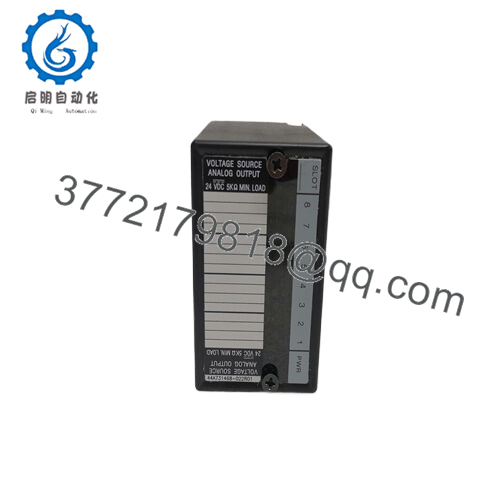
- IC3600AVIB1L1B
Related or alternative products in the GE Speedtronic Mark I/II IC3600 family include:
IC3600AVIB1 – Base voltage isolator board (without L1B suffix; core equivalent for most applications).
IC3600AVIB1K – Earlier or variant revision of the isolator, often interchangeable.
IC3600AVIB1M1C – Updated isolator variant with potential component enhancements.
IC3600SVDC1 – Vibration detector board for direct turbine vibration processing (complementary function).
IC3600AVLA1 – Voltage level amplifier board often paired in analog signal chains.
IC3600AFGB1 – Timed acceleration board for startup sequencing in turbine controls.
IC3600TPAA1 – Turbine protection auxiliary board for overspeed/flame-related isolation.
IC3600STDC1 – Speed detection board as part of turbine speed/position signal paths.
Before installing GE IC3600AVIB1L1B, confirm compatibility with your specific Mark I or Mark II panel version — check backplane slot assignment, power rail voltages (±15 V typical), and signal input/output ranges against existing wiring diagrams. Verify the revision suffix matches field requirements, as minor differences can affect pinouts or calibration. Power down the panel fully before insertion to avoid backplane shorts, and inspect edge connectors for corrosion or damage. After installation, perform system diagnostics (via turbine control panel tests) to validate isolation integrity — monitor for clean signal transfer and absence of ground faults. In TMR configurations, ensure all three channels use matched boards for synchronization.
Ongoing maintenance for GE IC3600AVIB1L1B emphasizes visual and functional checks in a low-intervention approach. Routinely inspect board LEDs (if present) and components for overheating, discoloration, or capacitor swelling during outages. Test signal paths annually with calibrated sources to confirm isolation ratio and linearity, logging any drift. Clean dust from the board and rack vents to maintain thermal performance. In high-humidity sites, check for corrosion on connectors. Replacement is straightforward — swap with a known-good spare after power-down, then re-validate turbine startup sequences. Keep spares stocked, as Mark I/II parts availability relies on legacy suppliers; trend system alarms for early signs of degradation.