 WhatsApp: +86 16626708626
 Email:
  Phone: +86 16626708626
Description
Real-world use and application scenarios
The GE IC3603A177AF2 is widely used in power plants, combined-cycle facilities, and heavy industry environments where precise turbine control and protection are essential. It handles inputs and outputs related to speed, valve positions, pressure, and other key turbine parameters, making it indispensable for the automated sequencing, protection, and regulation of turbine operation. This board interfaces directly with sensors, actuators, and control valves in control systems, enabling efficient and safe turbine start-up, load changes, synchronization, and emergency shutdowns. Its use is common in applications that demand high reliability and fault tolerance, where it supports turbine governors, protection relays, and position feedback loops under System Mark V architectures. Operators, engineers, and buyers search for this model for maintaining or upgrading legacy turbine controls applicable in industrial automation environments dealing with heavy machinery instrumentation and control.
Product introduction and positioning
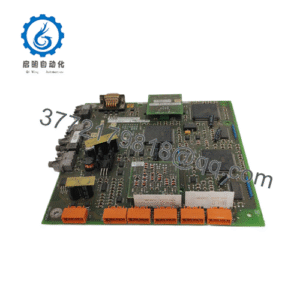
The GE IC3603A177AF2 serves as a dedicated I/O interface board within the GE Speedtronic Mark V turbine control system. It handles critical analog and digital input/output functions, including valve position feedback via LVDT sensors and control valve servo interfaces. This card is part of the modular control hardware designed for redundancy and reliability, fitting into GE’s IC3600 rack system used widely in Mark V panels. It is engineered to provide robust communication and precise control signals for the turbine’s servo valves and speed sensors, facilitating sophisticated features such as automatic synchronization with electrical grid frequency and millisecond-level timing for breaker closure commands. The GE IC3603A177AF2 is positioned as a core building block within the Mark V control platform, essential for engineers needing a high-integrity, field-proven interface unit compatible with their existing GE turbine control infrastructure.
Key technical features and functional benefits
The GE IC3603A177AF2 excels in delivering stable and accurate valve control signals with bi-polar current outputs over ranges from 10 to 120 milliamps and provides precise LVDT excitation for feedback in valve position loops. It supports multiphase speed sensing inputs, designed to detect turbine rotational speeds down to 2 rpm on multi-toothed wheels, critical for early start-up sequences and overspeed protection. The card also integrates tightly with protection systems by interfacing with emergency overspeed sensors, ensuring reliable shutdown in fault conditions.
Constructed with industrial-grade components typical for GE Speedtronic hardware, the IC3603A177AF2 is designed for resilience in harsh plant environments—handling temperature cycles, electrical noise, and vibration common in turbine halls. It fits conveniently into standard GE IC3600 card racks, allowing quick replacement and minimal downtime during maintenance. The interface’s seamless compatibility with other Mark V system modules enables straightforward integration without requiring custom configuration changes, saving engineering time and reducing error potential.
Long-term, the design emphasizes fault tolerance and maintainability, with features such as software-implemented control loops for valve regulation that improve operational consistency and simplify in-situ calibration. This modularity supports fault diagnostics and preventive maintenance strategies that extend the operational life of turbine controls, crucial for plants with aging equipment but stringent performance requirements.

- IC3603A177AF2
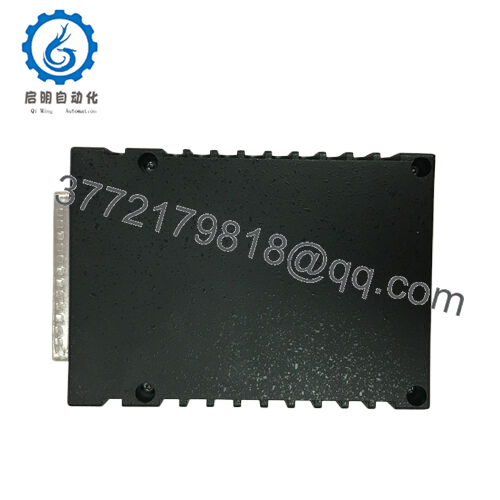
- IC3603A177AF2
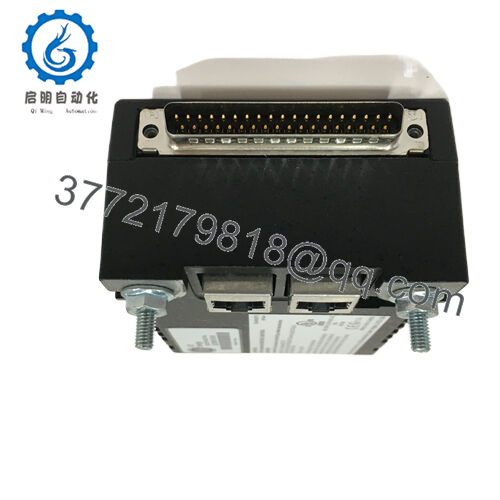
Detailed technical specifications
| Parameter | Value |
|---|---|
| Model | GE IC3603A177AF2 |
| Brand | General Electric (GE) |
| Product type | I/O Interface Board for Mark V Turbine Controls |
| System family | GE Speedtronic Mark V |
| Function | Valve position feedback, valve servo driver interface |
| Output signal ranges | Bi-polar current outputs: 10, 20, 40, 80, 120 mA |
| Input signals | LVDT excitation 7 Vrms (3.2 kHz), speed sensor inputs (2-14 kHz) |
| Mounting | IC3600 rack-mounted card |
| Application areas | Steam and gas turbine control systems |
| Compatibility | Compatible with Mark V modular control hardware |
| Protection features | Interfaces overspeed sensors and emergency shutdowns |
| Control features | Software-based valve control loops, automatic synchronization |
| Construction | Industrial PCB with discrete components |
Related modules or compatible units
IC3600TPSA1D – Single-phase power supply board vital for powering Mark V control modules, including the IC3603A177AF2.
IC3600AIAE1A1B – Current sensor board from the same IC3600 range, often paired for monitoring turbine electrical inputs.
IC3600DLCA1B – Another interface/control board in the Mark V system used for different control or logic functions.
IC3603A177AF1 – Prior revision of the same interface board with minor hardware adjustments.
IC3600TPSA1H1 – Alternate power supply with similar electrical characteristics, sometimes used for redundancy.
Installation notes & maintenance best practices
Installation of the GE IC3603A177AF2 should be done with the turbine control system powered down and the respective racks de-energized. Proper inspection of the card edge connector and rack socket is essential to avoid contact issues. The card must align precisely with the IC3600 rack’s guide rails for correct insertion without force. Verify that all associated wiring and sensor inputs conform to original system design to maintain signal integrity. Ambient conditions such as temperature and vibration should be within specified ranges to prevent accelerated aging or intermittent faults.
Routine maintenance involves visual inspections during scheduled outages, focusing on signs of component wear, corrosion, or overheating. Because the card operates in demanding industrial environments, checking connection integrity and performing function tests on valve feedback loops ensures reliable operation. In case of failure, replacement with a properly tested unit or refurbished board from a trusted source is advised. Maintaining detailed records of serial numbers and installation dates aids in fleet management and failure trend analysis.