 WhatsApp: +86 16626708626
 Email:
  Phone: +86 16626708626
Description
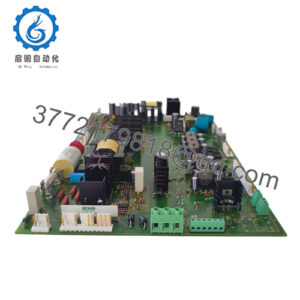
The GE IC3606SPCD1H (part of GE’s legacy IC3600 series Speedtronic turbine control family) resolves a key pain point in older Mark IV (and potentially earlier Mark series) gas/steam turbine control panels: the need for dependable, precise interface and conditioning of discrete control signals tied to turbine protection, sequencing, and operator interfacing. In these systems—common in power generation, oil & gas compression, and cogeneration since the 1980s—aging or failed interface boards can cause erratic discrete logic, false protective trips, unreliable startup/cooldown sequencing, or degraded communication between control racks and field devices/actuators. This leads to increased downtime, reduced availability during peaking or baseload operation, and higher maintenance costs from frequent troubleshooting. GE IC3606SPCD1H acts as a specialized control/interface printed circuit board, handling signal isolation, buffering, and logic processing for critical discrete paths (e.g., relay outputs, contact inputs, or interlock signals). It becomes essential during overhaul periods, spare replenishment, or when restoring full system integrity in Mark IV racks, particularly in high-stakes environments where even brief instability risks thermal excursions, overspeed events, or emissions non-compliance. By providing robust signal handling with industrial-grade components, GE IC3606SPCD1H helps maintain deterministic behavior and high reliability in noisy, vibration-heavy turbine halls, supporting safe, efficient turbine performance without necessitating full system replacement.
GE IC3606SPCD1H functions as a discrete signal control and interface card within the GE Speedtronic Mark IV (or compatible IC3600 rack-based) turbine control architecture. It mounts in a standard Mark IV card rack slot, interfacing via edge connectors to the backplane for power distribution (±15 V analog, +5 V logic rails) and inter-module signal exchange. The board processes and conditions discrete inputs/outputs—likely including relay drivers, opto-isolated contacts, or logic-level signals—for turbine sequencing, protective functions (e.g., overspeed, vibration, flame detection interlocks), or operator panel interfaces. It incorporates buffers, drivers, and possibly snubber-like elements to suppress transients and ensure clean signal transmission in electrically noisy settings. While not a high-channel-count I/O module, GE IC3606SPCD1H contributes to the analog/discrete hybrid layer of the Mark IV, bridging field wiring or adjacent cards to maintain fault-tolerant operation (often with redundancy across racks). Positioned mid-tier in the control stack—supporting both protective and regulatory loops—it integrates seamlessly with processor cards, regulator boards, and I/O subsystems, relying on the rack’s passive backplane for communication without introducing significant latency.

- IC3606SPCD1H
| Specification | Details |
|---|---|
| Model Number | IC3606SPCD1H |
| Brand | GE (Speedtronic / IC3600 series) |
| Type | Control/Interface Printed Circuit Board |
| Input Voltage | Backplane-powered (typically +5 V logic, ±15 V analog) |
| Operating Temp Range | 0 to +60 °C (typical Mark IV rack environment) |
| Mounting Style | Rack-mounted PCB (edge connectors) |
| Dimensions | Standard IC3600/Mark IV board size (approx. 6U equivalent) |
| Weight | Approx. 0.5–1 kg |
| Interface/Bus | Mark IV/IC3600 backplane edge connectors |
| Compliance | Industrial standards of the era |
| Supported Protocols | N/A (discrete/analog signal processing; proprietary Mark IV) |
| Typical Power Draw | Low (few watts; signal-focused) |
Choosing GE IC3606SPCD1H delivers continued dependable performance in legacy Mark IV installations by addressing signal integrity at the interface level—critical for avoiding cascading faults in protective or sequencing logic. Engineered with durable components suited to turbine environments, it withstands thermal cycling, vibration, and electrical noise, helping sustain tight control tolerances that optimize combustion efficiency, reduce wear on hot gas path parts, and support emissions compliance. The board’s role in clean discrete handling minimizes nuisance alarms or trips, cutting unplanned outages and extending intervals between major inspections. Maintenance benefits from its modular design: straightforward rack insertion, visual component inspection, and compatibility with standard Mark IV diagnostics reduce repair times during outages. In essence, GE IC3606SPCD1H preserves the value of proven Speedtronic architecture, allowing operators to focus on turbine optimization rather than frequent electronics interventions.
GE IC3606SPCD1H is commonly deployed in heavy-duty gas turbine control systems, such as Frame 5, 6B, 7E/EA, or similar series in utility power plants, where it supports discrete interfacing for startup permissives, protective relays, or governor feedback in high-demand baseload or cycling duty. In oil & gas applications—like mechanical drive turbines for pipelines or LNG facilities—it’s used to manage interlock signals in remote, vibration-intensive settings requiring continuous uptime. Cogeneration or process plants leverage GE IC3606SPCD1H for reliable discrete control in combined-cycle setups, ensuring stable operation amid fluctuating loads or fuel variations while maintaining critical system uptime.
Here are some related or alternative products in the GE IC3600 / Speedtronic Mark series:
IC3606SPCE1 – Snubber card variant often paired for transient suppression in similar interface roles.
IC3606SPCF1 – Complementary snubber or protection board for discrete signal paths.
IC3606SPCC1H – PWM or pulse-related control board for sequencing/actuation functions.
IC3606SIFA9 – Filter card for noise reduction in analog/discrete interfaces.
IC3606SIIA9 – Isolator board providing additional galvanic separation for signals.
IC3603A177CD2 – Potted relay or discrete output assembly for complementary logic.
IC3606ATCB – Thermocouple conditioning card frequently used alongside interface boards.
Before installing GE IC3606SPCD1H, confirm rack slot compatibility within your Mark IV panel (standard IC3600 position; verify backplane pinouts and adjacent card dependencies). Check power rails for stability (±15 V analog, +5 V logic) and low ripple—monitor during powered tests if possible. Inspect edge connectors for pin integrity, cleanliness, and proper seating; clean contacts and apply protective compound in corrosive or humid conditions. Ensure revision alignment with system EPROMs or processor cards to avoid logic/timing conflicts. During commissioning, validate discrete paths via Mark IV diagnostics, HMI status, or external testing—confirm signal states, interlocks, and response to simulated inputs. For ongoing maintenance, perform quarterly visual checks for component degradation (e.g., capacitor swelling, solder joint cracks), clean dust buildup (power off), and test key signals during planned outages. Proper rack grounding and ESD precautions during handling prevent damage. These boards prove highly durable in turbine service but can suffer from age-related wear—maintain spares for immediate availability.