 WhatsApp: +86 16626708626
 Email:
  Phone: +86 16626708626
Description
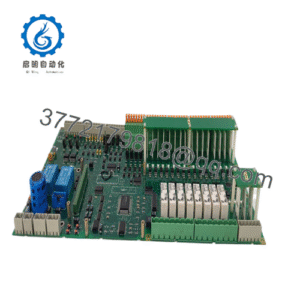
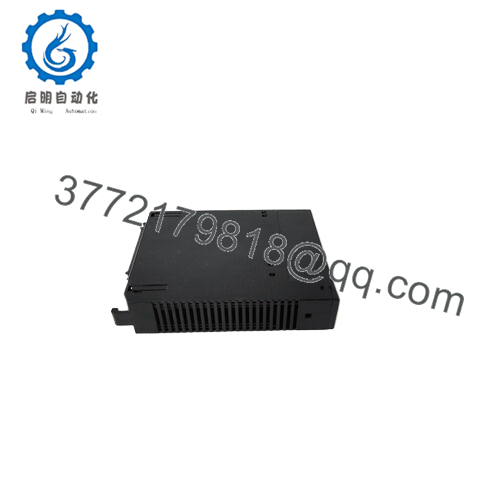
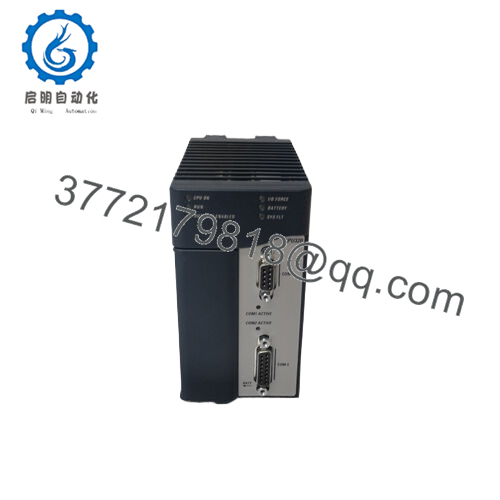
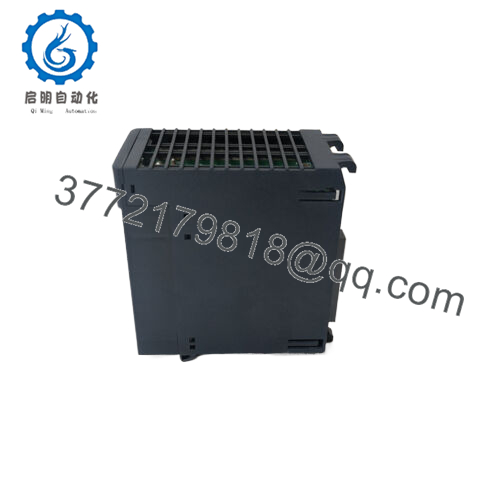
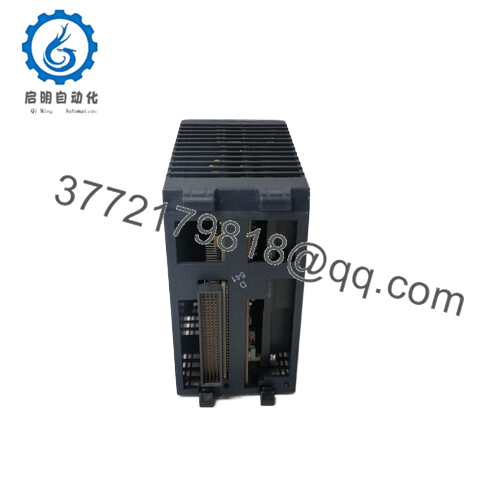
The GE IC655BEM510G (a revision suffix variant of the IC655BEM510, commonly with -G indicating a hardware update, manufacturing revision, or minor enhancement in GE Fanuc’s Series Five lineup, now legacy under Emerson) addresses the challenge of distributed, high-density I/O in mid-to-large industrial automation systems using the Series Five PLC platform. In facilities from the 1980s–2000s era — such as power plants, manufacturing lines, or process facilities — centralizing all I/O in the main rack limited scalability, increased wiring costs, and complicated maintenance in spread-out operations. GE IC655BEM510G serves as the Genius Bus Controller, enabling a single Series Five CPU to manage up to 32 remote Genius I/O devices over a serial bus, supporting thousands of points with diagnostics and fault tolerance. It’s essential in setups requiring high reliability for process control or discrete applications, where noise-immune, long-distance field wiring, online changes, and built-in diagnostics reduce downtime and engineering overhead compared to traditional point-to-point I/O.
GE IC655BEM510G plugs into a dedicated slot in the Series Five rack as the interface to the Genius serial bus, acting as the master controller for a network of up to 32 Genius I/O blocks (or other compatible devices). It handles half-duplex communications at selectable baud rates from 38.4 kbps to 153.6 kbps, supporting cable lengths up to 7500 feet (with repeaters for longer spans) and multidrop topology for flexible placement of remote I/O near field devices. The module manages data exchange — reading inputs, writing outputs, and monitoring diagnostics — while providing global fault reporting, automatic device mapping, and support for online addition/replacement of blocks without shutting down the bus in many cases. It integrates via the Series Five backplane, drawing power from the rack supply, and features front-panel LEDs for bus status, activity, faults, and configuration. Positioned in the communications layer of the Series Five architecture, GE IC655BEM510G offloads I/O scanning from the CPU, enabling deterministic performance even with distributed points, and complements other Series Five modules for full system coordination.
| Specification | Details |
|---|---|
| Model Number | IC655BEM510G |
| Brand | GE Fanuc (now Emerson legacy) |
| Type | Series Five Genius Bus Controller |
| Input Voltage | Supplied by rack power supply (typically +5 VDC, ±12 VDC rails) |
| Operating Temp Range | 0°C to 60°C |
| Mounting Style | Plug-in card in Series Five rack (dedicated slot) |
| Dimensions | Approx. 208 mm x 280 mm (board); standard Series Five form factor |
| Weight | Approx. 1.0–1.5 kg |
| Interface/Bus | Genius serial bus (twisted pair); Series Five backplane |
| Compliance | Typical industrial for era (UL, CSA equivalents) |
| Supported Protocols | Genius I/O protocol (half-duplex serial) |
| Typical Power Draw | Approx. 500 mA at +5 VDC (nominal) |
| Bus Devices Supported | Up to 32 Genius I/O blocks/devices |
| Baud Rates | 38.4 to 153.6 kbps (selectable) |

- IC655BEM510G
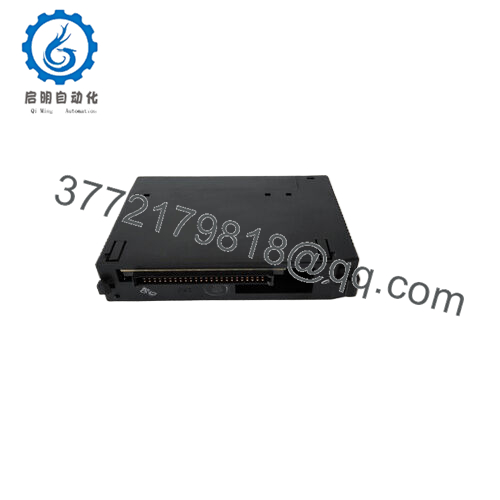
Choosing GE IC655BEM510G delivers scalable, diagnostic-rich distributed I/O that enhances system flexibility and resilience in legacy Series Five installations. The Genius bus architecture minimizes long field wiring runs by placing I/O close to sensors/actuators, cutting installation costs and improving signal integrity in noisy environments. Built-in diagnostics — including device faults, bus errors, and configuration mismatches — feed directly into the PLC fault tables, enabling faster troubleshooting and predictive maintenance. The module supports online bus modifications and automatic device replacement, reducing planned outages and supporting critical system uptime in continuous processes. For existing Series Five users, GE IC655BEM510G preserves investments in CPU and logic while enabling expansions without rack overhauls, offering a cost-effective bridge to modern platforms during phased migrations.
GE IC655BEM510G is commonly deployed in power generation for turbine auxiliary controls or boiler I/O distribution, where remote Genius blocks handle field signals across large plant areas with reliable bus communications under EMI-heavy conditions. Manufacturing and material handling facilities use it to extend I/O to conveyor zones, presses, or assembly stations, maintaining fast update rates for sequencing and safety interlocks. In process control environments like chemical plants or water treatment, it’s applied for distributed valve, pump, or instrumentation monitoring, prioritizing high reliability and diagnostic visibility in extended, harsh setups.
Related or alternative products in the GE Fanuc Series Five and Genius family include:
IC655BEM510 – Base Genius Bus Controller (without -G suffix; core equivalent for most systems).
IC655BEM510B – Earlier revision variant, often interchangeable with minor differences.
IC655BEM510D – Later revision for continued production or field compatibility.
IC655BEM510H – Higher revision often seen in refurbished stock.
IC660BBA020 – Genius analog I/O block commonly networked via this controller.
IC660BBD020 – Genius discrete I/O block for digital expansion on the bus.
IC655CHS506 – Series Five 16-slot rack for hosting GE IC655BEM510G and CPU.
IC697BEM731 – Genius bus controller for Series 90-70 as a migration alternative.
Before installing GE IC655BEM510G, confirm rack slot availability (dedicated comm slot) and power supply adequacy for the added draw. Power down the rack before insertion to avoid backplane issues, and inspect connectors for damage. Configure baud rate, bus ID, and mapping via Series Five programming tools (e.g., Logicmaster), ensuring consistency with connected Genius blocks. Terminate the bus properly (daisy-chain with drop cables and terminators at ends) and ground shielding to minimize noise. Commission by powering up, checking LEDs for bus health/activity, and validating I/O data exchange in the CPU diagnostics.
Ongoing maintenance focuses on bus monitoring and periodic inspections: check front LEDs regularly for OK, BUS ACTIVE, FAULT, or CONFIG status. Inspect bus cabling and connectors annually for wear, loose shields, or corrosion in industrial settings. Use programming software to review Genius fault tables and device diagnostics, trending errors or timeouts. Test baud rate stability and device responses during outages. The plug-in form supports replacement during shutdowns — swap with a spare, reconfigure if needed, and verify network integrity post-install. Keep spares stocked, as Series Five parts depend on legacy/remantufactured sources.