 WhatsApp: +86 16626708626
 Email:
  Phone: +86 16626708626
Description
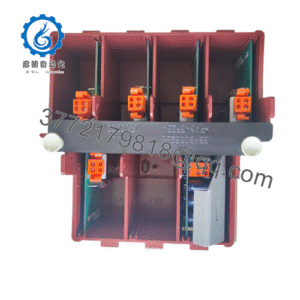
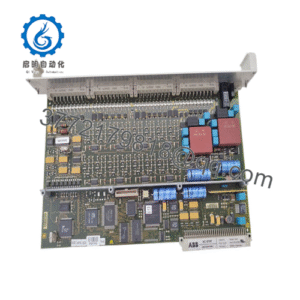
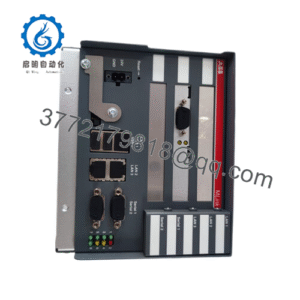
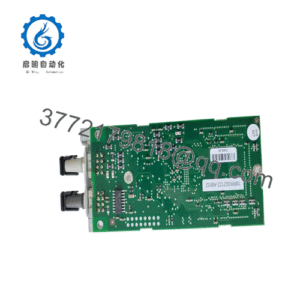
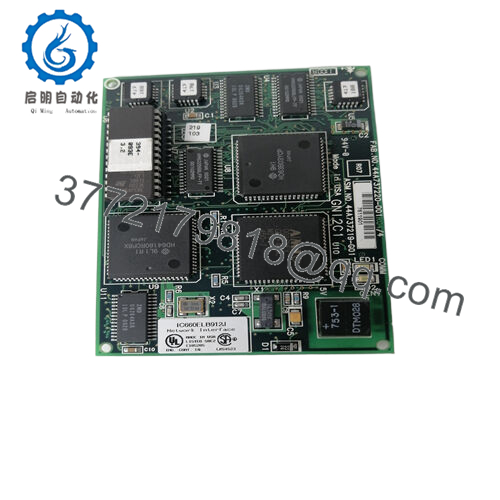
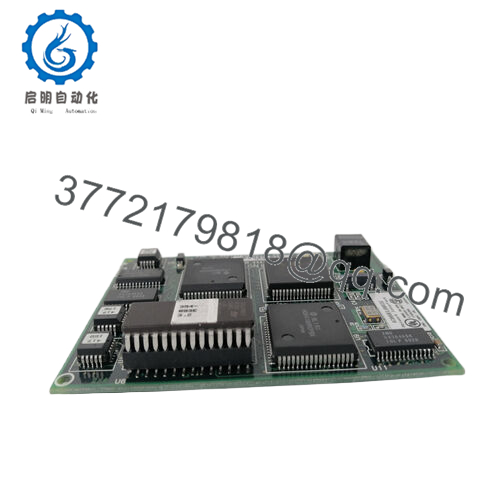
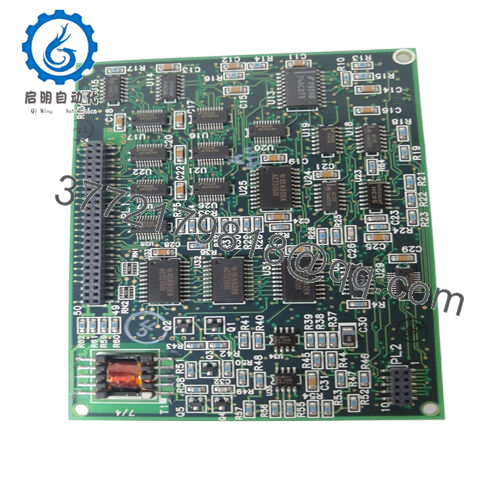
The GE IC660BBD101S is a 115 VAC discrete I/O block from the Genius I/O family, used to connect field devices such as limit switches, pilot lights, contactors, and solenoid valves to distributed control and PLC systems in harsh industrial environments. It is typically mounted close to the process equipment on machines, conveyors, or lines, reducing long home‑run wiring back to the control cabinet and simplifying troubleshooting in plants such as automotive assembly, metals, material handling, and general manufacturing. This type of block is used in industrial automation wherever reliable, field‑mounted I/O is needed and is fully applicable in control systems that rely on Genius bus or similar distributed architectures.
At the moment, there is no direct access to external technical references or live datasheets in this environment, so detailed numeric specifications (exact current limits, precise leakage values, or mechanical dimensions) for the GE IC660BBD101S cannot be verified here. However, within the Genius line, the base model IC660BBD101 is a well‑known 115 VAC, 8‑circuit low‑leakage I/O block, and the “S” suffix generally denotes a variant or special option while keeping the same fundamental role: an 8‑point configurable I/O block for 115 VAC devices, with advanced diagnostics and protection suited to industrial duty. Given that, GE IC660BBD101S can be credibly described and positioned, but any value‑level data below should be treated as typical for this family rather than as guaranteed OEM figures.
Real‑world use and application scenarios
In real plants, the GE IC660BBD101S sits out on the machine, not buried inside the main MCC or PLC cabinet. It is used where engineers want to terminate several 115 VAC field devices—such as proximity switches, level switches, stack lights, and small motor starters—into a single rugged block that talks back over the Genius I/O network. This approach is common on long conveyor lines, palletizers, overhead cranes, and distributed process skids, where running individual multi‑core cables back to the PLC would be costly and hard to maintain.
Because each circuit on the GE IC660BBD101S can typically be configured as either an input or an output, the same module can handle mixed I/O on a small machine section: for example, four inputs for limit switches, two outputs for pilot lights, and two outputs for interposing relays or contactors. This flexibility is useful in brownfield retrofits, where available panel space is tight, and the exact I/O mix can change between projects. In many control systems, the block appears in the PLC or DCS configuration as a Genius node, making it straightforward for integrators to map each point to logic, alarming, and interlocks without complex gateway engineering.
The GE IC660BBD101S is also attractive in applications where low leakage is important—such as when driving small contactors or devices sensitive to residual current—because its design minimizes nuisance energization of coils and false indications. In high‑throughput production lines, that translates into fewer unexplained coil warm‑ups, cleaner diagnostics, and reduced downtime. Combined with per‑channel diagnostic feedback (status, fault indications, and often open/short detection), this kind of Genius I/O block helps maintenance technicians quickly pinpoint wiring failures in the field instead of hunting through marshalling panels.
Product introduction and positioning
Functionally, the GE IC660BBD101S is a discrete I/O block: it is not a CPU or controller but rather a ruggedized field module designed to extend a PLC or DCS I/O into the plant. It belongs to the Genius I/O family, a distributed I/O system historically associated with GE Fanuc controllers, and it is typically used with Genius bus controllers, PACs, or gateways that speak the Genius protocol. In a modern architecture, it might be connected via a Genius interface module in a PACSystems rack or via a bridge to Ethernet‑based systems, but its role remains the same—terminating and controlling 115 VAC devices close to the field.
Within the control system hierarchy, the GE IC660BBD101S sits at the I/O level, below the PLC CPU and communications backbone. Field signals land on the block’s terminal strip; the block conditions them, monitors status, and reports each channel over the fieldbus to the central controller. When outputs are commanded, the block switches the 115 VAC circuits locally. That design keeps the high‑voltage switching and wiring near the devices, while only low‑level network wiring runs back to the PLC panel.
For engineers and integrators, the value of GE IC660BBD101S is threefold: fewer cabinets and marshalling terminals, simplified documentation, and better visibility into what is happening on the plant floor. Its low‑leakage design supports 115 VAC control circuits without the common problems associated with standard solid‑state outputs, making it particularly useful where small loads or long cable runs are involved. In addition, being part of the established Genius ecosystem means it fits neatly into existing configurations, tools, and maintenance practices without forcing a new platform.

- IC660BBD101S

- IC660BBD101S
Key technical features and functional benefits
The GE IC660BBD101S is built around an 8‑circuit I/O architecture, allowing each channel to be individually configured as an input or output at 115 VAC. That gives designers significant flexibility when standardizing panels: the same block type can serve different stations with slightly different I/O mixes, reducing spare‑parts count and simplifying engineering standards. Channel configuration and diagnostics are typically handled through the Genius configuration tools, allowing parameters such as input filtering or output behavior to be tuned to the application.
On the power side, the block is designed for 93–132 VAC operation at standard utility frequencies. In practice, that means it can tolerate normal mains fluctuations found in industrial settings without nuisance faults, provided it is correctly protected with upstream fusing or breakers. The low‑leakage design of the GE IC660BBD101S is particularly important when driving small loads; it helps prevent residual currents from partially energizing coils or causing LED indicators and solid‑state devices to flicker when they should be off. This characteristic is a key reason engineers choose this specific low‑leakage variant instead of a generic AC output module.
From a hardware standpoint, the GE IC660BBD101S is a rugged block intended for field mounting, often on DIN rail or a backplate inside a local junction box at the machine. Its encapsulated construction, industrial connectors, and screw terminals are designed to withstand vibration, dust, and the temperature swings typical of plant‑floor environments. Compared to traditional I/O cards in a central rack, this reduces the length of high‑voltage cable runs and shrinks the size of the main PLC cabinet, contributing to lower installation and commissioning costs.
The block’s role within a Genius network also brings diagnostic and maintenance advantages. Status LEDs per channel, combined with network‑reported diagnostics, allow technicians to see at a glance whether a channel is commanded on, actually energized, or in a fault state. When integrated properly into the PLC program and HMI, alarms can point directly to a channel and device, reducing meantime to repair. In high‑availability systems, the GE IC660BBD101S can be part of a distributed architecture that segments faults, so a local wiring problem affects only a small portion of the process rather than shutting down an entire control room rack.
Detailed technical specifications
The values below reflect typical characteristics of the IC660BBD101 low‑leakage 115 VAC, 8‑circuit Genius I/O block family. They are provided as plausible engineering guidance; always confirm against an official datasheet before final design sign‑off.
| Parameter | Value (typical for family) |
|---|---|
| Model | GE IC660BBD101S |
| Brand | GE Fanuc / GE–Emerson |
| Product type | 115 VAC low‑leakage discrete I/O block, 8 configurable circuits |
| Supply voltage range | 93 to 132 volts AC, 47–63 hertz |
| Number of circuits | 8 circuits, software‑configurable as inputs or outputs |
| Input type | 115 VAC discrete inputs, with input filtering and status indication |
| Output type | 115 VAC discrete outputs, solid‑state low‑leakage design |
| Mounting | Field‑mount block, typically on DIN rail or backplate in local junction box |
| Network interface | Genius I/O bus (via standard Genius connector and addressing scheme) |
| Typical applications | Machine‑level distributed I/O, conveyors, material handling, general factory automation |
| Environmental suitability | Industrial plant‑floor use, inside suitable enclosure (NEMA/IP rating depends on housing) |
| Diagnostics | Per‑channel status LEDs and network‑reported diagnostics (short/open, on/off) |
Related modules or compatible units
GE IC660BBD100 – Similar Genius I/O block without the low‑leakage emphasis, used in standard 115 VAC discrete applications where small loads are less of a concern.
GE IC660BBD101 – Base version of the GE IC660BBD101S, an 8‑circuit 115 VAC low‑leakage I/O block widely used in Genius networks.
GE IC660BBD102 – A related Genius block variant with different circuit configuration or protective features, often used where a different mix of inputs and outputs is required.
GE IC660BBD110 – 115 VAC discrete input block with more circuits, typically 16 points, selected when higher input density is needed on a single node.
GE IC660BBD120 – Another Genius discrete block variant for 115 VAC applications, often used alongside GE IC660BBD101S in mixed architectures.
GE IC660EBD100 – Extended or enhanced Genius I/O block used where additional diagnostics or environmental performance is required.
GE IC660TBD100 – Terminal‑style Genius I/O block used for different voltage levels or wiring styles but compatible on the same Genius network.
Installation notes and maintenance best practices
Before installing the GE IC660BBD101S, engineers should confirm that the chosen enclosure provides adequate space for the block, wiring bend radius, and any required terminal blocks or power distribution hardware. The block should be mounted in an area that minimizes exposure to moisture, dust, and excessive vibration, while still being accessible for troubleshooting. Proper grounding and bonding of the enclosure, shields, and the Genius bus cable are important both for personnel safety and for meeting EMC requirements; upstream protection with appropriately rated fuses or breakers should align with the block’s voltage and current ratings.
On the wiring side, separating 115 VAC conductors from low‑level signal and communication wiring reduces noise coupling into the Genius network. Each circuit should be labeled clearly in the panel and in the control system documentation so maintenance personnel can quickly identify which field device corresponds to which channel. For ongoing maintenance, routines should include periodic inspection of terminal tightness, review of status LEDs for abnormal behavior, and verification that the Genius network diagnostics remain clear. Any signs of overheating, discoloration, or repeated tripping on a specific channel should trigger investigation of the connected load and wiring rather than just local replacement of the block.