 WhatsApp: +86 16626708626
 Email:
  Phone: +86 16626708626
Description
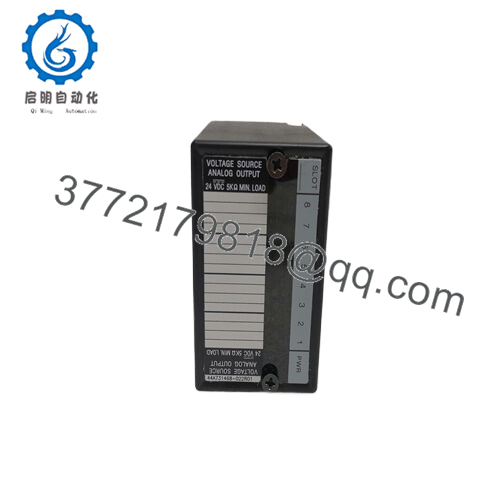
The GE IC670GBI002J (a hardware revision of the base IC670GBI002) is the Genius Bus Interface Unit (BIU) for GE’s Field Control distributed I/O system, serving as the intelligent header module that links up to eight Field Control I/O modules to a host PLC or computer via the Genius serial bus. In industrial automation and process control—particularly legacy distributed setups in manufacturing, utilities, or process plants—engineers need flexible, noise-resistant remote I/O that extends from a central controller without excessive cabling, while providing diagnostics and configuration at the field level. Centralized I/O often leads to long wire runs prone to noise/dropouts, higher installation costs, or limited scalability when adding points in harsh or expansive environments.
GE IC670GBI002J addresses these by acting as the communication and processing gateway for a local Field Control station, handling I/O scanning, data packaging (up to 128 bytes input/output per scan), and Genius bus protocol for reliable exchange with the host (e.g., Series 90-70/30 PLCs or compatible masters). It becomes essential in modular expansions where you want to place I/O closer to sensors/actuators—reducing field wiring length and costs—while maintaining centralized control logic. Typical scenarios include retrofitting older Genius networks, adding distributed stations in conveyor lines or pump skids, or maintaining spares for long-running Field Control installations. Without a functional BIU like GE IC670GBI002J, remote I/O stations lose bus connectivity, diagnostics become blind, or the entire group goes offline—risks that compromise high reliability and increase troubleshooting time in industrial automation environments.
GE IC670GBI002J mounts as the first (header) module in a Field Control DIN-rail station, connecting to up to eight I/O modules (discrete, analog, or specialty) via local backplane-style interconnects for high-speed internal scanning. It powers from a nominal 24 VDC supply (with wide tolerance), provides regulated power distribution to attached modules, and interfaces externally via a single twisted-pair Genius bus drop (configurable baud rates up to 1 Mbps, supporting distances to 7500 ft at lower speeds). The BIU performs intelligent functions like input/output mapping, fault reporting (e.g., module faults, bus errors, power loss), and configurable diagnostics (via Genius Handheld Monitor or host programmer).
In the Field Control/Genius architecture, GE IC670GBI002J positions as the station master on the Genius network—up to 30 drops per bus—exchanging data deterministically with the host PLC. It supports redundant bus options (dual drops for high availability), handles scan cycles with low latency, and includes status LEDs (power, bus activity, faults) plus supervisory signals. No field-level protocols beyond Genius; it focuses on bridging local I/O to the distributed bus for real-time control and monitoring in TMR-capable or simplex setups.
| Specification | Details |
|---|---|
| Model Number | IC670GBI002J |
| Brand | GE Fanuc / Emerson |
| Type | Genius Bus Interface Unit (BIU) for Field Control |
| Input Voltage | 24 VDC nominal (18–30 VDC range) |
| Operating Temp Range | 0 to +60 °C (typical Field Control) |
| Mounting Style | DIN rail (Field Control station header) |
| Dimensions | Standard Field Control module footprint (approx. compact DIN size) |
| Weight | Approx. 0.5–0.8 kg |
| Interface/Bus | Genius serial bus (twisted pair drop); local interconnect to I/O modules |
| Compliance | Typical industrial standards (CE/UL equivalents per era/system) |
| Supported Protocols | Native Genius I/O protocol |
| Typical Power Draw | ~16.8 W max (full load with I/O modules) |

- IC670GBI002J
Selecting GE IC670GBI002J provides scalable, diagnostic-rich distributed I/O that extends legacy Genius systems efficiently. Its intelligent scanning and fault isolation allow continued operation on healthy modules during partial failures, while configurable diagnostics (open wire, no-load, etc.) enable proactive maintenance via the host or handheld monitor—reducing mean time to repair and avoiding process interruptions.
The BIU’s 24 VDC operation and wide tolerance handle real-world supply variations, and the single-bus-drop design simplifies network topology. Maintenance benefits from LED visibility, hot-swap compatibility in many setups, and easy configuration without rewiring. Overall, GE IC670GBI002J lowers expansion costs, boosts system resilience, and supports sustained performance in aging Field Control deployments transitioning gradually to newer architectures.
GE IC670GBI002J is commonly used in discrete manufacturing for distributed I/O on assembly lines, packaging, or material handling conveyors, interfacing remote sensors/actuators to a central PLC while minimizing long cable runs in noisy environments. It supports utility and water/wastewater applications for pump/valve stations or remote monitoring points, ensuring critical system uptime through reliable bus communication and diagnostics in dispersed layouts. In process control environments—such as batch processing, chemical skids, or HVAC controls—the BIU aggregates I/O from field modules for centralized logic under harsh or expansive conditions.
Compatible or alternative products include:
IC670GBI002 – Base/standard version (identical core functionality; -J is a revision, often with minor hardware, firmware, or certification updates).
IC670GBI001 – Earlier or variant BIU in Field Control series (check compatibility for bus/power differences).
IC660BBD110 – Genius discrete input block (alternative distributed I/O node on same bus).
IC670TBM002 – Terminal block or mounting base for Field Control stations.
IC670MDL series – Field Control I/O modules (e.g., discrete/analog) that attach to the BIU.
IC697BEM731 – Genius Bus Controller for host PLC side (Series 90-70).
IC693BEM340 – Genius Bus Controller for Series 90-30 hosts.
Before installing GE IC670GBI002J, verify 24 VDC supply stability (18–30 V range) with adequate fusing, and connect the Genius bus drop using shielded twisted-pair per specs (baud rate/address set via switches or handheld). Attach up to eight compatible I/O modules, ensuring proper seating and power sequencing. Configure station parameters (I/O mapping, diagnostics) using Genius Handheld Monitor or host programmer before energizing, and test bus communication/LEDs for normal status (power green, bus active). Ground the station well to reduce noise.
Ongoing maintenance includes monitoring LEDs during inspections—power and bus should indicate healthy; faults prompt checks on supply, bus cable, or attached modules. Inspect connections annually for corrosion or looseness, particularly in humid/corrosive areas, and clean vents to maintain cooling. During outages, use the handheld monitor to review diagnostics, force I/O for verification, and back up configurations. The BIU’s robust design supports extended life with emphasis on bus integrity and environmental protection.