 WhatsApp: +86 16626708626
 Email:
  Phone: +86 16626708626
Description
In sprawling wastewater treatment basins where pump stations span acres and remote valve pits demand flawless remote oversight, or amid sprawling conveyor networks in mining ops syncing crushers against stockpile levels, the GE IC670GBI102 enables seamless distributed control that banishes single-point failures. Field crews in power plants coordinate boiler feedwater I/O across turbine halls without cabling marathons, while automotive body shops link paint booth sensors to central PLCs over twisted-pair runs. Rolled out in industrial automation for oilfield pumpjacks or rail signaling yards, this Genius Bus Interface bridges up to eight Field Control modules—discrete, analog, or specialty—into host GE CPUs, tackling the sprawl of remote I/O by consolidating data over robust serial networks at speeds up to 153.6 Kbaud.
Picture a cement silo farm: the GE IC670GBI102 aggregates level transmitters and auger starters from drop cabinets 500m out, feeding fault-tolerant packets to Series 90-70 logic for automated fills sans Ethernet fragility. In chemical dispatch racks, it hot-swaps during live batches, preserving redundant bus paths that dodge EMI from arc welders nearby. Tailored for control systems in corrosive pump houses or dusty bulk handlers, this BIU supports daisy-chain topologies with termination resistors tuned to network loads, turning isolated outposts into unified process nerves. Integrators grab the GE IC670GBI102 for retrofits where fiber budgets sting, delivering peer-to-peer comm that scales without rack bloat.glow.
Product Role
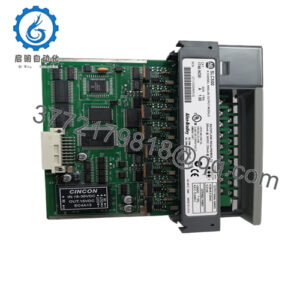
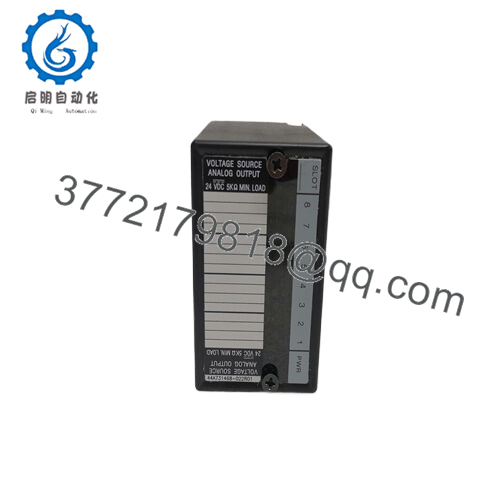
The GE IC670GBI102 operates as a rack-mounted Genius Bus Interface Unit in GE Fanuc’s Field Control lineup, linking remote I/O stations to host controllers like Series 90-30/70 or Rx7i via dual independent serial buses. DIN-rail terminal blocks host screw terminals for primary/redundant Genius drops—up to 127 bytes each for inputs, outputs, analog, and status—while 9-pin D-shells mate handheld programmers for field tweaks. It powers Field Control modules directly, forming standalone nodes with 256-byte allocations across %I/%Q/%AI/%AQ registers, configurable via Proficy for baud rates from 38.4 to 153.6 Kbaud.
Control engineers lean on the GE IC670GBI102 to collapse wiring closets into drop cabinets, prized for dual-bus redundancy that self-heals cable faults mid-cycle. In PAC architectures, it slots as a GBC interface, valued for hosting smart modules without host CPU polling overhead. Diagnostics stream OK/FAIL per drop over bus, slashing truck rolls, while 20 ms hold-up bridges power blips. The GE IC670GBI102 anchors hybrid networks, marrying legacy Genius to modern Ethernet trunks via gateways.

- IC670GBI102
Core Strengths
Techs wiring remote tanks praise the GE IC670GBI102‘s universal AC/DC power—90-135 VAC or 105-150 VDC at 48 VA/125W—that thrives on site feeders without converters, complete with 20A inrush clamps and 20 ms ride-through for generator starts. Dual buses daisy-chain up to 32 nodes with 75/100/120/150 Ohm jumpers at ends, handling 600K-hour MTBF through optical isolation and transient suppressors that eat VFD noise. DIN mounting with removable terminal strips eases swaps in tight enclosures, while tri-color LEDs flag bus traffic, power, and faults at 50m glances.
Field tolerance hits industrial marks: 0-60°C operation through 95% RH, 5-15G shock, and 1G vibes lock it past crane bumps, with panel IP20 rating suited for purged cabinets. Eight drop ports power 500 mA each at 6.5 VDC internally, scaling to 64 I/O points per rack sans external PSUs. The GE IC670GBI102 auto-detects baud mismatches, pulsing diagnostics to host for preemptive alerts, and supports IC660BLM pre-fab cables for plug-and-play nets. No fans or batteries—just solid-state relays rated for decade duty—yielding uptime that outpaces fragile slaves.
Hot configuration via handheld ports tweaks %I/O maps live, with redundant paths auto-failing over. Pre-formed bus stubs cut install hours, while termination aids prevent reflections cold. This BIU equips system builders for resilient drops that endure.
Specifications
| Parameter | Value |
|---|---|
| Model | IC670GBI102 |
| Brand | GE Fanuc (Field Control) |
| Type | Genius Bus Interface Unit |
| Power Supply | 90-135 VAC / 105-150 VDC |
| Operating Temperature | 0 to 60°C |
| Storage Temperature | -40 to 85°C |
| Mounting | DIN rail / panel |
| Dimensions | 197 x 100 x 130 mm (approx) |
| Weight | 1.2 kg (2.6 lbs) |
| Interfaces | 2x Genius bus (screw term), 2x D-shell programmer |
| Bus Speeds | 38.4, 76.8, 153.6 Kbaud |
| I/O Capacity | 127 bytes per bus (%I/%Q/%AI/%AQ) |
| Certifications | CE, UL, CSA |
| Power Consumption | 48 VA AC / 125 W DC |
| Environmental Rating | IP20 (panel mount) |
| Hold-up Time | 20 ms |
Compatible Units
IC670GBI002 – 24 VDC sibling for low-voltage remote drops.
IC670MDL64A – 32-point discrete input module for sensor walls.
IC670ALG330 – Analog combo expander for transmitter banks.
IC660BPM021 – Power transducer tying into bus metering.
IC670CHS001 – Chassis base for eight-module racks.
IC660BLM508 – 75 Ohm pre-fab bus cable for quick nets.
IC670PBI001 – Profibus alternative for mixed-protocol sites.
Installation Tips
Mount the GE IC670GBI102 on 35mm DIN rails in ventilated cabinets—secure with end stops, then torque 16-position bus terminals to 1.0 Nm using 14-16 AWG shielded pairs twisted 10/inch, installing 120 Ohm jumpers at network ends only. Wire AC/DC to labeled lugs with 10A breakers upstream, fusing neutrals separately; isolate grounds from I/O trays 6 inches min to kill loops. Programmer D-shells face outward for knee-level access, and label drop addresses pre-power via rotary dials—verify baud sync with handheld first.
Bimonthly checks ping bus health via LEDs for traffic drops; cycle host diagnostics to log CRC bursts flagging bad shields. Terminal blocks extract sans power-down for field swaps, but tag configs offline. Annual hi-pot tests across buses confirm 1500V isolation, while cable pulls replace stubs over 1200m. These steps fortify the GE IC670GBI102 against net gremlins.