 WhatsApp: +86 16626708626
 Email:
  Phone: +86 16626708626
Description
When you’re trying to bring real-world analog signals—like 4-20 mA loops from pressure transmitters, thermocouples from furnace zones, or 0-10 V position feedback—into a Series 90-30 PLC without introducing noise, drift, or frequent recalibration headaches, the limitations of basic I/O cards become painfully obvious. In noisy plant environments, ground loops and EMI turn marginal cards into unreliable data sources that force operators to second-guess trends or trigger false alarms. Worse, when a single channel drifts or fails, you often lose the entire card until the next maintenance window, and the lack of usable diagnostics leaves you chasing ghosts through hundreds of meters of shielded cable.
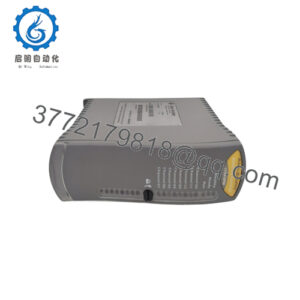
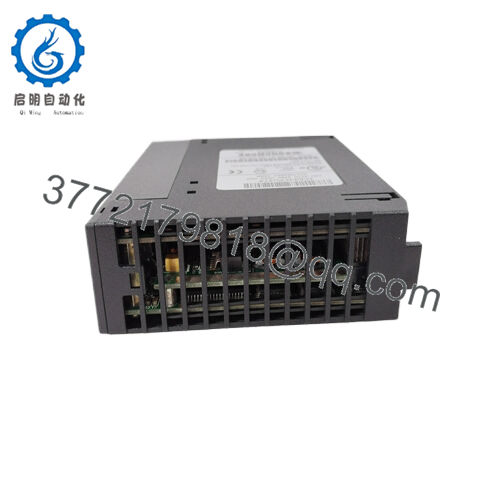
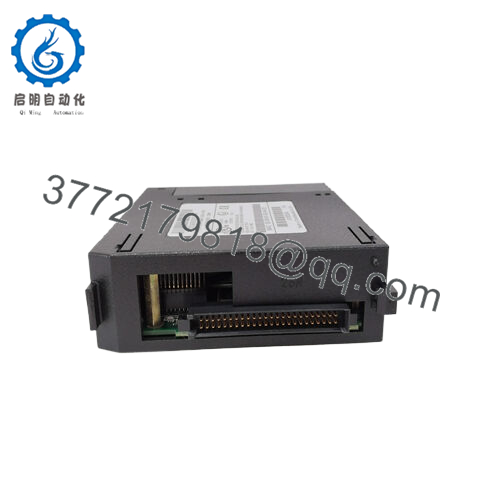
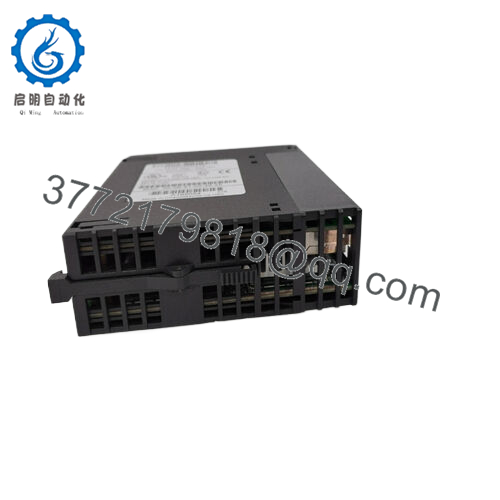
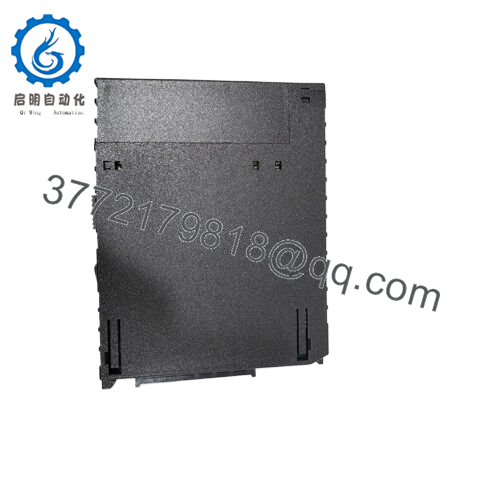
The GE IC693ALG221 directly addresses these pain points as a 4-channel current-input analog module engineered for rock-solid performance in everyday industrial automation and process control applications. It converts those critical 4-20 mA (or 0-20 mA) loops into precise 16-bit digital values the 90-30 CPU can trust, even when the card is mounted in a rack right next to VFDs or welding robots. With 1500 VAC isolation channel-to-channel and to the backplane, plus true differential inputs, the GE IC693ALG221 eliminates the ground-loop and common-mode noise problems that plague cheaper cards. On-board diagnostics immediately flag open-wire, out-of-range, or loss-of-power conditions per channel, so your logic can respond gracefully instead of letting bad data propagate upstream. For plants that have invested decades in 4-20 mA instrumentation and need high reliability without moving to fieldbus, this module has been the de-facto standard for everything from boiler feedwater control to conveyor load monitoring.
How the Product Works & Fits into a System
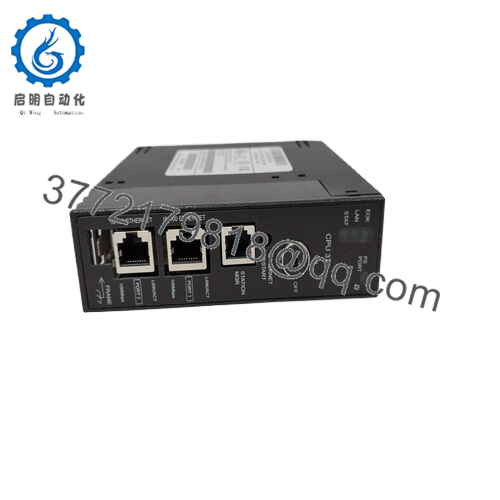
The GE IC693ALG221 occupies a single slot in any Series 90-30 baseplate (5-slot or 10-slot, CPU, expansion, or remote) and presents four fully isolated differential current inputs to the PLC backplane. Each channel is independently configurable via logic for either 4-20 mA or 0-20 mA range, with 0.25 µA resolution and better than 0.1 % of full-scale accuracy across the operating temperature range. Conversion happens continuously at roughly 2 ms per channel, and updated values are placed directly into %AI registers that you map exactly like any other analog input.
Because the module speaks native Series 90-30 I/O protocol over the parallel backplane bus, it integrates without gateways or special function blocks—just drop it in, assign the starting %AI reference in the configuration, and you’re reading process values. It plays nicely alongside discrete cards, RTD/thermocouple modules, and high-speed counters in the same rack. If you’re running a redundant CPU setup with HRM or Genius I/O, the GE IC693ALG221 follows the normal I/O scan rules and supports warm-restart behavior so your analog values stay valid through CPU switchovers.

- IC693ALG221
- IC693ALG221
| Specification | Details |
|---|---|
| Model Number | GE IC693ALG221 |
| Brand | GE (General Electric) |
| Type | 4-Channel Analog Current Input Module |
| Input Voltage | 24 VDC user supplied (loop power) |
| Operating Temp Range | 0 °C to 60 °C |
| Mounting Style | Series 90-30 baseplate (any I/O slot) |
| Dimensions | 130 mm × 37 mm × 130 mm (standard 90-30) |
| Weight | 0.35 kg |
| Interface/Bus | Series 90-30 parallel backplane |
| Compliance | CE, UL, CSA, ATEX Zone 2 |
| Supported Protocols | Native 90-30 analog protocol |
| Typical Power Draw | 120 mA @ 5 VDC (backplane) + loop power |
Real-World Benefits
With the GE IC693ALG221, you get data you can actually trust shift after shift. The combination of differential inputs and 1500 V isolation means that even when you have long cable runs across a noisy plant floor, the readings in your HMI match what the transmitter is really seeing—no more unexplained 0.5 mA offsets that drive operators crazy. The per-channel open-wire detection is particularly valuable on safety-related loops; instead of waiting for a process upset, your logic can immediately declare the channel bad, switch to a backup transmitter, and generate a maintenance ticket before anything dangerous happens.
Maintenance teams appreciate that a failed channel doesn’t take down the other three, and the front-panel LEDs plus fault bits in the PLC make locating the problem trivial—usually a broken wire or a transmitter that lost its loop power. Recalibration is rarely needed; most plants run these cards for ten to fifteen years with nothing more than occasional connector cleaning. When you’re under pressure to keep legacy 90-30 systems running while the budget for a full migration hasn’t materialized, the GE IC693ALG221 quietly delivers modern-grade accuracy and diagnostics without forcing you to retrain anyone.
Typical Use Cases
You’ll find the GE IC693ALG221 everywhere 4-20 mA remains king: water treatment plants reading chlorine residual and turbidity loops, chemical dosing skids monitoring pH and flow, and steel mill hydraulic systems watching pressure and position on rolling stands. In food & beverage, it’s common on pasteurizers and clean-in-place skids where precise temperature-to-current conversion has to survive washdown environments. Power plants use it for coal conveyor weigh scales and cooling-tower basin levels—applications where a few tenths of a mA drift can mean the difference between optimal combustion and an emissions excursion. Anywhere you need high-reliability analog input in harsh conditions without the cost or complexity of moving to Profinet or Ethernet I/O, the GE IC693ALG221 is still the first card engineers reach for.
Compatible or Alternative Products
GE IC693ALG220 – 4-channel voltage input (±10 V) companion module
GE IC693ALG223 – 16-channel single-ended current input for higher density
GE IC693ALG392 – 8-channel high-density current/voltage output module
GE IC693ALG222 – 16-channel voltage input hybrid for mixed signals
GE IC693MDL940 – Commonly paired high-density relay output for control
GE IC693ACC301 – Replacement terminal block assembly
GE IC694ALG221 – RX3i drop-in replacement with identical wiring
Setup Notes & Maintenance Insights
Before installation, verify that your loop transmitters are externally powered or that you’ve budgeted 24 VDC for the loops if the transmitters are two-wire. Double-check that the shield is landed only at the module end—grounding both ends is the fastest way to create noise problems. When wiring, use the removable terminal block so you can pre-wire offline; torque the screws to 0.5 Nm and give each one a gentle tug—loose connections are the number-one field failure mode.
In service, glance at the module LEDs during rounds: steady green means all is well, flashing red points you to the exact channel that’s open or out of range. Every couple of years, pop the terminal block off and inspect for corrosion or loose strands, especially in aggressive atmospheres. Keep a configured spare on the shelf; swapping takes under a minute and the new card picks up the existing configuration automatically. If you ever see random jumps in a reading, check loop power first, then swap the terminal block—nine times out of ten that resolves it without pulling the card.