 WhatsApp: +86 16626708626
 Email:
  Phone: +86 16626708626
Description
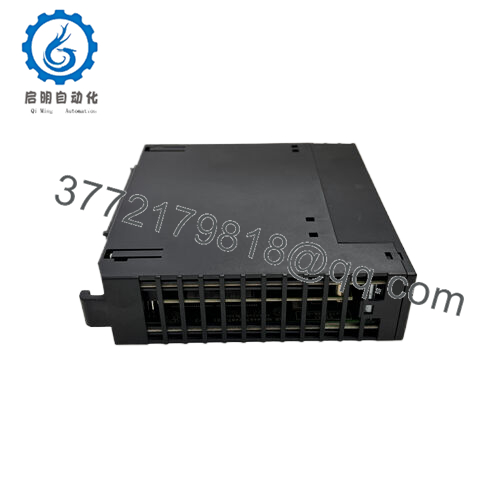
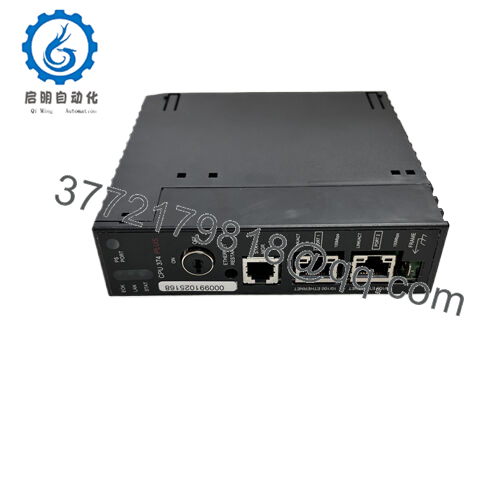
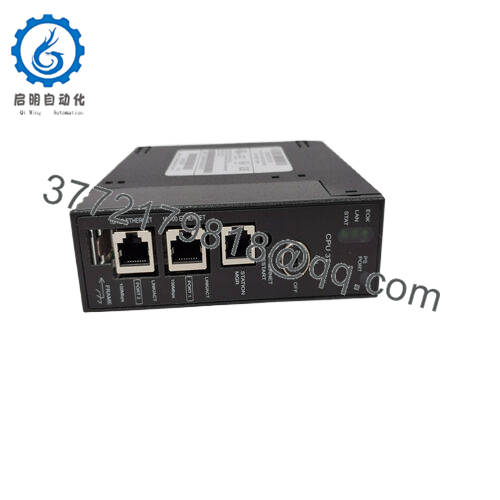
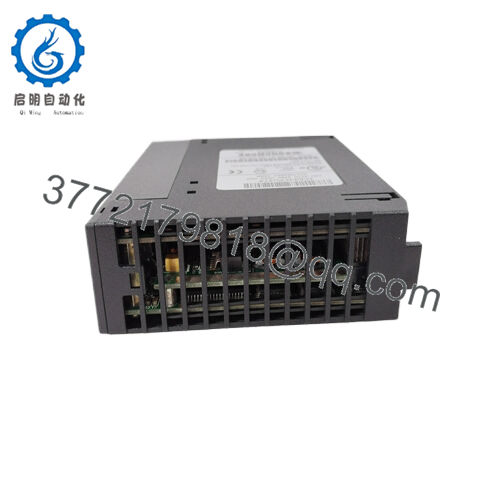
The GE IC693ALG222E (a revision variant of the IC693ALG222, with -E often indicating a hardware/firmware update or manufacturing batch in GE Fanuc/Emerson Series 90-30 documentation) solves the challenge of high-density, flexible analog voltage acquisition in space-constrained or cost-sensitive industrial automation systems. In Series 90-30 setups monitoring multiple process variables — pressure, level, flow, position, or temperature via voltage transmitters — lower-channel modules force extra racks or wiring complexity, while isolated alternatives add unnecessary expense when common-mode noise is manageable. GE IC693ALG222E provides up to 16 single-ended or 8 differential channels in a single slot, configurable per application for unipolar (0–10 V) or bipolar (±10 V) ranges with 12-bit resolution. It’s essential in retrofits, expansions, or mid-sized controls where high reliability and accurate I/O signals are needed without over-engineering isolation, supporting deterministic updates and basic diagnostics to keep loops stable and reduce false alarms in process control environments.
GE IC693ALG222E mounts in any available slot (except CPU slot 1) on a modular Series 90-30 baseplate, converting analog voltage inputs to 12-bit digital values (scaled 0 to +32000 for 0–10 V unipolar default; –32000 to +32000 for ±10 V bipolar) for PLC use. Channels are software-configurable (via Proficy Machine Edition or legacy tools) for single-ended (16 max) or differential (8 max) mode, with factory calibration ensuring 2.5 mV/LSB (unipolar) or 5 mV/LSB (bipolar) accuracy. It scans all channels rapidly — about 6 ms for 16 single-ended or 3 ms for 8 differential — applying a fixed filter (41 Hz single-ended, 82 Hz differential) for noise rejection. The module reports open-circuit faults (in certain modes) and cross-channel rejection (>80 dB DC–1 kHz), with data mapped directly to %AI registers. Positioned in the analog I/O layer of the 90-30 stack, it draws isolated +24 VDC from the backplane (if needed) and uses a terminal block for field wiring, integrating seamlessly with the CPU for scaling, alarming, or PID without extra hardware.
| Specification | Details |
|---|---|
| Model Number | IC693ALG222E (revision of IC693ALG222) |
| Brand | GE Fanuc (now Emerson) |
| Type | Series 90-30 16-Channel Analog Voltage Input Module |
| Input Channels | 1–16 single-ended or 1–8 differential (configurable) |
| Input Voltage Range | 0 to +10 V (unipolar) or –10 to +10 V (bipolar) |
| Resolution | 12-bit (2.5 mV/LSB unipolar; 5 mV/LSB bipolar) |
| Operating Temp Range | 0°C to 60°C |
| Mounting Style | Rack-mount in Series 90-30 baseplate (any available slot) |
| Dimensions | Standard 90-30 single-slot (approx. 145 mm H x 45 mm W x 140 mm D) |
| Weight | Approx. 0.8–1.0 kg |
| Interface/Bus | 90-30 backplane; terminal block for field wiring |
| Compliance | CE, UL, CSA, typical industrial certifications |
| Supported Protocols | N/A (analog input; data via backplane to CPU) |
| Typical Power Draw | 112 mA max at +5 VDC (backplane); 41 mA max from isolated +24 VDC |
| Update Rate | ~6 ms (16 single-ended); ~3 ms (8 differential) |
| Absolute Accuracy | ±0.25% full scale at 25°C; ±0.5% over temp range |

- IC693ALG222E
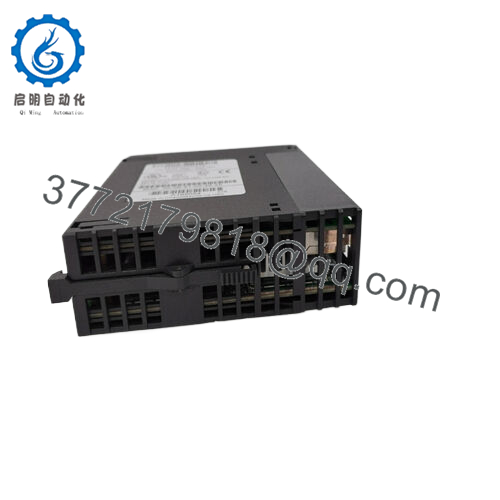
Choosing GE IC693ALG222E yields efficient, high-density voltage input handling that optimizes rack space and wiring in Series 90-30 systems. The configurable single-ended/differential modes and dual ranges adapt to diverse transmitters without hardware changes, delivering precise 12-bit data for stable control loops or trending. Factory calibration and strong rejection specs minimize drift or noise effects, while fast updates support responsive monitoring in dynamic processes. Maintenance is simplified by direct %AI mapping and fault reporting in the PLC, reducing troubleshooting time versus multi-module setups. Long-term, GE IC693ALG222E extends legacy 90-30 viability cost-effectively, deferring migrations while ensuring critical system uptime in analog-heavy applications.
GE IC693ALG222E excels in manufacturing for multi-point monitoring of position, load, or speed signals in assembly or test stands, where density and quick scans coordinate discrete/analog actions. In water/wastewater or utilities, it’s used for level, pressure, or flow transmitters across tanks/pumps in process control environments. Chemical or food & beverage facilities deploy it for temperature/pressure arrays in batch or continuous lines, valuing reliable conversion and basic diagnostics under moderate noise conditions.
Related or alternative products in the GE Fanuc Series 90-30 analog family include:
IC693ALG222 – Base model (without -E suffix; core equivalent functionality).
IC693ALG223 – 16-channel current input variant (4–20 mA) for transmitters requiring mA loops.
IC693ALG220 – 4-channel voltage input for lower-density needs.
IC693ALG221 – 4-channel current input alternative.
IC693ALG390 – Analog output module (2 channels) to pair for closed-loop control.
IC693ALG392 – 8-channel analog output for expanded actuation.
IC693CPU363 – High-memory CPU often paired for larger analog-heavy programs.
IC693CHS391 – 10-slot baseplate for systems with multiple analog modules.
Before installing GE IC693ALG222E, confirm modular baseplate (not embedded CPU models) and slot availability with adequate power (e.g., IC693PWR321/330). Power down for insertion, connect field wiring to the terminal block (shield grounds at one end), and configure channels/ranges in Proficy Machine Edition — assign %AI addresses and scaling. Test with calibrated voltages during commissioning, verifying counts, fault detection, and update timing in the CPU.
Ongoing maintenance involves status monitoring: check module LEDs (OK for health, FAULT for issues) during rounds. Inspect terminals annually for corrosion/loose connections, especially in humid areas. Use Proficy diagnostics to trend channel data and faults — recalibrate if drift noted (factory trim typically holds well). Test inputs yearly with sources for accuracy/linearity. Firmware (if updates exist) aligns via Proficy; the design supports quick swaps — power down, replace, reconfigure, and validate without major reconfiguration.