 WhatsApp: +86 16626708626
 Email:
  Phone: +86 16626708626
Description
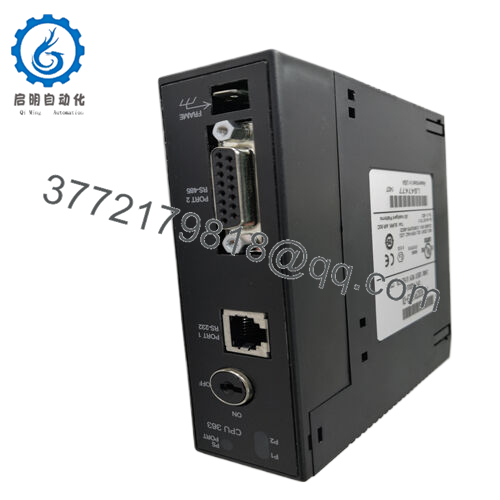
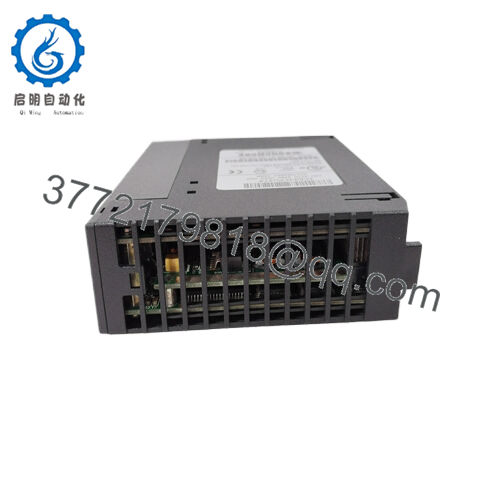
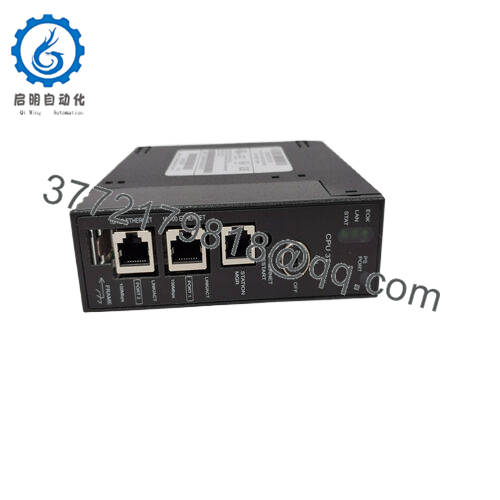
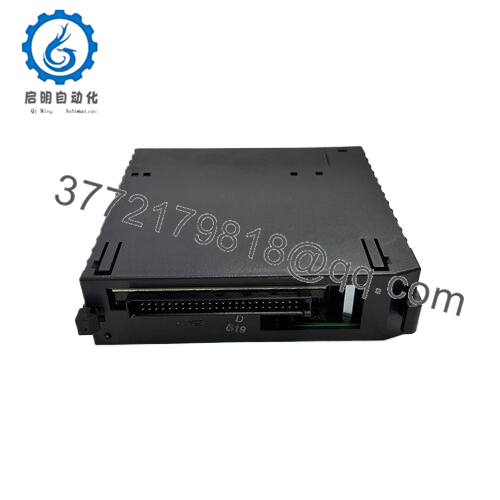
Product Model: GE IC693ALG223C
Product Brand: GE Fanuc / General Electric
Product Series: Series 90-30 / PACSystems
Product Features:
• 16-channel analog current input module for Series 90-30 PLC systems with flexible input ranges
• Supports 0–20 mA, 4–20 mA, and enhanced 4–20 mA with open-wire fault detection
• Factory-calibrated high-resolution 12-bit conversion with ±0.25 % accuracy
• Strong electrical isolation and robust update performance for industrial environments
Technical Specifications Table
| Specification | Detail |
|---|---|
| Model | GE IC693ALG223C |
| Module Type | Analog Current Input Module |
| Series | Series 90-30 / PACSystems |
| Input Channels | 16 single-ended (configurable per channel) |
| Supported Ranges | 0-20 mA, 4-20 mA, 4-20 mA Enhanced |
| Resolution | 12-bit (4 µA/5 µA per count) |
| Accuracy | ±0.25 % @ 25 °C; ±0.5 % over operating range |
| Update Rate | ~6–13 ms for 16 channels |
| Isolation | 250 VAC continuous; 1500 VAC for 1 min |
| Input Impedance | ~250 Ω |
| Power Requirements | 120 mA (+5 V bus); 65 mA (+24 V external) |
| LED Indicators | Module status, power, fault |
| Operating Temp | −40 °C to +70 °C (varies by vendor) |
| Certifications | CE, industrial standards |

- IC693ALG223C
Product Role & System Fit
Within the architecture of a GE Fanuc Series 90-30 PLC, the GE IC693ALG223C occupies a specific but essential role: it is a 16-channel analog current input module that couples field signal loops to the PLC’s internal logic table. It is not a CPU, power supply, or network communication card; rather, it functions as the analog bridge between real-world variable signals and programmable control logic.
Physically, the module installs in any I/O slot that offers a serial connector on a Series 90-30 or PACSystems RX3i rack. Once seated on the backplane, it draws logic power from the PLC’s 5 V bus and field power from an external 24 V loop supply. From there, each of the 16 single-ended channels independently monitors a current loop, converting analog values into 12-bit digital representation. These values enter the PLC’s %AI (analog input) data table, accessible to user logic for processing, alarming, or feedback control.
One of the practical considerations in system integration is the flexibility of input range configuration. Each channel on the GE IC693ALG223C can accept one of three modes: traditional 4–20 mA current loops, 0–20 mA signals, or an enhanced 4–20 mA mode that provides open-wire fault detection. The enhanced mode adds a layer of diagnostic intelligence by signaling when a loop falls below its normal lower threshold — a valuable feature in applications where sensor disconnection could otherwise go unnoticed until a critical process variable has already drifted dangerously.
Another key aspect of system fit is update rate and isolation. The module provides a fast update cadence — typically in the range of 6–13 ms for all 16 channels — ensuring that analog data remains fresh for real-time control loops. Its robust isolation (up to 1500 VAC for short bursts and 250 VAC continuous between field and logic circuits) protects the controller from electrical noise or voltage spikes common in industrial environments.
In sum, the GE IC693ALG223C complements other I/O modules and PLC components to form a balanced control system: discrete bits from digital I/O cards, variable data from this analog input card, and central processing via the CPU module. Together, they enable sophisticated automation strategies that maintain efficiency, uptime, and process safety across a variety of sectors.